Hospital Lightning Protection Jacksonville: Critical Infrastructure Protection for Healthcare Facilities
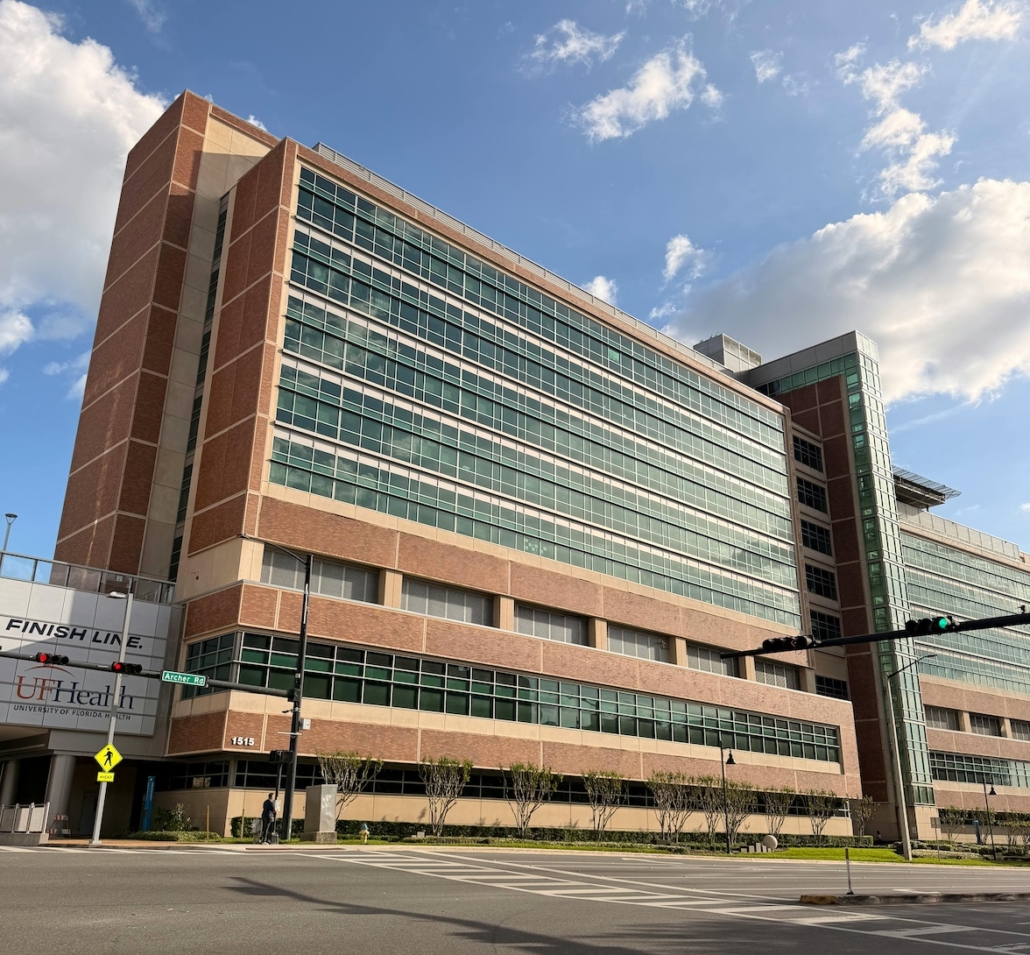
Jacksonville, Florida, ranks among the most lightning-prone cities in the United States — and for hospitals operating around the clock, a single direct strike or power surge can mean the difference between life and death. When UF Health Jacksonville, Baptist Medical Center, or Memorial Hospital Jacksonville loses power to an OR suite, imaging system, or life-support unit, the consequences are immediate and irreversible. That’s why hospital lightning protection in Jacksonville isn’t a code checkbox; it’s a duty of care.
Why Jacksonville Hospitals Face Elevated Lightning Risk
Florida leads the nation in lightning strikes per square mile, and Jacksonville’s coastal geography and afternoon storm patterns make it a consistent target. Healthcare facilities are especially vulnerable because they operate 24/7 with no tolerance for downtime. Unlike a commercial office building, which can withstand a brief outage, a hospital’s electrical infrastructure directly supports human life.
The risks hospitals face include:
Direct strikes to rooftop equipment, HVAC units, and antenna systems. Indirect surges travel through utility lines, data cabling, and grounding systems. Equipment damage to MRI machines, CT scanners, EKG monitors, and surgical robotics. Data loss in electronic health record (EHR) systems and network infrastructure. Generator transfer failures during simultaneous utility strikes.
A properly engineered lightning protection system and surge suppression stack addresses all of these exposure points from the service entrance down to individual medical devices.
Regulatory Compliance: What Jacksonville Hospitals Are Required to Meet
Healthcare facilities in Florida don’t get to treat lightning protection as optional. Two key regulatory frameworks create binding obligations.
42 CFR §482.15 — Emergency Preparedness
The Centers for Medicare & Medicaid Services requires all participating hospitals to maintain a comprehensive emergency preparedness plan. Under 42 CFR §482.15, facilities must document risk assessments that include natural disasters — including lightning and severe electrical storms — and demonstrate that critical systems remain operational or transfer safely to backup power when utility power is compromised. Lightning protection infrastructure is a direct component of that documented risk posture.
Joint Commission Environment of Care Standards
The Joint Commission’s Environment of Care standard EC.02.05.07 addresses utility system management and requires hospitals to maintain electrical systems that support safe patient care. This includes protection from surges, transients, and power quality events. A healthcare facility that lacks documented surge protection across its electrical infrastructure is exposed during any Joint Commission survey.
NFPA 780 and UL-Listed Systems
Beyond CMS and Joint Commission standards, hospital lightning protection systems must conform to NFPA 780 (Standard for the Installation of Lightning Protection Systems) and use UL-listed components throughout. Any protection contractor working on a healthcare facility should be able to demonstrate UL Master Label certification for the completed installation.
The Full Type 1 / Type 2 / Type 3 SPD Stack for Healthcare Facilities
Surge protection for hospitals is not a single device — it’s a layered architecture. Each layer catches transients at progressively lower energy levels, ensuring that sensitive medical electronics never see a damaging voltage spike.
Type 1 SPD — Service Entrance Protection
Installed at the main electrical service entrance or on the line side of the main disconnect, Type 1 surge protective devices handle the highest-energy events — direct strikes and utility-borne surges. For a hospital, this is typically a hardwired, permanently connected unit rated to handle 100kA or more per phase. Without Type 1 protection, every downstream device is exposed to the full brunt of a direct strike event.
Type 2 SPD — Distribution Panel Protection
Type 2 devices are installed at sub-panels throughout the facility — the panels feeding each wing, floor, or department. These units clamp the residual surge energy that passes through the Type 1 device. In a hospital environment, this means the panels serving the ICU, imaging suites, operating rooms, and laboratory equipment all receive a second layer of protection before current reaches sensitive equipment. Our full surge protection services cover every tier of this stack for healthcare facilities.
Type 3 SPD — Point-of-Use Protection
Type 3 devices are installed at or near individual loads — the MRI machine, the ventilator bank, the infusion pump rack, the EHR workstation cluster. These are the last line of defense and catch the fine-grain transients that accumulate from internal switching and residual energy that Type 1 and Type 2 units didn’t fully absorb. In a hospital, skipping Type 3 protection is where equipment losses actually happen.
Air Terminals, Bonding, and Grounding
The surge suppression stack only works if the facility has a proper lightning protection system above it. Air terminals (lightning rods) installed across the roofline give strikes a preferred, controlled path to ground. Interconnecting conductors bond all metallic rooftop systems — HVAC, exhaust stacks, elevator penthouses, communication towers — into a unified ground network. The grounding electrode system must meet NFPA 780 specifications and be bonded to the building’s electrical grounding system. An improperly grounded hospital can actually become more dangerous during a strike, with ground potential rise creating hazardous step and touch voltages throughout the structure.
Protecting the Equipment That Cannot Fail
Not all hospital equipment carries equal risk. These systems demand priority attention in any lightning protection design:
Life-Support and Critical Care Systems
Ventilators, cardiac monitors, defibrillators, and infusion pumps are directly life-sustaining. Surge events that damage or disrupt these units during active patient care create immediate patient safety incidents. Point-of-use protection at every critical care outlet is non-negotiable.
Imaging Equipment — MRI, CT, X-Ray
Imaging systems represent some of the highest-value and most surge-sensitive equipment in any hospital. A single unprotected transient can damage gradient amplifiers, RF coils, or the imaging computer systems that process diagnostic data. Downtime for a hospital MRI unit runs into tens of thousands of dollars per day, plus the cost of rescheduling and patient transport.
Operating Room Suites
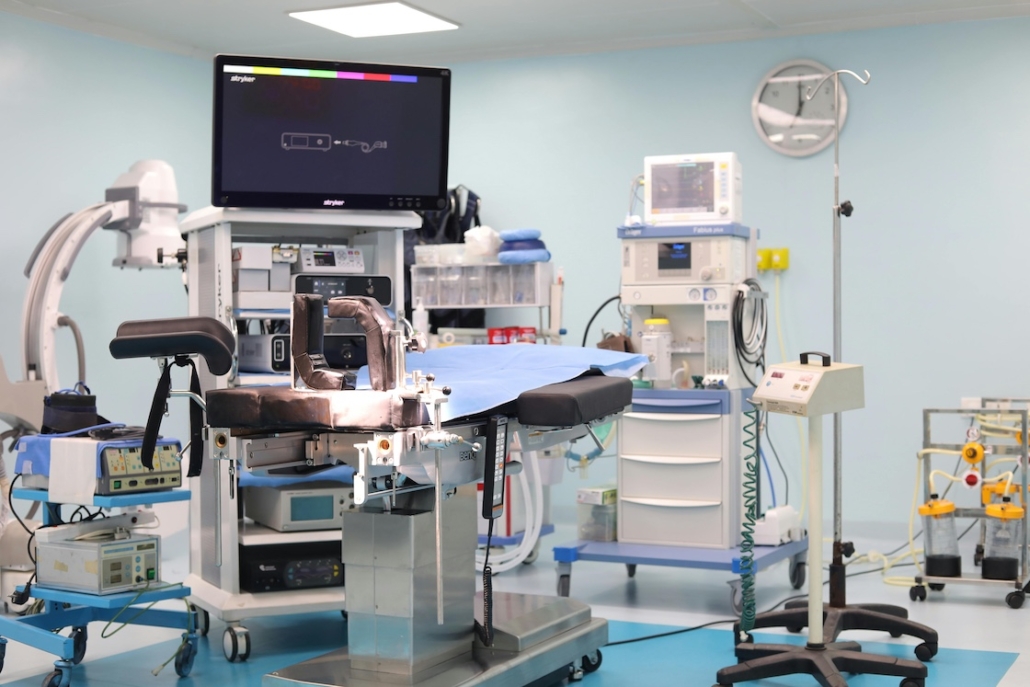
OR suites combine high-stakes patient conditions with dense concentrations of electronic equipment — surgical robots, electrosurgical units, anesthesia machines, patient monitors, and overhead lighting systems. Surge events during an active procedure are a sentinel event scenario. OR circuits should receive both panel-level Type 2 protection and point-of-use Type 3 devices on all critical outlets.
Electronic Health Record Infrastructure
EHR systems, network switches, and server rooms may not be patient-facing, but a surge event that corrupts patient records or takes down clinical systems creates cascading care disruptions. Rack-level surge protection and clean power conditioning for server infrastructure should be part of every hospital protection plan.
Jacksonville’s Major Healthcare Facilities: What’s at Stake
UF Health Jacksonville
As the region’s only Level I trauma center and a major academic medical center, UF Health Jacksonville operates with no capacity to absorb infrastructure failures. Trauma bays, surgical suites, the burn unit, and the NICU all depend on uninterrupted electrical continuity. Lightning protection at a facility of this complexity requires a full engineered system design coordinated with the facility engineering team.
Baptist Medical Center Jacksonville
Baptist Medical Center is a full-service regional hospital with cardiac care, neurology, and oncology programs that rely heavily on imaging and monitoring technology. The hospital’s age and expansion history mean its electrical infrastructure may have multiple service entrances, sub-panels from different eras, and varying levels of existing surge protection — all of which require assessment before a complete protection stack can be specified.
Memorial Hospital Jacksonville
Memorial’s trauma and emergency services place the same demands on electrical infrastructure as any Level II facility. Surge events affecting the ED, the imaging department, or the ICU create direct patient safety exposure that Florida’s regulatory environment — and hospital duty-of-care obligations — require to be mitigated.
Frequently Asked Questions
Does a hospital’s backup generator protect against lightning damage?
No. Generators protect against utility outages but do nothing to stop surge energy from traveling through the electrical system. A lightning strike can damage equipment even while a generator is running, because the surge travels through wiring and cabling — not just through the utility feed. Surge protective devices must be installed regardless of generator presence.
How often should hospital lightning protection systems be inspected?
NFPA 780 recommends annual inspections for all lightning protection systems, and healthcare facilities should schedule inspections after any known strike event. Joint Commission surveys may also prompt documentation requests for maintenance records. You can learn more about what’s covered in a professional lightning protection inspection and schedule one for your Jacksonville facility.
What certifications should a lightning protection contractor have for hospital work?
Look for a contractor holding UL Master Label certification for lightning protection systems, and verify that the company has documented experience with healthcare facilities. Installers should be familiar with NFPA 780, NFPA 99 (Health Care Facilities Code), and the electrical coordination requirements of hospital environments.
Can lightning protection be installed without shutting down the hospital?
Yes, with proper planning. Experienced healthcare facility contractors phase installations to avoid disrupting active patient care areas. Work in critical care zones is typically scheduled during off-peak hours with coordination from the facility’s engineering and infection control teams.
What is the liability exposure for a hospital without adequate lightning protection?
A hospital that suffers a patient harm event traceable to a preventable surge or strike — and cannot demonstrate that it maintained adequate lightning protection infrastructure — faces significant regulatory, legal, and accreditation exposure. Joint Commission citations, CMS enforcement actions, and civil liability claims are all foreseeable outcomes when duty-of-care obligations aren’t met.
Work With a Certified Lightning Protection Contractor in Jacksonville
All South Lightning Protection has served commercial and healthcare facilities across Florida for decades, with certified installations in the Tampa, Jacksonville, and Sunrise markets. Our team designs and installs full NFPA 780-compliant lightning protection systems — from rooftop air terminal arrays to Type 1/2/3 SPD stacks — with the documentation and UL Master Label certification your facility needs for Joint Commission and CMS compliance. See our healthcare project portfolio to review past work at medical facilities across Florida.
If you manage a hospital, medical campus, or healthcare facility in Jacksonville and haven’t had your lightning protection system assessed recently, now is the time to act. Florida’s storm season does not wait.
Call All South Lightning Protection today at (813) 842-6172 to schedule a facility assessment for your Jacksonville hospital or medical center.