Lightning Protection Systems
Air terminals, down conductors, and grounding designed to NFPA 780, sized for the Tampa Bay roof geometry and soil conditions.

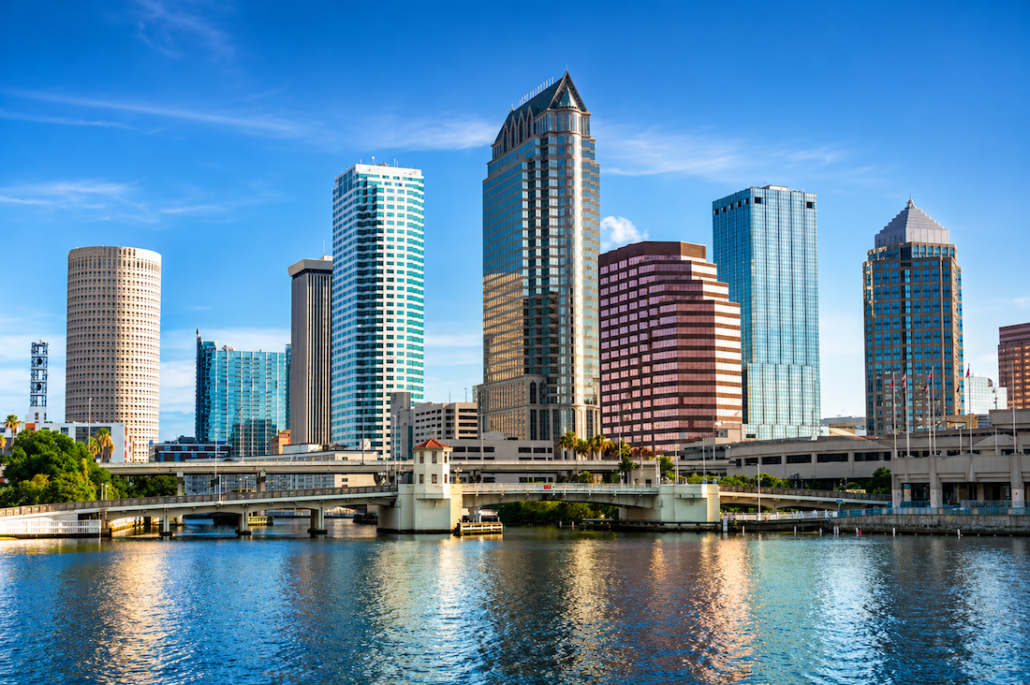
Tampa Bay sits in the heart of Florida’s Lightning Alley — the stretch between Tampa and Orlando that takes more cloud-to-ground strikes than anywhere else in the country. If you own a home or run a building here, a direct strike or a nearby surge isn’t a rare event. It’s a seasonal certainty. All South Lightning Protection has designed and installed code-compliant lightning protection systems across Tampa Bay for over 40 years of experience, from our headquarters off Falkenburg Road in East Tampa.
Every system is engineered in-house with sealed drawings — not pulled off a shelf.
Lightning protection for a building is a layered system. A structural system intercepts the strike; surge devices catch the conducted transient on power and data lines; grounding ties everything together. A gap at any layer is a gap lightning uses.
| Layer | What it does | Why it matters |
|---|---|---|
| 1. Structural strike termination | Air terminals + down conductors + grounding route a direct strike safely to earth around the building. | Without this, a strike arcs through the roof, HVAC, and steel looking for ground — through your equipment. |
| 2. Service-entrance SPD (Type 1) | Clamps the big surge on the utility feed before it enters the building. | Full service-entrance transient reaches distribution gear and everything downstream if this is missing. |
| 3. Distribution SPD (Type 2) | Catches residual surge at panels feeding the building. | Let-through voltage still exceeds what PDUs and controls survive. |
| 4. Data & signal line protection | Protects network, telecom, and signal copper entering the building. | Transient bypasses all power-side protection — the most-missed path. |
| 5. Grounding & equipotential bonding | Ties all systems to a common reference so nothing floats at a different potential. | Unequal grounds arc between each other — the classic source of “unexplained” equipment failures. |
| 6. Point-of-use protection | Final layer at the rack or critical load. | On its own it can’t absorb a service-entrance transient it was never rated for. |
| 7. Inspection & recertification | Confirms the whole chain is intact after changes, additions, and strikes. | Documentation lapses; a re-racked building no longer matches its certified drawings. |
Most property owners believe they’re covered because they have a surge strip and a UPS. Those protect against some things, but almost nothing about a lightning event. Use the questions below the answers tell you exactly where your exposure is.
First question: Is there a coordinated SPD at the service entrance, or does protection start at the outlet? If it starts at the outlet, Layers 2 and 3 are missing, and the biggest surge has an open door.
Second question: When was the grounding and bonding last verified against your current floor plan? If your building has been re-racked or expanded since the last inspection, the bonding almost certainly hasn’t kept up.
Third question: Are your data lines (network, telecom, security) protected as they enter the building? If not, a transient bypasses all your power-side protection on the way in.
If you can’t answer all three cleanly, that’s where your exposure is, and it’s exactly what a site assessment documents.
How much does a lightning protection system cost in Tampa?
Residential systems generally run $1,000–$3,500, depending on roof size and complexity; commercial varies with the structure. We provide free, fixed estimates after a site assessment.
Is Tampa really a high-risk area for lightning?
Yes. The Tampa–Orlando corridor is the most lightning-prone region in the United States, which is why NFPA 780 protection is a practical investment here, not an over-spec. Summer storms alone drive dozens of insurable events per square mile per year.
Do I need lightning protection if I already have surge protectors?
Surge protectors are one layer. They don’t intercept a direct strike — that takes air terminals, down conductors, and proper grounding working together. The surge device is the last safeguard, not the only one.
Are your systems code-compliant and certified?
Every system is built to NFPA 780 and UL 96A, with sealed engineering drawings and permit-ready documentation. You get recertification on schedule so your records stay audit-ready.
Do you serve both homes and businesses in Tampa?
Yes — residential, commercial, industrial, and institutional, all from our Tampa headquarters off Falkenburg Road.
From our HQ at 5307 N Falkenburg Rd, Bldg A, Tampa, FL 33610 (just off the Selmon Expressway near Brandon), we cover Hillsborough, Pinellas, Pasco, and Polk counties — including Tampa, St. Petersburg, Clearwater, Brandon, Riverview, Plant City, Lakeland, and the I-4 data-center corridor.
5307 N Falkenburg Rd bldg a, Tampa,
FL 33610, USA
Tampa 813-630-2757
Tampa Fax 813-630-2758
Our Tampa location is BBB Accredited.