How Much Does a Lightning Protection System Cost? A Real-World Pricing Guide for Residential and Commercial Facilities
Before a facility manager signs off on a lightning protection budget, the first question is almost always the same: what is this actually going to cost? It’s a fair question, and the honest answer is that lightning protection system cost varies more than most contractors will tell you upfront. A single-family home in Clearwater might run $450 to $2,681. A mid-size commercial building in Tampa can land anywhere between $10,000 and $35,000. A hospital campus with a helipad, server rooms, and a medical-grade grounding requirement? That number climbs higher still. This guide breaks down what drives those ranges, what you should expect to pay at each building type, and how to frame the investment as a financial decision — not just a safety checkbox.
Why Lightning Protection System Cost Varies So Widely
The price range isn’t arbitrary. Every compliant system built to NFPA 780 standards requires five core components: air terminals, down conductors, a grounding electrode system, equipotential bonding, and surge protective devices (SPDs). The cost of each scales with building size, height, construction type, and occupancy. A 1,200-square-foot wood-frame house needs a Class I system with conductors sized at a minimum 57,400 circular mils of copper. A 12-story concrete hospital requires Class II conductors at 115,000 cmil, multiple down-conductor paths, a ground bed tested to less than 25 ohms, and bonding to every metallic system in the building to prevent sideflash.
Roof geometry matters too. A simple gable roof takes a fraction of the labor that a complex hip-and-valley commercial roof demands. Existing infrastructure plays a role — retrofitting a system onto a building that’s already occupied is more disruptive and more expensive than installing during new construction. And then there’s the surge protection layer. Many facility managers are surprised to learn that a complete system requires Type 1 SPDs at the service entrance, Type 2 devices at distribution panels, and Type 3 units at sensitive point-of-use equipment. Skipping any tier leaves gaps that a direct strike or nearby ground flash will find.
Finally, Florida’s permitting and inspection requirements add a layer that other states don’t always impose. New commercial construction in Florida must comply with NFPA 780 and UL 96A certification requirements, which require a third-party UL inspection, not just contractor sign-off. It carries its own cost but also delivers the documentation that insurers and risk managers require.
Residential Lightning Protection Cost: $450 to $2,681
For a standard single-family home, the national average lightning protection installation runs between $450 and $2,681, with most projects landing around $1,200 to $1,800 for a properly engineered system. That range reflects real differences in square footage, roof complexity, and the number of air terminals required. A 2,000-square-foot ranch home with a simple roofline sits at the lower end. A 4,500-square-foot two-story with dormers, a detached garage, a pool equipment pad, and a home office full of electronics will push toward the top of that range once you account for the full SPD package.
One thing worth clarifying: a single lightning rod on the ridge does not protect the whole structure. The Rolling Sphere Method, which replaced the outdated 45-degree cone-of-protection model in NFPA 780, uses a conceptual 150-foot sphere rolled across the roofline to identify every point that needs an air terminal. Gaps in coverage are gaps in protection. A system that cuts corners on terminal placement to hit a lower price point isn’t a bargain; it’s an incomplete system.
Homeowners in Florida should also factor in the insurance angle. Several Florida carriers offer premium reductions for UL-listed lightning protection systems. Given that the average Florida lightning insurance claim runs approximately $18,641 (2024 industry data), a $1,500 system that reduces your risk profile and lowers your annual premium can pay for itself in a few years.
Commercial Lightning Protection Cost: $10,000 to $35,000+
Commercial pricing reflects the complexity gap between a house and a functioning business facility. For a mid-size commercial building, say, a 20,000-square-foot office building or a single-story retail center, expect a properly engineered NFPA 780-compliant system to run $10,000 to $20,000 installed. Larger structures, taller buildings, and facilities with sensitive electronic infrastructure push that number toward $35,000 and beyond.
The variables that move the needle most in commercial work:
- Building height and class: Class II systems (buildings over 75 feet) require heavier conductor sizing and more down conductor paths, which increases both material and labor cost.
- Roof type and access: Flat membrane roofs on commercial buildings are generally more accessible than complex architectural roofs, but penetrations must be properly flashed and sealed — that’s a coordination cost with the roofing contractor.
- Grounding system complexity: A ground bed must test below 25 ohms resistance, and bonding to the building’s electrical grounding electrode system per NEC 250.106 and NEC 250.60 requires coordination with the electrical contractor. In areas with high-resistivity soil (common in parts of Florida’s sandy coastal zones), achieving that resistance target may require additional ground rods or a ground enhancement compound.
- SPD scope: A large commercial facility with multiple distribution panels, a data room, and point-of-use equipment throughout can require 15 to 30+ SPD devices across all three types. Each device has a unit cost plus installation labor.
- Engineering and documentation: Permit-ready CAD drawings and sealed engineering documents are not optional for Florida commercial work — they’re required. That engineering scope is part of a legitimate bid.
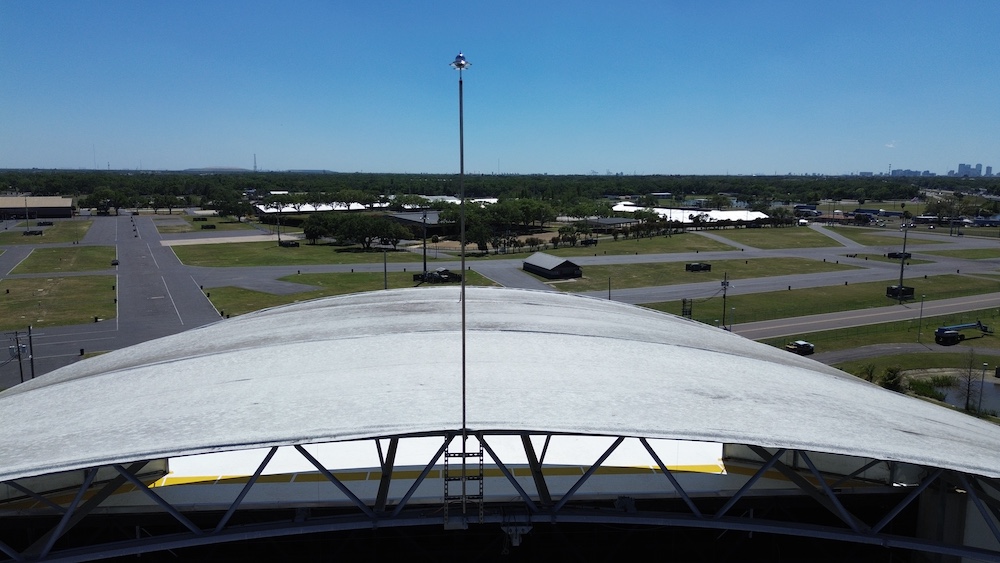
For a real-world reference point: the lightning protection system at the Tampa Convention Center, a large, high-occupancy public assembly facility, required a Faraday-cage-style approach with extensive bonding throughout the structure. That’s a different scope than a standard commercial build, but it illustrates how occupancy type and risk profile shape the final number. You can see more about our completed commercial projects for a sense of the range of work involved.
Healthcare Facility Lightning Protection: What Hospitals and Medical Campuses Actually Pay
Healthcare is its own category, and not just because of building size. Hospitals operate under regulatory frameworks, 42 CFR §482.15, Joint Commission Environment of Care standards that treat electrical system reliability as a patient safety issue. You cannot evacuate a hospital mid-storm. A lightning-induced power surge that takes down a nurse call system, a ventilator circuit, or a PACS imaging server is not an inconvenience; it’s a clinical event.
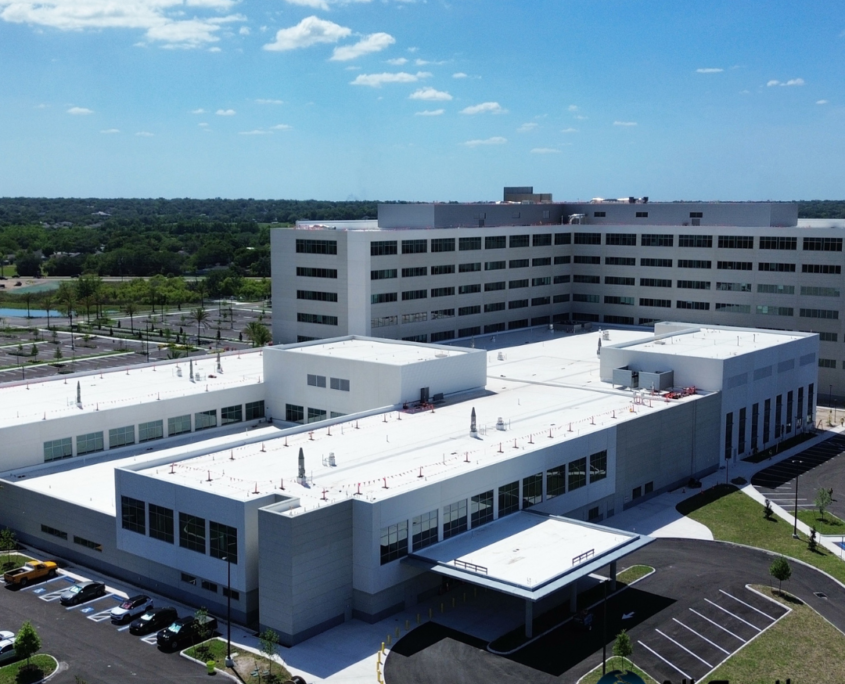
For a community hospital or medical office building in the 50,000 to 150,000-square-foot range, a complete lightning protection and surge suppression system typically runs $25,000 to $75,000 or more, depending on the number of buildings on campus, the presence of a helipad (which has its own NFPA 780 requirements for the landing zone), and the depth of the data and medical equipment protection scope.
The grounding requirements alone are more demanding in healthcare. Operating rooms and procedure rooms require equipotential grounding that goes beyond standard NEC 250 compliance; every conductive surface within patient reach must be bonded to a common reference point. That bonding work integrates with the lightning protection grounding system and must be coordinated carefully to avoid ground loops that can introduce electrical noise into sensitive monitoring equipment.
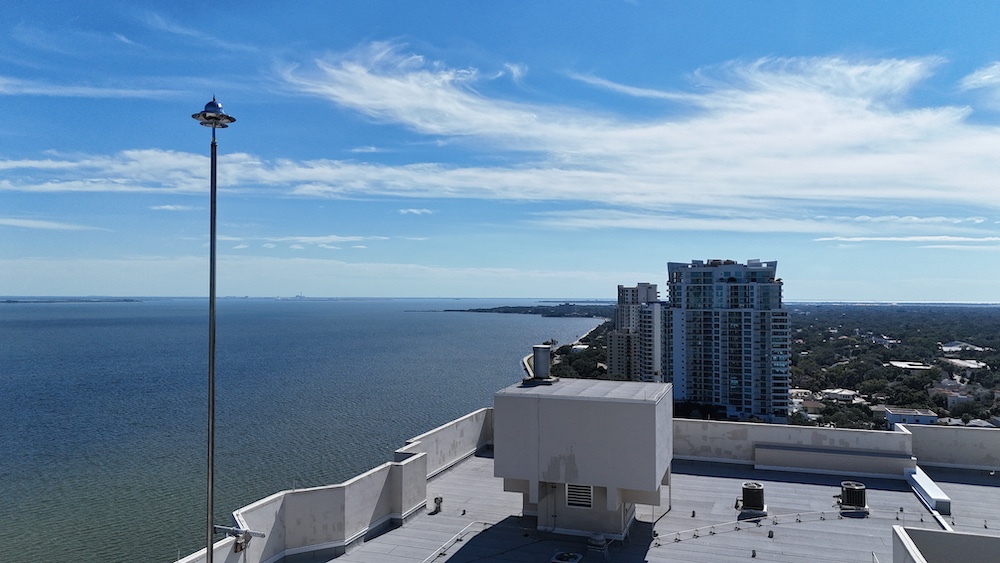
We’ve completed lightning protection work at Tampa General Hospital (including the helipad), the Orlando VA Medical Center, and Aravilla Assisted Living. Each project required a different scope, but all shared the same foundation: a fully engineered system with UL 96A documentation that the facility’s risk management team could put in front of their insurer and their accreditation body. See our healthcare lightning protection projects for specifics.
For a deeper look at the regulatory and clinical dimensions of protecting medical facilities, see our detailed guide on lightning protection for hospitals and healthcare facilities.
The ROI Calculation: What You’re Actually Buying
A lightning protection system is not a cost center; it’s a risk transfer mechanism with a calculable return. Here’s how to frame it for a budget conversation.
Florida sees approximately 1.4 million cloud-to-ground lightning strikes per year, with 76 flashes per square mile annually, the highest density in the United States, according to National Weather Service lightning safety data. Between 2021 and 2024, Florida insurers paid out more than $2.6 billion on lightning-related claims, averaging roughly $18,641 per claim. For commercial properties, a single direct strike that takes out a data system, HVAC controls, or a fire alarm panel can easily generate $50,000 to $200,000 in equipment replacement and business interruption costs before you factor in liability exposure if a third party is harmed.
Data center and IT-dependent facilities face the steepest downtime math. Industry estimates put unplanned data center downtime at $5,000 to $10,000 per minute. A surge event that triggers a 30-minute outage costs $150,000 to $300,000 in direct losses, multiples of what a complete surge suppression system costs to install. The surge protection systems we install for commercial clients use coordinated Type 1, 2, and 3 SPDs specifically to prevent that cascade failure scenario.
On the insurance side, facilities with UL 96A-certified systems and current inspection documentation consistently report better outcomes in claims negotiations and, in many cases, measurable premium reductions. Some carriers offer up to 18% reduction in lightning-related coverage costs for certified systems. Over 10 years, that savings alone can offset a significant portion of the original installation cost.
The Lightning Protection Institute maintains published guidance on the financial case for lightning protection that risk managers and CFOs find useful when building the internal justification for a capital expenditure.
What a Legitimate Bid Should Include
If you’re comparing proposals, the price difference between bids often comes down to what’s actually included. A complete, code-compliant bid for a commercial lightning protection system should specify:
- Air terminal type, quantity, and placement per Rolling Sphere Method analysis
- Down conductor sizing (Class I or II) and routing plan
- Grounding electrode system design with target resistance specification (<25 ohms)
- Equipotential bonding scope — every metallic system that must be bonded to prevent sideflash
- SPD schedule: Type 1 at service entrance, Type 2 at distribution panels, Type 3 at point-of-use
- Permit-ready CAD drawings and, where required, sealed engineering documents
- UL 96A inspection and certification (if applicable)
- Warranty terms and the 5-year recertification schedule
A bid that omits any of these line items isn’t necessarily cheaper; it’s incomplete. The missing scope will either show up as a change order or, worse, as a system that fails its first real test. Our lightning protection system inspections regularly identify systems installed by others that are missing bonding connections, have undersized conductors, or lack any surge protection at all.
For a broader look at what goes into a properly engineered system, the UL 96A standard and the NFPA 780 standard are the two documents that define what “complete” actually means.
Frequently Asked Questions
How much does a lightning protection system cost for a commercial building?
For most mid-size commercial buildings in Florida, 10,000 to 50,000 square feet, a complete NFPA 780-compliant system runs $10,000 to $35,000 installed. Larger buildings, taller structures, and facilities with extensive electronic infrastructure (data centers, hospitals, schools with networked systems) typically exceed that range. The most accurate number comes from a site assessment that accounts for building class, roof geometry, grounding conditions, and the full SPD scope. Proposals that come in significantly below this range usually reflect an incomplete system scope, not a better price.
Does lightning protection really reduce insurance premiums?
Yes, in many cases it does, but the documentation matters as much as the system itself. Florida carriers that offer premium reductions for lightning protection typically require a UL 96A certificate of installation, which means the system was inspected by a UL field representative, not just self-certified by the contractor. Some facilities report reductions of up to 18% on lightning-related coverage. Beyond the premium impact, having current UL documentation significantly strengthens your position in a claims negotiation if a strike does occur. Risk managers should request the UL certificate as a deliverable in any commercial lightning protection contract.
What’s the difference between a lightning protection system and surge protection?
They solve different parts of the same problem, and both are required for complete protection. A lightning protection system air terminals, conductors, and grounding intercepts a direct strike and routes the current safely to ground, protecting the building structure and its occupants. Surge protective devices (SPDs) protect the electrical and electronic systems inside the building from the transient overvoltages that a nearby strike or a direct hit generates on the power, data, and communication lines. A building with only air terminals and no SPDs can survive a direct strike structurally while losing every piece of electronic equipment inside. A complete system requires both layers.
How long does a commercial lightning protection system last, and what does maintenance cost?
A properly installed copper conductor system has a service life measured in decades; the conductors themselves don’t wear out under normal conditions. What requires attention is the inspection and recertification cycle. UL 96A-certified systems must be re-inspected every five years to maintain certification. Post-storm inspections are also advisable after any known strike event, since a direct hit can damage bonding connections or SPDs without visible exterior damage. Annual inspection costs for a mid-size commercial system typically run $500 to $1,500 depending on system complexity. SPDs have a finite service life and should be tested or replaced on a schedule. Type 1 and 2 devices typically every 5 to 10 years depending on the number of surge events they’ve absorbed.
Is lightning protection required by Florida law for commercial buildings?
Florida requires NFPA 780 compliance for new commercial construction, and the Florida Building Code incorporates those requirements by reference. For schools specifically, Florida law mandates lightning protection system installation on new school buildings. Healthcare facilities face additional requirements through Joint Commission standards and CMS Conditions of Participation (42 CFR §482.15), which treat electrical system reliability as a patient safety obligation. Even where lightning protection isn’t explicitly mandated for a specific occupancy type, the duty-of-care exposure for a facility that chose not to install a system and then experienced a preventable injury or equipment loss is a significant liability consideration that risk managers take seriously.
Get an Accurate Cost Estimate for Your Facility
The pricing ranges in this guide are real, but they’re starting points. The number that matters for your facility comes from a site assessment that accounts for your building’s specific characteristics, your grounding conditions, your electronic infrastructure, and your compliance obligations. All South Lightning Protection has been engineering and installing complete lightning protection systems across Florida for 40+ years, from single-family homes in Clearwater to hospital campuses in Tampa and data centers in Broward County. We provide permit-ready CAD drawings, UL 96A certification, and the kind of documentation your insurer and risk manager can actually use.
Schedule a site assessment with our team before your next construction phase, your next insurance renewal, or your next UL recertification deadline. Request a project quote here — we’ll give you a specific number, not a range.