Lessons from School Lightning Strikes: Why Educational Facilities Need Robust Protection
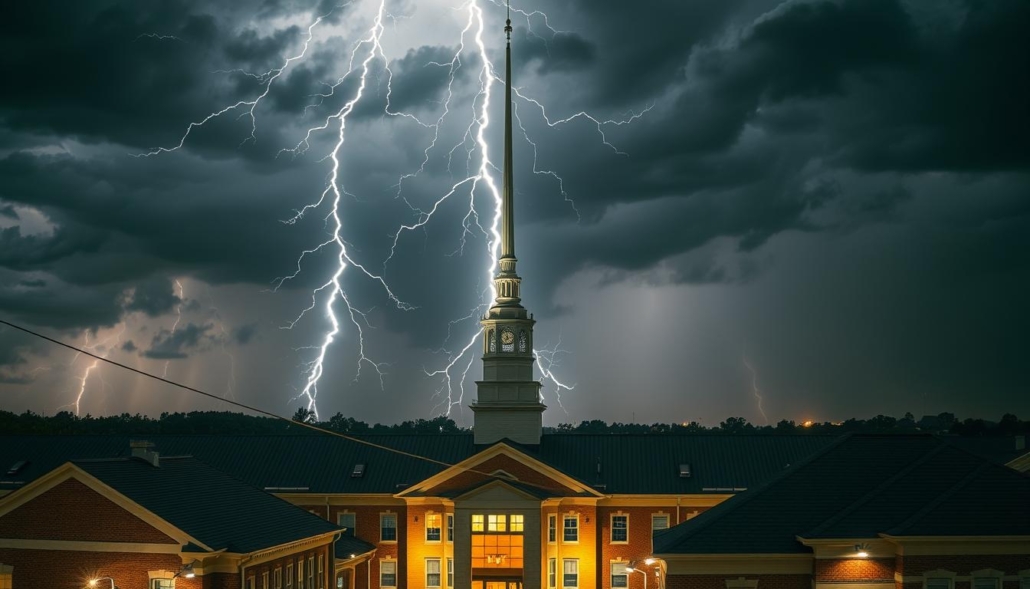
“The world we have made, as a result of the level of thinking we have done thus far, creates problems that cannot be solved by the same level of thinking.” – Albert Einstein
This wisdom applies perfectly to our modern educational infrastructure. Schools and universities now depend on complex technology. This technology powers everything from online classes to student records.
A single electrical storm can cause massive damage. We’ve seen real incidents where technology systems failed. AT&T customers lost service after a fire. Cloud services went offline for hours. Storage systems lost power completely.
Educational institutions face unique challenges. They blend old buildings with new technology. They have large campuses with many vulnerability points. The safety of students and staff depends on reliable systems.
Modern processors work with tiny amounts of electricity. But a lightning strike releases massive power. Even a small fraction of this power can destroy sensitive equipment. It can fry circuits and corrupt important information.
This guide examines real-world examples. We show how to protect critical infrastructure. The goal is to maintain continuous educational services. We provide a clear roadmap for decision-makers.
Understanding the Lightning Threat in Educational Environments
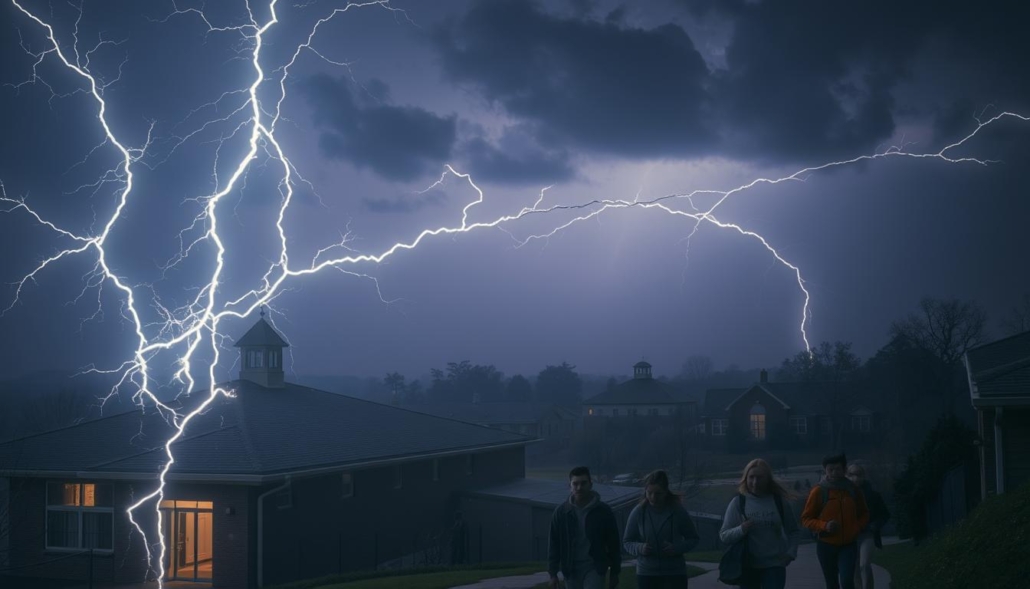
When severe weather strikes, educational facilities become particularly susceptible to catastrophic system failures. These institutions house complex networks that support learning and administration. The potential for disruption is significant.
Historical analysis shows electrical storms cause more disruptions than officially reported. Many schools experience undocumented incidents leading to temporary failures. These events compromise academic continuity across campuses.
Historical Incidents and Real-World Impacts
Real-world examples demonstrate the catastrophic potential of electrical storms. The AT&T incident shows how a single event can cascade into extended outages. Customers lost access to services after a fire sparked by atmospheric electricity.
Educational institutions face particular vulnerability during cloud computing failures. Electrical storms have damaged power equipment, causing outages lasting hours. This results in significant disruption to online platforms.
How Lightning Strikes Disrupts Critical Systems
The technical disparity is staggering. Modern microprocessors operate on minuscule currents. Yet atmospheric discharges release massive energy that can destroy sensitive electronics.
These events disrupt infrastructure through multiple mechanisms. Direct physical damage occurs to structural elements. Fires can ignite and spread to adjacent systems.
Power system failures cascade through interconnected equipment. Cooling system knockouts lead to thermal damage. The operational impact includes prolonged downtime and information loss.
Implementing lightning protection for data centers in Educational Facilities
Securing the technological heart of a school requires a deliberate and layered strategy. This approach ensures that vital academic and administrative operations continue without interruption, even during severe weather.
A comprehensive safeguard strategy integrates several key components. Each part works together to manage and disperse harmful electrical energy.
Essential Components of a Robust Safeguard System
The foundation of any effective strategy is a network designed to intercept and safely channel electrical discharges. This network includes air terminals, conductors, and ground electrodes.
These elements create a path of least resistance. They guide immense energy away from sensitive infrastructure and safely into the earth.
Surge protective devices are equally critical. They are installed where wiring enters the building. This setup prevents damaging voltage spikes from reaching delicate electronics.
Achieving electrical stability is crucial. All metallic systems within the server environment must be bonded together. This bonding eliminates dangerous potential differences.
For many institutions, following the minimum code is not enough. Protecting irreplaceable research or student records often requires exceeding standard specifications.
| System Component | Primary Function | Key Benefit |
|---|---|---|
| Air Terminals | Intercept atmospheric discharges | Prevents direct strikes on the building |
| Grounding Electrodes | Disperse electrical current safely | Protects equipment and personnel |
| Surge Protective Devices | Limit voltage spikes on lines | Safeguards sensitive electronic equipment |
| Bonding Systems | Equalize electrical potential | Prevents damaging currents between systems |
By integrating these measures, educational facilities can create a resilient environment. This ensures that learning and operations proceed without disruption.
Assessing and Managing Lightning Risks
Before implementing any safeguard measures, institutions must first quantify their exposure to atmospheric hazards. A thorough evaluation provides the foundation for strategic decisions about infrastructure investments.
Educational administrators need objective metrics to prioritize resources effectively. This prevents subjective concerns from driving expensive but unnecessary projects.
Conducting a Comprehensive Risk Analysis
The assessment process begins with geographic factors. Local ground flash density and building dimensions determine strike probability. Elevated structures may attract preferential attachment.
Analysis must consider multiple loss scenarios. Physical damage to equipment represents just one concern. Service interruptions can disrupt academic operations significantly.
Utilizing Risk Calculators and Industry Insights
The NFPA 780 calculator offers a standardized methodology. It quantifies probability and assesses potential consequences. This enables data-driven investment decisions.
IEC 62305 Part 2 establishes international frameworks. It classifies facilities into appropriate system classes based on calculated risk levels. Educational institutions have unique tolerance thresholds.
Regular reassessment becomes essential as technology evolves. New equipment and structural changes alter baseline risk profiles. Ongoing evaluation ensures the continued adequacy of protective measures.
| Assessment Component | Primary Focus | Key Consideration |
|---|---|---|
| Geographic Analysis | Strike Probability | Local weather patterns and topography |
| Consequence Evaluation | Impact Severity | Academic disruption and financial loss |
| System Classification | Protection Level | International standards compliance |
| Cost-Benefit Analysis | Investment Justification | Expected loss prevention over lifecycle |
This systematic approach ensures resources target the most critical vulnerabilities. It balances protection costs against potential business interruption expenses.
Designing and Installing an Effective Protection System
Implementing a comprehensive safeguard strategy requires meticulous planning from the initial design phase. Engaging certified professionals early ensures architectural decisions align with security requirements.
Step-by-Step How-To Guide for Installation
The process begins with establishing a robust grounding foundation. Soil conditions dictate the configuration of electrode arrangements.
Strategic placement of air terminals follows established methodologies. Proper spacing calculations ensure comprehensive coverage across all elevated surfaces.
Down-conductor installation creates redundant pathways for energy dissipation. Multiple routes provide backup channels for electrical current.
Integrating Surge, Arc Fault, and Grounding Solutions
Surge protective devices operate at hierarchical levels throughout electrical networks. This layered approach prevents voltage spikes from reaching sensitive equipment.
Comprehensive bonding interconnects all conductive elements within the infrastructure. This prevents dangerous potential differences during electrical events.
Arc fault solutions incorporate detection mechanisms and safety procedures. These measures minimize risks for maintenance personnel working near energized components.
| Installation Phase | Key Components | Critical Considerations |
|---|---|---|
| Foundation | Ground electrodes, bonding | Soil resistivity, corrosion resistance |
| Structural | Air terminals, conductors | Spacing, height, material durability |
| Integration | SPDs, monitoring systems | Hierarchical placement, coordination |
| Commissioning | Testing, documentation | Certification, staff training |
Post-installation procedures include thorough inspection and certification. Facility staff require comprehensive training on maintenance protocols.
Integrating Industry Standards and Best Practices
Navigating the complex landscape of safety regulations is essential for modern educational infrastructure. Adherence to established protocols separates adequate systems from truly resilient installations. These frameworks ensure consistent performance across diverse institutional settings.
Educational facility server rooms must comply with multiple overlapping standards frameworks. U.S.-based requirements like NFPA 780 and UL 96A establish rigorous installation criteria. International specifications, including IEC 62305, provide comprehensive risk management guidance.
Meeting NFPA, UL, and IEC 62305 Requirements
The NFPA 780 standard delivers comprehensive requirements for safeguarding structures. It establishes specifications for components that form compliant installations. These measures create a robust foundation for operational continuity.
UL 96A offers detailed installation criteria ensuring systems meet performance benchmarks. The IEC 62305 series represents the internationally recognized framework. Its four parts address principles, risk management, physical safeguards, and electronic system security.
European standard EN 50600 specifically addresses information processing facilities. It references IEC 62305 requirements for complete implementation. This integrated approach provides guidelines for planning, construction, and ongoing operations.
Compliance delivers measurable advantages, including reduced insurance premiums and minimized weather-related interruptions. These practices protect capital investments in technological assets. They demonstrate due diligence for liability considerations.
Best practices extend beyond minimum code compliance. They incorporate emerging technologies and field experience. Staying current with evolving specifications ensures solutions address new vulnerabilities effectively.
Conclusion
Educational institutions face a critical choice: invest in comprehensive safeguard systems or risk catastrophic operational failures. The documented incidents of weather-related disruptions demonstrate that proactive measures are essential for academic continuity.
Robust safeguard solutions should be viewed as fundamental infrastructure, not optional enhancements. These systems protect sensitive information and maintain uninterrupted services for students and faculty.
The financial calculus strongly favors implementation when comparing modest costs against potential equipment replacement and extended downtime. Compliance with established standards demonstrates due diligence while ensuring reliable performance.
By prioritizing these measures, educational leaders can protect their technological investments and maintain the operational resilience that modern academic environments require for success.