Lightning Protection for Apartment Buildings & Condos: Protecting Multi-Family Residences

What if the very design of your apartment complex makes it a magnet for one of nature’s most powerful forces? High-rise structures and buildings with large rooftops create an expanded zone that can attract electrical storms.
In the United States, the ground experiences approximately 40 million strikes annually. The financial impact is severe, with the average insurance claim exceeding $18,000 in a single year. For a large residential property, the total damage can be catastrophic.
This guide provides authoritative knowledge for property managers and owners. We will explore comprehensive safety systems that defend the entire building envelope. These measures are crucial for safeguarding both human life and your substantial financial investment.
Understanding the unique vulnerabilities of this type of home is the first step. A proper defense strategy involves risk assessment, specialized components, and adherence to strict compliance standards. Our goal is to equip you with the practical strategies needed for complete peace of mind.
The Importance of Lightning Protection for Multi-Family Residences
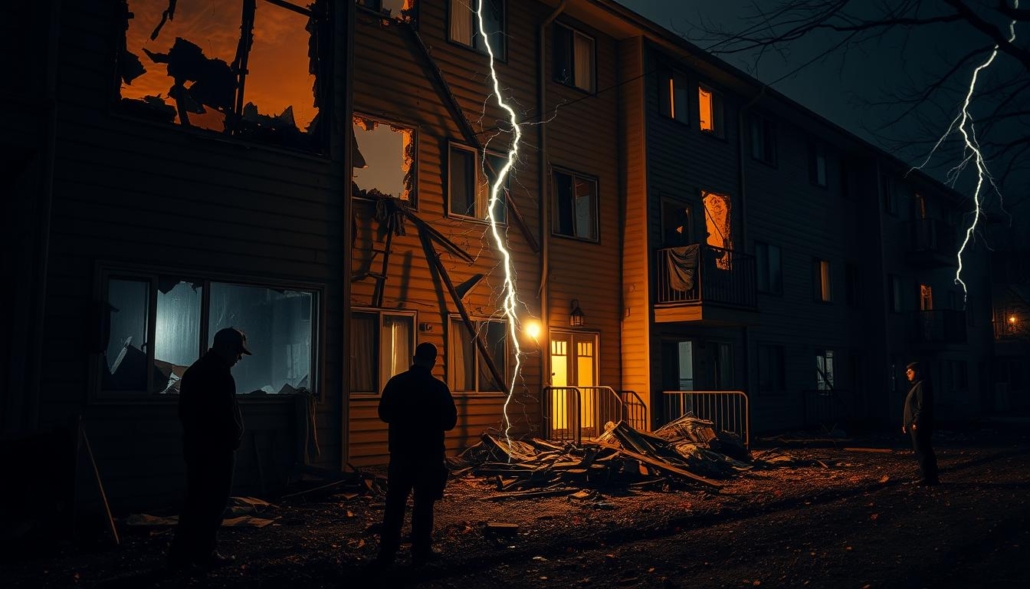
Multi-unit dwellings present evacuation complexities that single-family homes simply don’t encounter during emergencies. The Insurance Information Institute reported 13 fatalities from electrical storms in 2023 alone.
Assessing the Risks and Impacts of Lightning Strikes
A typical electrical discharge carries approximately 300 million volts. It generates temperatures between 18,000 and 60,000 degrees Fahrenheit. This immense power can instantly ignite building materials.
Fires may start as smoldering embers that go undetected while residents sleep. The danger grows unnoticed until it becomes a major conflagration.
- Charring at impact sites
- Active fires and power outages
- Damaged electrical infrastructure
- Compromised structural integrity
Financial, Safety, and Insurance Considerations
Property owners face significant financial exposure. Direct repair costs often exceed $18,000 per claim. Standard insurance may not cover business interruption or tenant displacement.
Extended repair periods mean lost rental income. There’s also potential liability for tenant property damage. A single event can affect dozens of families simultaneously.
Understanding Lightning Protection Systems and Components
Modern building safety standards demand integrated approaches that address both external strikes and internal electrical surges. A complete defense strategy involves multiple components working together seamlessly.
Air Terminals, Conductors, and Grounding Essentials
Air terminals, commonly called rods, serve as strategic strike receptors across rooftops. These copper or aluminum components intercept electrical discharges before they reach vulnerable areas.
Heavy-duty conductors create safe pathways to ground electrodes. Proper grounding requires at least two rods driven deep into earth. This system safely dissipates immense energy into the soil.
Surge Protection Devices and Bonding Mechanisms
Surge protection devices safeguard incoming utility lines and electrical systems. These critical components divert dangerous surges away from sensitive equipment.
Bonding connects all metallic building systems to equalize electrical potential. This prevents dangerous side flashes that could cause fires or equipment damage.
Key Standards and Compliance Requirements
The foundation of any reliable safety strategy lies in compliance with recognized industry standards. These guidelines ensure consistent quality across all installations.
National Standards: NFPA 780, UL 96A, and LPI 175
Three primary documents govern safety system design and implementation. NFPA 780 establishes installation requirements for electrical discharge safety. UL 96A covers material specifications and installation methods.
LPI 175 provides comprehensive practice guidelines. Together, these standards create a robust framework for building safety.
Certification, Inspection, and Continuous Maintenance
Proper installation requires certified professionals. Lightning Protection Institute certification ensures technical competency. Qualified specialists use approved materials and methods.
Regular inspections are essential for system reliability. Experts recommend examinations every two to five years. This identifies potential issues before they compromise safety.
The LPI-Inspection Program offers additional quality assurance. It verifies compliance with national standards. This provides confidence that systems will function as designed.
Building code requirements and insurance considerations depend on proper compliance. Property managers should consult technical documentation for specific guidance.
Best Practices for Lightning Protection for Multi-Family Residences
Strategic integration of safety measures requires careful planning that balances technical requirements with architectural aesthetics. Proper implementation ensures comprehensive coverage while maintaining the building’s visual appeal.
System Design Considerations and Strategic Installations
Modern safety components are designed to be visually unobtrusive. Air terminals can be manufactured as slender rods that blend seamlessly with rooftop profiles.
Architectural elements like spires or ornamental metalwork can serve dual purposes. These features function as strike termination devices while enhancing building aesthetics.
New construction projects allow complete concealment of conductor cables within walls and attics. Retrofit installations may require exposed routing along natural building edges.
Rooftop amenities demand special consideration. Safety components can be positioned to provide full coverage without interfering with tenant enjoyment.
Common Pitfalls and How to Avoid Them
Inadequate spacing between air terminals creates protection gaps. Proper calculations based on building height and roof configuration prevent vulnerable areas.
Insufficient conductor sizing compromises entire safety systems. Large structures require heavy-duty cables to handle immense electrical energy.
Failure to bond metallic systems creates dangerous side flashes. Complete integration ensures equalized electrical potential throughout the structure.
Regular system updates are essential when buildings undergo modifications. Renovations that alter the structure’s profile require corresponding safety adjustments.
Property owners can leverage comprehensive weather solutions as marketing advantages. Enhanced security features appeal to safety-conscious prospective residents.
Installation and Retrofitting Strategies
Proper installation strategies differ significantly between new construction and existing buildings. Each approach requires specialized planning to ensure optimal performance and compliance.
Integrating Protection in New Construction Projects
New building projects offer the ideal opportunity for seamless system integration. Early coordination with architects and engineers allows complete concealment of conductor cables within walls and attics.
This approach provides comprehensive safety without visual impact. The historic North Court dormitories at Richmond University demonstrate successful integration during renovation.
Effective Upgrades for Existing Apartment Structures
Retrofit projects require careful assessment of current structural conditions. Exposed conductor routing along roof edges often provides the most economical solution.
These installations maintain full compliance while minimizing costs. Military housing at Grissom Air Force Base shows large-scale implementation effectiveness.
Senior living facilities benefit particularly from these safety enhancements. Proper installation addresses evacuation challenges for vulnerable populations. Qualified specialists use UL-listed materials and verified methods.
Enhancing Property Safety with Surge and Lightning Protections
Beyond the immediate threat of a direct strike, electrical surges present a silent danger to apartment buildings. These sudden voltage increases originate from various sources including utility grid operations, large appliance cycling, and infrastructure issues.
Surges travel through power lines, telephone connections, and cable wiring. They damage both building infrastructure and tenant electronics. The effects accumulate over time, leading to eventual equipment failure.
Implementing Whole-House Surge Protection
Comprehensive whole-house systems intercept large surges at electrical meters or service panels. These primary protection devices prevent external surges from distributing throughout the building’s electrical system.
A layered approach combines building-level protection with point-of-use devices in individual units. This strategy safeguards shared systems and personal electronics simultaneously.
Additional Measures to Minimize Structural and Electrical Damage
Effective surge protection depends on proper grounding systems. Devices divert excess voltage to ground where it safely dissipates. Inadequate grounding compromises the entire safety strategy.
Electrical malfunctions ranked as the fourth-highest cause of home fires in 2022. Properly installed surge arresters prevent dangerous spikes that can ignite fires at service panels.
Property managers should engage qualified electricians to assess existing grounding. Installation during electrical upgrades provides optimal protection for investments and resident safety.
Conclusion
Property owners managing large residential complexes must prioritize systematic approaches to weather-related hazards. Comprehensive safety measures represent essential investments that safeguard both human life and substantial financial assets.
A complete defense strategy integrates multiple components working in harmony. Air terminals, conductors, grounding systems, and surge devices create unified protection. Adherence to national standards ensures reliable performance when electrical events occur.
Proactive implementation delivers lasting benefits beyond immediate risk reduction. These systems demonstrate responsible stewardship while protecting property values. Engaging certified professionals provides confidence in your building’s safety readiness.