Lightning Protection Industry Trends: What Healthcare and Commercial Facility Leaders Need to Know
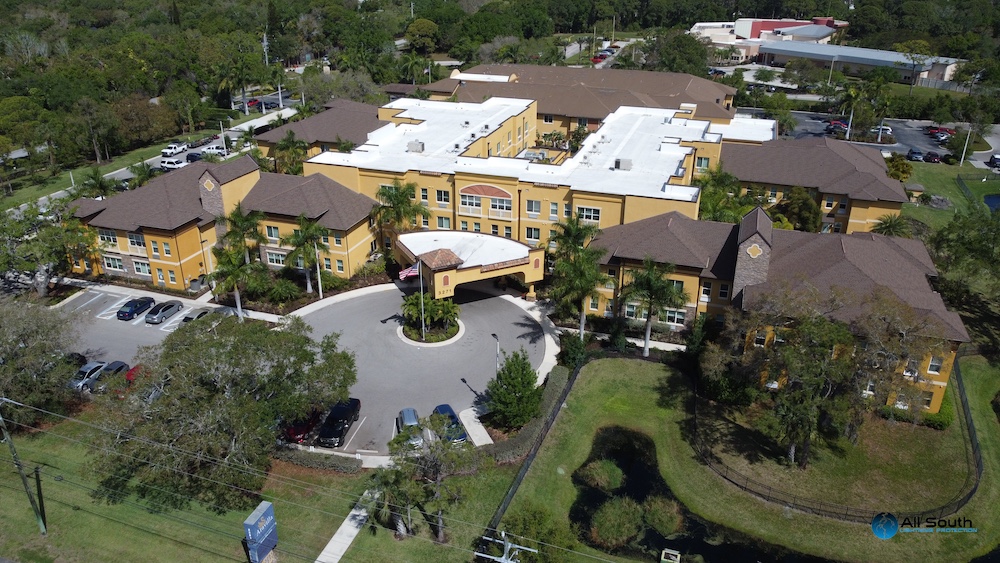
Insurance carriers tightened underwriting requirements throughout 2025. Florida’s lightning claim payouts topped $2.6 billion between 2021 and 2024. And the Joint Commission didn’t accept “we lost power in a storm” as an explanation for a lapse in patient care continuity. For hospitals, medical office campuses, and large commercial facilities across Florida, the lightning protection industry trends that shaped 2025 weren’t abstract market data – they were budget line items and compliance obligations that landed on facility managers’ desks throughout the year. This post breaks down what drove the market, where the technology headed, and what best practices separated proactive facilities from reactive ones.
Why Lightning Protection Demand Accelerated in 2025
The U.S. lightning protection market grew steadily, and 2025 marked a clear inflection point. Three converging forces drove that acceleration: climate pattern shifts, insurance market pressure, and the expanding footprint of sensitive electronic infrastructure inside buildings.
Florida remained the most lightning-dense state in the country — 76 cloud-to-ground flashes per square mile per year, with more than 1.4 million strikes annually and over 100 thunderstorm days in parts of the state. That wasn’t a new statistic, but what changed was how insurers responded to it. Carriers that once treated lightning damage as a routine weather peril began applying stricter scrutiny to renewal applications, requiring documented proof of compliant lightning protection systems as a condition of coverage — or pricing the risk accordingly.
For healthcare administrators, the calculus was even sharper. A hospital that lost a critical power circuit to a direct strike or a surge cascade wasn’t just facing equipment replacement costs. It was facing potential violations of 42 CFR §482.15, the CMS Conditions of Participation governing emergency preparedness, and Joint Commission scrutiny of its Environment of Care standards. The financial exposure from a single unprotected strike event — equipment damage, downtime, regulatory review, and potential liability — dwarfed the cost of a properly engineered protection system by an order of magnitude.
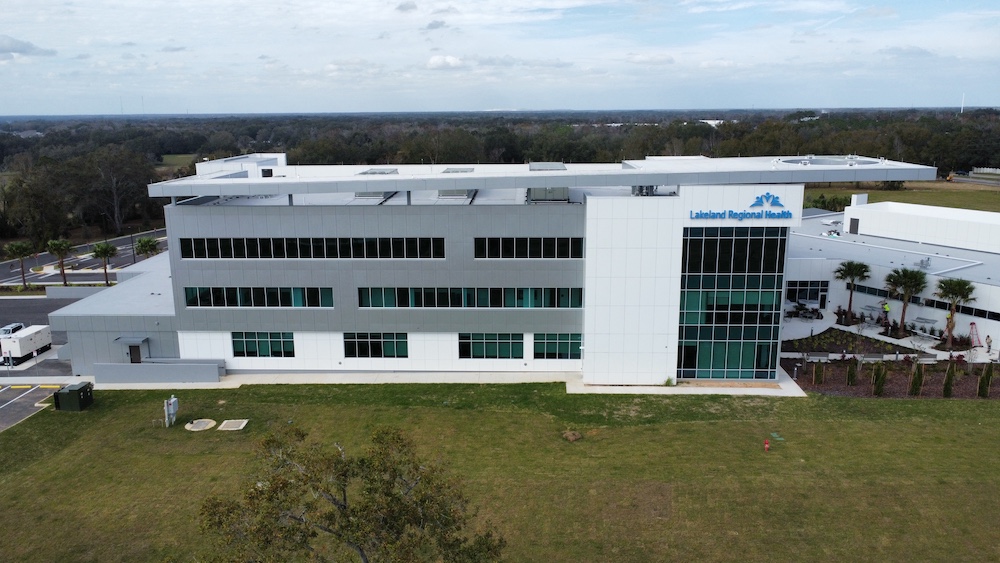
Climate Change Reshaped the Risk Profile for Commercial Buildings
The National Weather Service documented a measurable shift in lightning strike distribution patterns over the past decade. While Florida had always led the nation in strike density, the frequency and intensity of convective storm events — the kind that produce the most dangerous cloud-to-ground strikes — increased across the Southeast. For facility managers who last assessed their lightning protection systems five or more years earlier, the risk environment their systems were designed for no longer matched current conditions.
This mattered practically, not just theoretically. NFPA 780 (2026 edition) used a risk assessment methodology that accounted for local ground flash density (Ng), building geometry, occupancy type, and the consequence of a strike. As Ng values were updated in regional data sets, buildings that previously fell below the threshold requiring a full Class II system sometimes qualified — or buildings with existing systems needed conductor upgrades to meet the new sizing requirements. Class II systems (structures exceeding 75 feet) required a minimum conductor cross-section of 115,000 circular mils in copper; Class I systems (under 75 feet) required at least 57,400 cmil. These weren’t suggestions — they were the floor.
Architects and engineers working on new construction or major renovations in Florida had to build NFPA 780 risk assessments into the design phase, rather than treating lightning protection as a last-minute add-on. Florida already required NFPA 780 compliance for new commercial construction, and the 2026 edition tightened several provisions around bonding and the application of the Rolling Sphere Method — the 150-foot sphere model that replaced the outdated 45-degree cone-of-protection approach. Design teams still referencing the cone method needed to address that before permit submission.
The Insurance Pressure Point: Documentation Became a Competitive Asset
Risk managers at commercial and healthcare facilities discovered something that used to be a niche concern among lightning protection specialists: a UL 96A Master Label certificate increasingly became a negotiating tool with insurers, not just a compliance document. Underwriters Laboratories didn’t install systems — it inspected them against the UL 96A (14th edition, 2023) installation standard and issued a certificate that had to be renewed every five years. Facilities that carried a current UL 96A certificate had documented, third-party-verified proof that their system met the highest installation standard in the industry.
That documentation did real work in 2025. Some carriers offered premium reductions in the range of up to 18% for facilities with certified lightning protection systems. Others made certification a condition of writing the policy at all for high-value or high-occupancy structures. For a hospital or a large commercial campus, an 18% reduction on property insurance wasn’t a rounding error — it was a meaningful ROI that often paid back the cost of system installation or recertification within the first policy cycle.
The five-year recertification cycle also mattered operationally. A system installed in 2018 or 2019 came due for inspection in that window. Post-storm inspections — which should happen after any significant direct strike event — remained a separate obligation. Facilities that had rooftop HVAC equipment replaced, antennas added, or structural modifications made since the last inspection needed to account for the possibility that those changes had compromised the integrity of the original system design. An inspection wasn’t just paperwork; it was the mechanism that caught conductor displacement, corroded connections, and bonding gaps before they became failure points during the next storm.
Technology Trends: Surge Protection Became a Three-Layer Requirement
One of the most significant shifts in lightning protection industry trends for 2025 was the growing recognition that a structural lightning protection system — air terminals, down conductors, grounding electrodes — was necessary but not sufficient. The surge protection layer was where most of the electronic damage actually occurred, and the industry moved decisively toward a coordinated three-tier SPD architecture.
Type 1 SPDs (service entrance) handled the massive surge energy from a direct strike or near-miss. Type 2 SPDs at the distribution panel caught the residual energy that passed through. Type 3 SPDs at the point of use — individual workstations, medical imaging equipment, server racks, nurse call systems — handled the fine-grain transients that Types 1 and 2 didn’t fully suppress. All three tiers were required for complete protection; a power strip with a built-in surge suppressor was a Type 3 device only, and it provided zero protection against a direct strike or a high-energy near-miss event.
For healthcare facilities, this mattered acutely. MRI machines, CT scanners, infusion pumps, electronic health record servers, and building automation systems all represented six- and seven-figure replacement costs and — more critically — patient care dependencies. Coordinated surge suppression systems designed to IEC 62305-4 standards established Lightning Protection Zones (LPZ), with server rooms and critical medical equipment areas classified as LPZ 2 — the highest protection level. Designing to LPZ 2 meant the SPD coordination, shielding, and bonding requirements were specified at the system level, not left to individual equipment vendors.
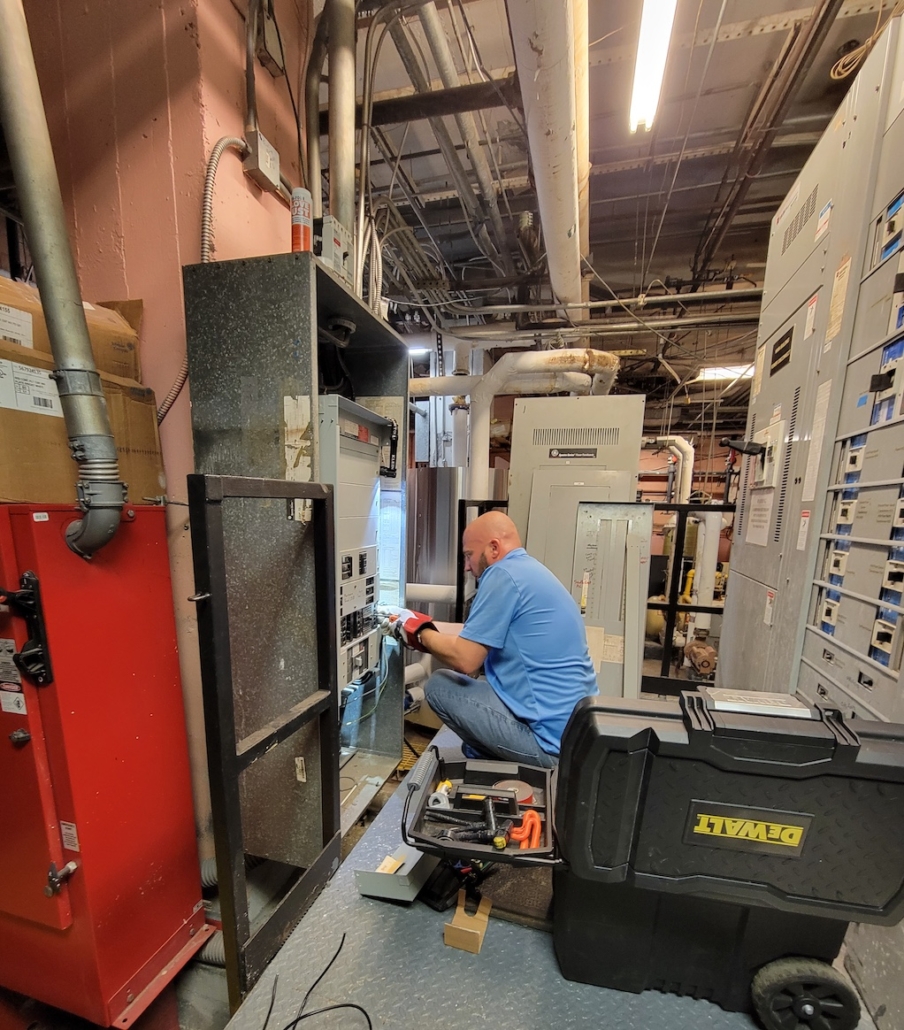
Healthcare Sector: The Compliance and Continuity Imperative
Hospitals occupied a unique position in the lightning protection market because they couldn’t do what most other facilities did during a severe storm: send people home and wait it out. Patients on ventilators, in surgery, or in the ICU required uninterrupted power and uninterrupted electronic monitoring. That operational reality made lightning protection a patient safety issue, not just a property protection issue.
The NFPA addressed this directly. NFPA 99 (Health Care Facilities Code) and NFPA 780 worked in tandem for hospital design — NFPA 99 governed the electrical systems that had to remain operational, and NFPA 780 governed the structural protection that kept those systems from being compromised by a direct strike or induced surge. The grounding and bonding requirements under NEC 250.106 required that the lightning protection grounding electrode system bond to the building’s electrical grounding system, creating equipotential bonding that prevented the sideflash events that could damage equipment and injure personnel even when the structural system performed correctly.
Tampa General Hospital’s helipad lightning protection system — a project All South completed — illustrated the complexity of healthcare-specific design. A hospital helipad was simultaneously a high-exposure elevated structure, an active landing zone with strict obstruction clearance requirements, and a critical access point for trauma patients. The air terminal placement, conductor routing, and bonding design had to satisfy NFPA 780, FAA obstruction clearance standards, and the hospital’s own operational requirements simultaneously. That kind of multi-constraint engineering was increasingly the norm, not the exception, for healthcare lightning protection work.
For hospital administrators evaluating their systems that year, the questions worth asking were: When was the last UL 96A inspection? Had the rooftop been modified since installation? Were the SPDs at the service entrance, distribution panels, and critical equipment locations all current-generation devices with documented coordination? Our healthcare lightning protection overview covers these considerations in detail.
Grounding and Bonding: The Foundation That Was Often Overlooked
Market trends in lightning protection didn’t get much attention for grounding and bonding — it wasn’t as visible as air terminals on a rooftop, and it didn’t generate the same kind of dramatic before-and-after imagery. But grounding system performance was where most lightning protection failures actually originated, and 2025 saw increased emphasis on ground resistance verification as part of both new installations and recertification inspections.
The target for a commercial grounding electrode system was less than 25 ohms ground resistance, with bonding connections between the LP system and the building electrical ground measuring 1 ohm or less. Florida’s sandy soils — particularly in coastal areas around Tampa, Jacksonville, and Broward County — presented a real challenge here. Sandy soil has high resistivity, which meant achieving sub-25-ohm ground resistance often required a ground bed with multiple electrodes, chemical ground enhancement, or driven ground rods in a configuration that accounted for soil conditions at depth.
Facilities that hadn’t had a ground resistance test performed since original installation had to treat that as a gap. Soil conditions changed. Electrodes corroded. Connections loosened. A system that tested at 18 ohms in 2015 could easily read 40 ohms a decade later, and that degradation was invisible without testing. Our grounding and bonding services included fall-of-potential ground resistance testing as a standard component of both new installations and inspection services.
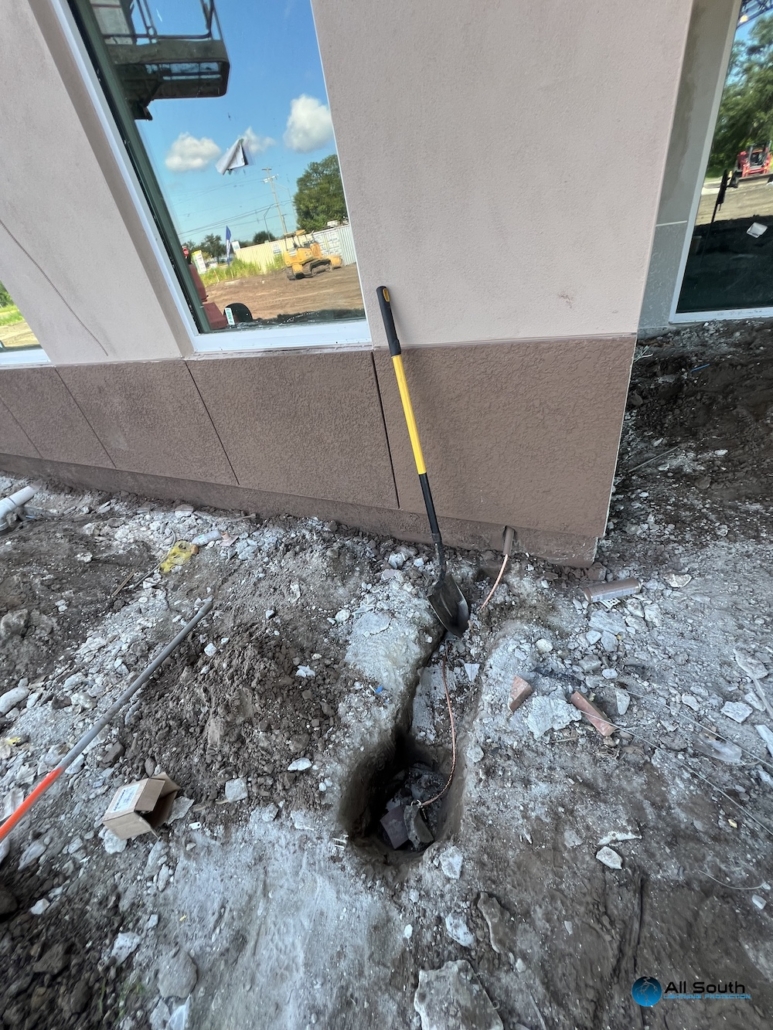
Emerging Best Practices That Shaped the 2025 Market
Beyond the regulatory and insurance drivers, several operational best practices gained traction among sophisticated facility managers and their engineering consultants.
Integrated design from day one. The most cost-effective lightning protection systems were those designed into a building during the schematic design phase, not retrofitted after construction. Conductor routing, bonding points, and grounding electrode placement were all significantly cheaper to execute when the structure was open than after finishes were in place. The Lightning Protection Institute recommended engaging a certified lightning protection designer — at minimum an LPI Master Installer/Designer (MID) — during the design development phase for any structure where a risk assessment indicated a protection system was warranted.
CAD-documented, permit-ready engineering drawings. Florida’s permitting environment became more rigorous about lightning protection documentation. Sealed engineering drawings that showed conductor routing, air terminal placement per the Rolling Sphere Method, grounding electrode configuration, and SPD locations were increasingly required — and they served as the foundation of a defensible compliance record if a claim or regulatory review occurred.
Post-storm inspection protocols. Facilities in Florida’s high-strike zones needed a defined post-storm inspection protocol that triggered after any confirmed direct strike event. A strike that the structural system successfully handled could still have displaced conductors, loosened connections, or partially degraded SPDs. Catching those issues before the next storm made the difference between a system that performed and one that failed when it mattered most.
Faraday cage approaches for sensitive environments. For facilities with extremely sensitive electronic infrastructure — data centers, hospital imaging suites, broadcast facilities — a Faraday-based shielding approach provided a level of electromagnetic protection that a conventional air terminal system alone couldn’t match. All South installed Faraday preventor systems at the Tampa Convention Center and multiple school facilities, and demand for this approach grew as building automation and IoT device density increased. Learn more about our Faraday preventor systems and where they’re most applicable.
Frequently Asked Questions
Did a lightning protection system actually reduce insurance premiums for commercial facilities?
Yes, and the documentation mattered as much as the system itself. A UL 96A Master Label certificate — issued after a third-party inspection by Underwriters Laboratories — was the credential most insurers recognized. Facilities with current UL 96A certification reported premium reductions of up to 18% with participating carriers. The certificate had to be renewed every five years, so a lapsed certificate didn’t carry the same weight in underwriting conversations. Beyond premiums, documented compliance also strengthened a facility’s position in the event of a claim dispute.
How did NFPA 780 apply to existing healthcare facilities, not just new construction?
NFPA 780 was primarily a design and installation standard for new systems, but it also established the benchmark against which existing systems were evaluated during UL 96A inspections and post-storm assessments. If an existing system was installed to an earlier edition of NFPA 780 and the building had been modified — rooftop equipment added, structure extended, occupancy changed — the system might no longer have provided compliant coverage under the current edition’s Rolling Sphere Method analysis. Florida required NFPA 780 compliance for new commercial construction; for existing facilities, the practical trigger was typically a UL 96A recertification inspection or a significant renovation permit.
What was the difference between a lightning protection system and surge protection, and did facilities need both?
A structural lightning protection system — air terminals, down conductors, grounding electrodes — intercepted a direct strike and routed the energy safely to ground. Surge protection devices (SPDs) handled the electromagnetic energy that a strike induced in electrical and data circuits, even when the strike hit nearby rather than the building directly. Both were necessary because they addressed different failure modes. A building with a perfect structural system but no SPDs would still lose electronics to induced surges. A building with SPDs but no structural system remained vulnerable to direct-strike damage that overwhelmed any SPD. The IEC 62305-4 Lightning Protection Zone framework formalized this layered approach for facilities with sensitive electronic infrastructure.
How often did a commercial lightning protection system need inspection in Florida?
UL 96A required recertification every five years for systems carrying a Master Label. Beyond that cycle, Florida’s strike density made annual visual inspections a reasonable practice, and post-storm inspections were triggered after any confirmed direct strike event. Facilities that had rooftop modifications, antenna installations, or HVAC equipment changes since their last inspection needed to schedule an assessment regardless of where they were in the five-year cycle — those changes could compromise the original system design in ways that weren’t visible without a professional evaluation.
What should a hospital administrator have prioritized if the lightning protection system hadn’t been inspected in several years?
The recommended starting point was a full system inspection by a certified installer — ideally one holding LPI Master Installer/Designer (MID) credentials — to establish a current baseline. The inspection needed to include ground resistance testing, conductor continuity verification, bonding connection checks, and a review of SPD condition at the service entrance, distribution panels, and critical equipment locations. If the system was more than 10 years old or the building had been modified, a full NFPA 780 risk assessment against the current edition was worth commissioning. The goal was a documented compliance record that satisfied Joint Commission Environment of Care standards and supported the facility’s insurance underwriting position. Schedule a professional inspection before the next storm season to close that gap.
The Bottom Line for 2025
The lightning protection industry trends that defined 2025 weren’t driven by technology novelty — they were driven by converging pressure from insurers, regulators, and the expanding cost of electronic infrastructure failure. For healthcare facilities and commercial property managers in Florida, the practical implication was straightforward: systems that were adequate five years earlier no longer met current NFPA 780 requirements, current UL 96A certification standards, or current insurer expectations in many cases. The gap between a compliant, documented system and an aging, uninspected one was measured in premium dollars, regulatory exposure, and — in healthcare — patient safety outcomes.
All South Lightning Protection has been engineering and installing compliant systems across Florida for more than 40 years, from Tampa General Hospital’s helipad to the Tampa Convention Center’s Faraday preventor installation. If your facility is due for an inspection, planning a renovation that affects your rooftop, or simply hasn’t had a documented system review in the past five years, now is the right time to act — before the next storm season, not after. Request a site assessment and get a clear picture of where your system stands against 2025 standards.