Jacksonville Home Lightning Risk: What Actually Needs Protection
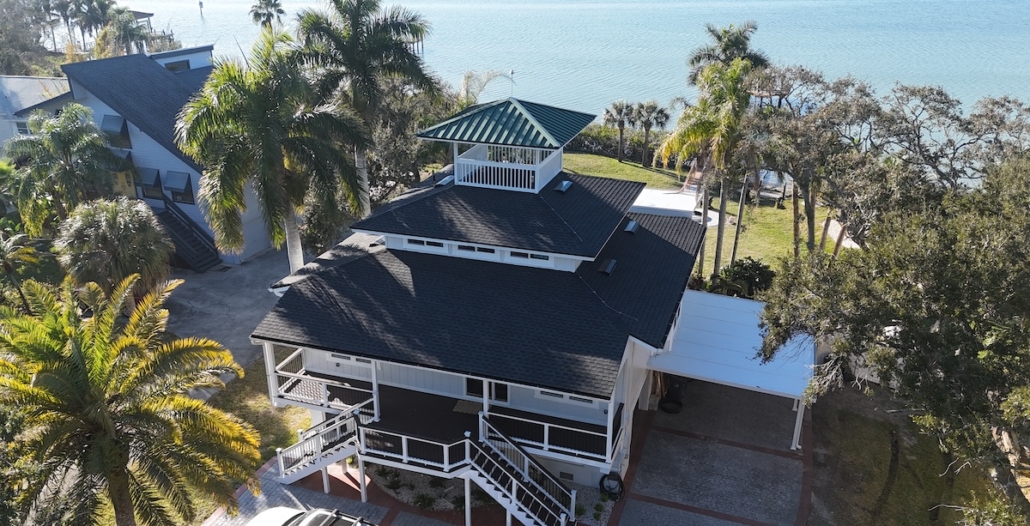
Northeast Florida logs more than 100 thunderstorm days a year. If you own a home in Duval County — especially on the water, on a ridge, or surrounded by mature oaks — that number is not an abstraction. It shows up as a fried HVAC controller, a dead router, a scorched attic rafter, or worse. The question most Jacksonville homeowners eventually ask is a reasonable one: does my house actually need a lightning protection system, or is a surge strip enough? The answer depends on your home’s specific exposure profile, what’s inside it, and what you’re trying to protect. This guide walks through all of it.
Why Jacksonville’s Geography Creates Unusual Residential Exposure
Florida leads the country in lightning density, and the Jacksonville metro sits squarely in that corridor. The National Weather Service tracks cloud-to-ground strike data by county, and Duval consistently ranks among the most active in the state. That’s not just a coastal phenomenon — inland neighborhoods in Southside, Orange Park, and Ponte Vedra see the same convective storm patterns that roll off the St. Johns River basin every afternoon from May through September.
What makes residential exposure in this market different from, say, a mid-rise commercial building is the combination of factors that concentrate risk at the individual home level: lot size, tree canopy, roofline height, and the density of connected electronics inside. A 2,800-square-foot home on a half-acre lot with a 30-year-old live oak taller than the roofline is a fundamentally different risk profile than a townhouse in a dense subdivision. Both can take a strike. The consequences, and the appropriate response, are not the same.
Four site characteristics reliably increase a home’s exposure:
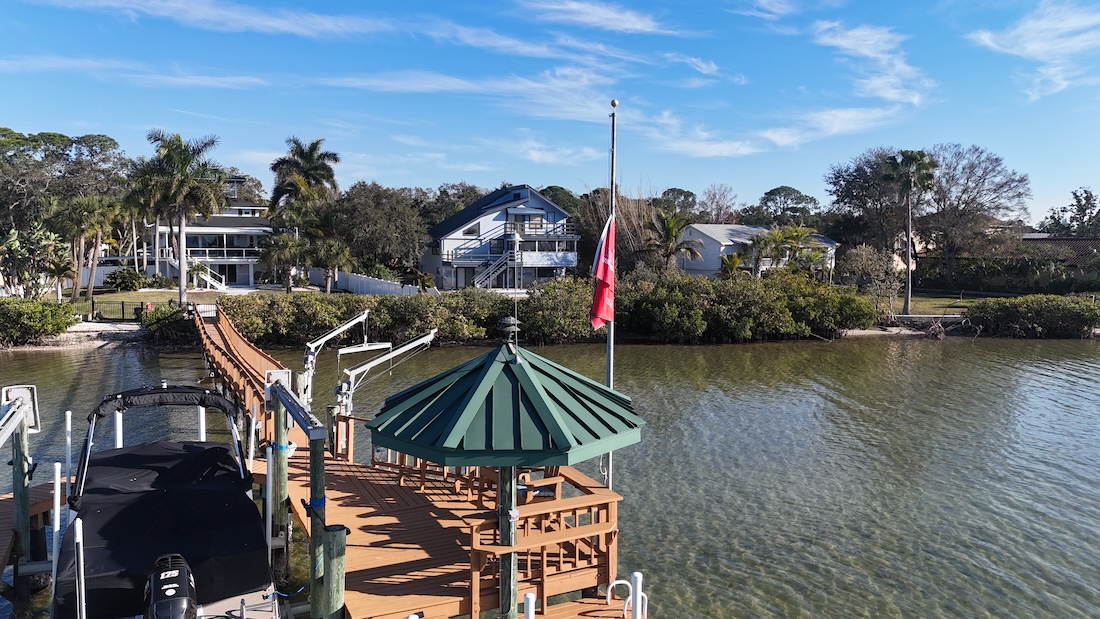
- Waterfront or open-lot position — homes on the Intracoastal, the St. Johns River, or any open body of water are frequently the tallest structure in their immediate vicinity during a storm.
- Mature trees taller than or adjacent to the roofline — a strike to a nearby tree can side-flash to the structure; root systems can carry current into the foundation.
- Larger roof area — a bigger footprint intercepts more of the electromagnetic field that precedes a strike and presents more surface area to the rolling sphere of risk.
- High density of connected systems — smart-home automation, whole-home audio, solar inverters, EV chargers, and networked security systems all create conductive pathways that a surge can travel.
What a Residential Lightning Protection System Actually Is
A properly designed residential system is not a lightning rod bolted to a chimney. That image is about 200 years out of date. A complete system — built to the NFPA 780 standard — has five integrated components that work together to intercept a strike, conduct the current safely to ground, and prevent it from jumping to anything inside the structure.
The Five Components and What Each One Does
Air terminals are the strike-interception points. Modern residential installations use moderately blunt copper or aluminum terminals positioned along the roof ridge, at peaks, and at corners — wherever the geometry of the structure creates a likely attachment point. The old sharply-pointed rod is actually less effective; NFPA 780 specifies terminal geometry for a reason.
Conductors are the cables that carry current from the air terminals down to ground. For a residential Class I structure (under 75 feet), NFPA 780 requires a minimum conductor size of 57,400 circular mils in copper. These run along the roofline and down the exterior walls — typically two or more down conductors on opposite sides of the structure to split the current load and reduce the magnetic field effect inside.
The grounding electrode system is where the energy goes. Ground rods are driven to a depth that achieves a resistance of 25 ohms or less — the threshold at which the earth can absorb the current without dangerous step-potential gradients at grade. In Jacksonville’s sandy coastal soils, achieving that resistance sometimes requires ground rings or multiple rods bonded together.
Equipotential bonding is the component most homeowners have never heard of, and it’s arguably the most important for protecting what’s inside the house. When lightning current enters a structure, it creates a massive voltage difference between the lightning system ground and every other grounded object nearby — the electrical panel, the gas line, the plumbing, the HVAC frame. That difference causes sideflash: an arc between the lightning system and the nearest grounded object. Bonding ties all of those systems to a common reference point so no voltage difference can develop. Without it, a technically correct air terminal and conductor system can still destroy equipment and start fires.
Surge protective devices (SPDs) are the last line of defense for electronics. A complete residential installation includes a Type 1 SPD at the service entrance (ahead of the main panel), a Type 2 device at the distribution panel, and Type 3 devices at sensitive point-of-use locations. These are not the same as a power strip. More on that distinction below.
A Surge Strip Is Not Lightning Protection — Here’s the Actual Difference
This is the most common misunderstanding All South’s field teams encounter in residential consultations. A power strip with a surge rating — even a good one — is a Type 3 device. It sits at the end of the protection chain, not the beginning. It’s designed to handle the small transient voltages that travel through your utility feed on an ordinary day: motor switching, utility grid fluctuations, the neighbor’s HVAC cycling on.
A direct strike to your home, or to the utility line feeding it, generates a surge that a Type 3 device cannot absorb. The energy arrives at the panel before the strip ever sees it, and it arrives at an amplitude that overwhelms anything without a Type 1 device upstream. The UL listing categories for SPDs — Type 1, 2, and 3 — exist precisely because no single device handles the full range of surge energy. You need all three in sequence, and the Type 1 and Type 2 have to be installed by a licensed electrician at the panel, not plugged into a wall outlet.
The practical implication: if your home has a whole-house surge protector at the panel but no air terminal system and no bonding, you have partial protection against utility-borne transients. You do not have protection against a direct strike or a near strike to a tree on your property.
How the Installation Process Works for a Jacksonville Home
A residential lightning protection installation is a one-to-two day process for most single-family homes, depending on roof complexity and the number of bonding connections required. Here’s what the sequence looks like in practice.
Site Assessment and System Design
Before any hardware goes up, a qualified installer walks the property and the roof. They’re mapping the roofline geometry, identifying the highest points and corners, locating existing grounded systems (electrical panel, gas meter, plumbing penetrations, HVAC equipment), and assessing soil conditions for the grounding electrode design. For homes pursuing a UL Master Label — the verifiable third-party certification that documents the system meets UL 96A — this assessment generates the engineering documentation that UL’s independent inspector will review.
Installation Sequence
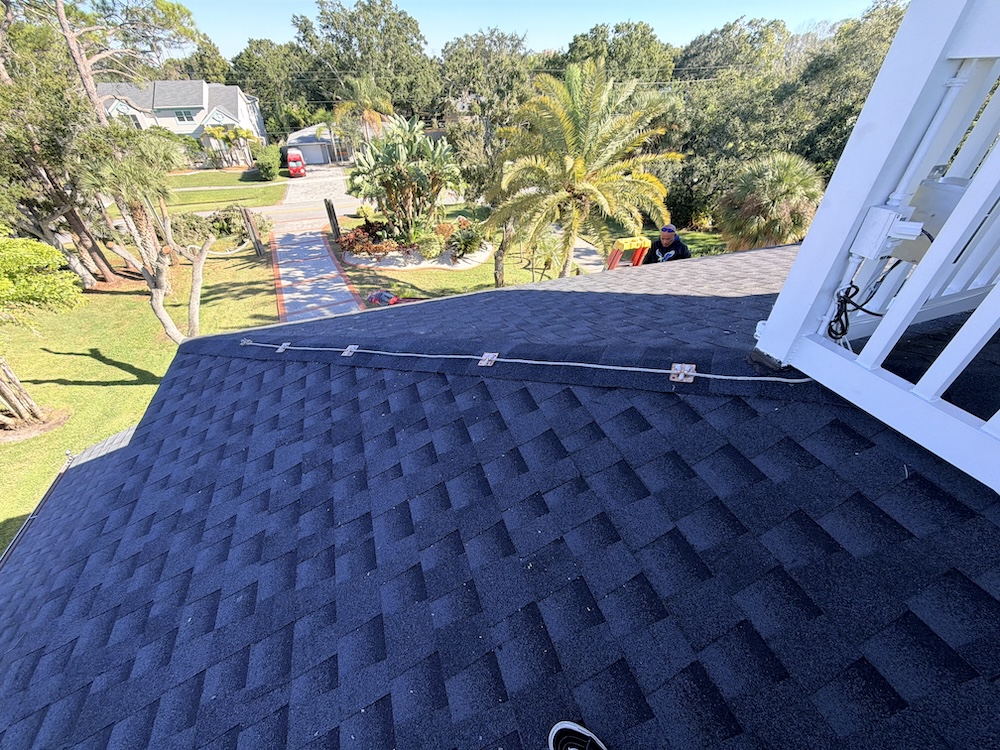
Air terminals go up first, positioned per the Rolling Sphere Method — the geometric model NFPA 780 uses to determine which points on a structure are most likely to receive a strike. A 150-foot imaginary sphere is rolled across the roofline; wherever it touches the structure without touching an existing terminal, a new terminal is required. Conductors are then routed from the terminals along the ridge and down the exterior, secured with non-ferrous fasteners that won’t corrode in Florida’s coastal humidity. Down conductors terminate at the ground electrode system, which is tested for resistance before the system is closed out. Bonding connections are made to every metallic system in the structure. SPDs are installed at the panel by a licensed electrician.
UL Master Label Certification
Homeowners who want documented proof that their system was installed correctly — for insurance purposes, for resale, or simply for their own confidence — can pursue UL Master Label certification. This involves an independent inspection by UL’s field representative, not by the installing contractor. The certificate is issued to the property, not the installer, and it documents that the system meets UL 96A installation requirements. It’s the residential equivalent of the commercial UL 96A certificate that facility managers rely on, and it’s the most credible third-party verification available for a residential system. Learn more about what a UL 96A inspection covers and why the documentation matters.
Which Jacksonville Homes Should Have This Conversation First
Not every home in Duval County carries the same urgency. Based on the site characteristics that drive real exposure, these are the residential profiles where a lightning protection system warrants serious evaluation:
- Waterfront properties on the St. Johns River, the Intracoastal, or any open-water lot in Ponte Vedra, Mandarin, or Fleming Island — where the home is frequently the tallest structure in the immediate strike zone.
- Homes with mature tree canopy taller than or within 10 feet of the roofline — particularly live oaks, which are common throughout Duval County and are excellent conductors of lightning current through their root systems.
- Larger custom homes with complex rooflines, multiple peaks, and significant square footage — more geometry means more potential attachment points and more interior systems at risk.
- Homes with substantial electronics investment — whole-home automation, solar panel arrays with inverters, EV charging equipment, home offices with server-grade hardware, or high-end audio/video systems where replacement cost is significant.
- Homes that have already taken a strike or a near strike — if you’ve had unexplained equipment failures after a storm, a post-storm inspection is the right first step before assuming the next one won’t be worse.
For a broader look at how residential systems are designed and what they cost, our guide on residential and commercial lightning protection system costs covers the variables that drive pricing in Florida’s market.
What a Lightning Protection System Does Not Do
Clarity here matters. A properly installed lightning protection system intercepts a strike and routes the current safely to ground. It does not prevent lightning from striking your property. It does not eliminate all surge risk from utility-borne transients unrelated to a direct strike. And it does not protect electronics that are not connected to the bonding and SPD network — a laptop running on battery with no data cable plugged in is isolated; a desktop plugged into an unbonded outlet is not.
The Lightning Protection Institute is clear on this point: a complete system manages the energy of a strike; it does not repel or prevent one. Any product or installer claiming to “dissipate” the charge before a strike occurs — through ionization or similar mechanisms — is describing technology that has not been validated by NFPA, UL, or independent peer-reviewed research. NFPA 780 does not recognize early streamer emission (ESE) devices as a substitute for a conventional system.
Frequently Asked Questions
Does NFPA 780 require residential homes to have a lightning protection system?
No. NFPA 780 is a design and installation standard, not a residential building code mandate. It defines how a system must be built if one is installed, and it’s the benchmark that licensed installers and UL inspectors use to evaluate residential systems. Florida’s building code requires lightning protection for certain new commercial and institutional construction — including schools — but there is no statewide mandate requiring single-family homes to have a system. The decision is voluntary, driven by the homeowner’s assessment of their exposure and the value of what they’re protecting.
Will a lightning protection system lower my homeowner’s insurance premium?
Some insurers offer premium reductions or favorable underwriting terms for homes with documented lightning protection systems, particularly those carrying a UL Master Label. The specific discount varies by carrier and policy. The more reliable insurance benefit is on the claims side: a system that prevents a strike from causing structural damage or a fire eliminates the claim entirely, which protects your claims history. Talk to your insurance agent about how your carrier treats documented lightning protection before installation — it’s a legitimate part of the ROI conversation.
My neighbor’s tree is taller than my roof. Does that protect my house?
No, and this is one of the most persistent misconceptions in residential lightning safety. A taller nearby object does not create a protective cone over your home. The 45-degree cone-of-protection model was retired from NFPA 780 decades ago. The Rolling Sphere Method, which replaced it, makes clear that a strike can attach to any point on a structure that the 150-foot sphere can touch — regardless of what’s nearby. A tall tree adjacent to your home is a risk factor, not a shield: a strike to the tree can side-flash to your structure or travel through the root system into your foundation.
How long does a residential installation take, and is it disruptive?
Most single-family homes in the Jacksonville area can be completed in one to two days. The work is primarily exterior — roofline, exterior walls, and ground electrodes — so interior disruption is minimal. The bonding connections to interior systems (electrical panel, gas line, plumbing) require brief access to those locations, typically less than an hour total. There’s no need to vacate the home during installation. The SPD work at the electrical panel requires a licensed electrician and a brief panel shutdown, which is coordinated in advance.
What’s the difference between a lightning protection system and a whole-house surge protector?
A whole-house surge protector — a Type 1 or Type 2 SPD installed at your electrical panel — protects against voltage transients traveling through your utility feed. It’s an important component of a complete protection strategy, but it’s not a substitute for an air terminal and conductor system. A direct strike to your home generates current that arrives before the SPD can respond, and at an amplitude that exceeds what a panel-mounted device alone can handle. A complete system uses both: the air terminal and conductor system to intercept and route the strike current, and the SPD cascade (Type 1, 2, and 3) to suppress the residual transient energy that reaches your wiring. One without the other is partial protection. See our overview of residential and commercial surge suppression for a deeper look at how SPD types work together.
The Right Next Step for Jacksonville Homeowners
If your home fits any of the exposure profiles described above — waterfront, tall tree canopy, large roofline, significant electronics investment — the right move is a site assessment, not a guess. A qualified installer can walk your property, evaluate your specific risk factors, and tell you exactly what a system for your home would involve: which components, what the installation sequence looks like, and whether UL Master Label certification makes sense for your situation.
All South Lightning Protection has been designing and installing residential and commercial systems in the Jacksonville market for over 40 years. Our Jacksonville team serves Duval County, St. Johns County, Ponte Vedra, Orange Park, and the surrounding area. We carry Florida state licensing and install to NFPA 780 and UL 96A standards on every residential project.
To schedule a site assessment for your Jacksonville home, reach out to our Jacksonville team directly. We’ll evaluate your property’s specific exposure and give you a clear picture of what protection looks like — and what it costs — before you make any decision.
You can also review our Jacksonville service area page for more on the markets we serve and the types of residential and commercial projects we handle in Northeast Florida.