Class II Lightning Protection for Tampa’s Port and Industrial Sites
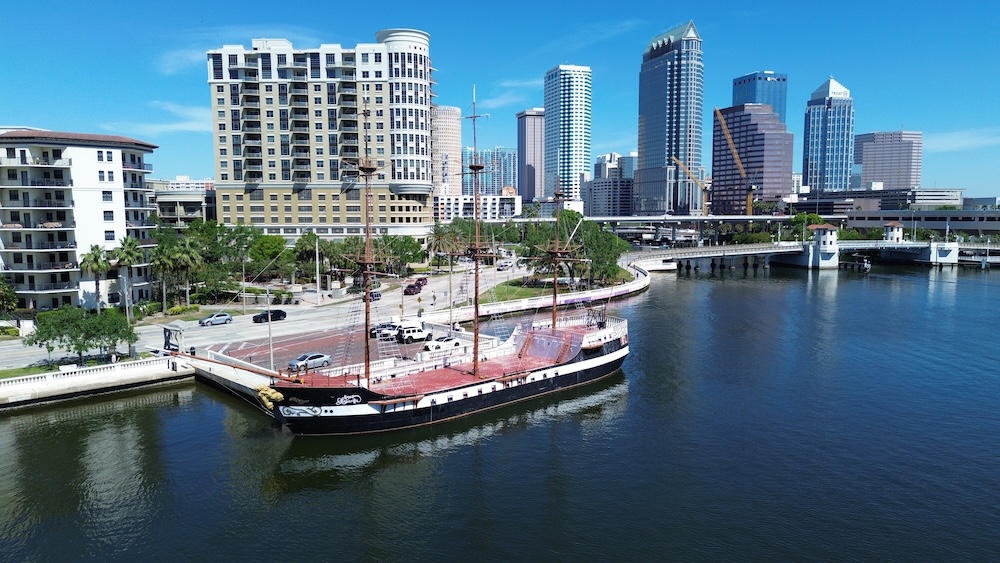
A single cloud-to-ground strike delivering 40,000 amperes into an unprotected crane rail, fuel tank farm, or process control cabinet doesn’t just damage equipment — it can halt port operations for days, trigger OSHA incident reporting, and expose facility ownership to liability that dwarfs the cost of a compliant system. Port Tampa Bay moves more than 37 million tons of cargo annually, making it the largest port by tonnage in the southeastern United States. The industrial corridor surrounding it — tank farms, bulk material handling, chemical processing, and utility substations — represents some of the highest-value, highest-consequence infrastructure in Florida. Lightning protection for industrial Tampa isn’t a checkbox. It’s a structural engineering decision that starts with the right conductor sizing, the right grounding electrode system, and permit-ready sealed drawings before a single air terminal goes on the roof.
Why Industrial Facilities in Tampa Sit in a Different Risk Category
Florida records approximately 76 cloud-to-ground lightning flashes per square mile per year — the highest density of any state in the country, according to the National Weather Service Lightning Safety program. Tampa sits near the center of what meteorologists call “Lightning Alley,” the corridor between Tampa Bay and the Atlantic coast where sea-breeze convergence generates afternoon convective storms with unusual regularity. The region logs more than 100 thunderstorm days per year in some years.
For a residential structure, that risk is significant. For a 200-foot bulk material handling crane, a petroleum tank farm with vapor-space ignition potential, or a substation feeding a port’s entire electrical distribution network, it’s a different order of magnitude. The physical height of industrial structures alone pushes most of them into NFPA 780 Class II territory — and Class II carries conductor sizing requirements that are roughly double those of Class I. That’s not a detail a general electrical contractor typically carries in their head.
NFPA 780 defines Class I as structures under 75 feet and Class II as those 75 feet and above. The conductor sizing difference is concrete: Class I systems require a minimum of 57,400 circular mils (cmil) of copper, while Class II systems require 115,000 cmil. Use undersized conductors on a Class II structure and you’ve built a system that looks compliant but will fail mechanically and thermally under a direct strike. That failure mode is invisible until the strike happens.
The Grounding Problem That Industrial Environments Make Worse
NEC 250.106 requires that a lightning protection system’s grounding electrode be bonded to the building’s electrical grounding electrode system. NEC 250.60 clarifies that lightning protection electrodes are separate from — but must be bonded to — the building grounding electrode system. In a standard commercial building, executing that bond is straightforward. In an industrial environment, it gets complicated fast.
Industrial facilities typically have multiple electrical services, independent equipment grounds for process machinery, cathodic protection systems on buried metallic structures, and grounding electrode systems that were installed in phases over decades. Each of those systems carries a ground potential. When a lightning strike drives 40,000 amps into one ground point and the others are at a different potential, the voltage difference between them — called a ground potential rise — can arc across bonding gaps, destroy control wiring, and ignite flammable materials. That’s not a theoretical risk at a petroleum terminal. It’s a documented failure mode.
The solution is equipotential bonding: every metallic system in the facility — structural steel, process piping, cable trays, equipment frames, cathodic protection anodes — bonded to a common reference plane so that when a strike occurs, everything rises together. NFPA 780 Chapter 4 addresses this directly, and NFPA’s published guidance on bonding for hazardous locations adds additional requirements for facilities with flammable vapor or dust. Getting this right in a complex industrial environment requires a site-specific engineering analysis, not a standard residential or light-commercial installation template.
The ground bed itself must measure below 25 ohms resistance to remote earth, with bonding connections between subsystems at or below 1 ohm. In Tampa’s sandy coastal soils — which have higher resistivity than clay-rich inland soils — achieving that threshold often requires driven ground rods supplemented with ground enhancement material or a buried counterpoise grid. A contractor who doesn’t test and document ground resistance before signing off on the system is leaving the most critical performance metric unverified.
Sealed Engineering Drawings: Why This Is the Differentiator That Actually Matters
Most lightning protection contractors can install air terminals and down conductors. Far fewer can produce permit-ready, sealed engineering drawings that satisfy the Hillsborough County permitting office, a port authority’s engineering review board, or an owner’s insurance carrier demanding documentation before binding coverage.
For industrial and port facilities in Tampa, sealed drawings aren’t optional — they’re the entry ticket. A project at Port Tampa Bay or a large industrial plant will go through a formal plan review process. The drawings need to show air terminal placement verified against the Rolling Sphere Method (a 150-foot sphere rolled across the structure’s surface, with air terminals positioned to intercept it before it contacts any unprotected surface), conductor routing with Class II sizing called out explicitly, grounding electrode locations with soil resistivity data, and bonding schedules for every metallic system on site.
The Rolling Sphere Method replaced the obsolete 45-degree cone-of-protection model that some contractors still reference. If a proposal you receive references a “cone of protection” as the design basis, that’s a signal the contractor is working from outdated methodology. NFPA 780 adopted the Rolling Sphere Method as the primary design tool precisely because it handles complex roof geometries — equipment penthouses, rooftop HVAC, elevated crane structures — that the cone model can’t address accurately.
All South’s in-house CAD capability means the engineering drawings are produced by the same team that designs and installs the system. There’s no translation loss between a third-party engineer’s drawings and what actually gets built. For a facility manager or port authority project manager, that matters: the as-built drawings match the permit drawings, the UL 96A master label documentation is accurate, and the system is certifiable from day one. Learn more about how we approach complete lightning protection system design for complex commercial and industrial projects.
Surge Protection for Industrial Process Control: The Layer That Gets Skipped
A direct strike to the structure is the event most facility managers think about. The more common — and more insidious — damage path is the conducted surge: a strike to a utility line, a nearby structure, or the ground itself that couples into the facility’s electrical distribution system and travels to process control equipment, SCADA systems, variable frequency drives, and programmable logic controllers.
NFPA 780 and IEC 62305-4 both address this through a coordinated surge protection device (SPD) strategy. The architecture is three-tiered:
- Type 1 SPDs at the service entrance — these handle the highest-energy surges and are rated for direct connection ahead of the main overcurrent device. They’re the only SPDs rated to handle the partial lightning current that can enter through the utility service.
- Type 2 SPDs at distribution panels — these clamp residual surges that pass through the Type 1 device and protect branch circuits feeding process equipment.
- Type 3 SPDs at point-of-use — installed within 30 feet of sensitive equipment, these handle the low-energy surges that survive the upstream devices and can still destroy microprocessor-based controls.
In an industrial environment, the Type 3 layer is frequently omitted because it requires coordination with the equipment manufacturer’s warranty requirements and the facility’s maintenance program. Skipping it is a false economy: a single VFD replacement on a large pump or compressor can run $15,000 to $50,000, and a SCADA system failure at a port terminal can halt operations at a cost that makes the entire SPD budget look trivial. Our commercial surge suppression services cover all three tiers, coordinated with the lightning protection system design.
UL 96A Certification for Industrial Facilities: What the Five-Year Clock Means
A UL 96A master label certificate is the gold standard of documentation for a lightning protection system. It tells an insurance carrier, a port authority, a corporate risk manager, and a building inspector that the system was installed to the 14th edition standard and verified by a UL field representative. For industrial facilities, that certificate has direct financial consequences: many commercial property insurers offer premium reductions — in some cases up to 18% — for UL-certified systems, and some policies require certification as a condition of coverage for high-value assets.
The certificate expires every five years. It also becomes void — immediately — if the structure is modified in a way that affects the lightning protection system. Adding a rooftop exhaust stack, installing a new antenna array, expanding a building footprint, or rerouting a down conductor during a renovation all trigger the need for recertification. At a working industrial facility where modifications happen continuously, that clock resets more often than facility managers expect.
Underwriters Laboratories conducts the inspection; they don’t install or repair systems. The contractor’s job is to ensure the system is in certifiable condition before the UL inspector arrives — and to document every modification that occurs between certification cycles. Our lightning protection system inspection services include pre-certification audits specifically designed to identify deficiencies before they become a failed inspection.
What a Compliant Industrial System Actually Looks Like at Port Tampa Bay
A Class II system for a large industrial structure at or near Port Tampa Bay typically involves several elements that don’t appear on a standard commercial installation:
- Structural steel integration — NFPA 780 permits the use of structural steel as a natural component of the down conductor network, provided the steel members are electrically continuous and properly bonded. For a steel-framed crane or bulk handling structure, this is both technically sound and cost-effective, but it requires verification of continuity at every bolted connection.
- Cathodic protection coordination — buried metallic structures at port facilities are often protected against corrosion by impressed-current cathodic protection systems. These systems intentionally maintain a voltage differential between the protected structure and the surrounding soil. Bonding the lightning protection ground to a cathodically protected structure without proper isolation can compromise the cathodic protection system. The two systems need to be engineered together, not independently.
- Hazardous location compliance — NFPA 780 Annex L addresses lightning protection in areas classified under NFPA 70 (NEC) Article 500 as Class I, II, or III hazardous locations. Petroleum terminals, chemical processing areas, and grain handling facilities all have classified areas where the bonding and grounding requirements are more stringent and where the consequences of a bonding failure are more severe.
- Tall structure provisions — structures above 200 feet are subject to upward leader attachment, where the lightning channel initiates from the structure rather than from the cloud. NFPA 780 Section 4.14 addresses this with side-flash protection requirements for the upper portions of very tall structures.
The Lightning Protection Institute maintains technical resources on industrial system design that complement NFPA 780’s requirements. For projects of this complexity, the LPI’s Master Installer with Design (MID) credential is the relevant qualification — it covers both the installation and the engineering design components that a standard installer certification doesn’t address.
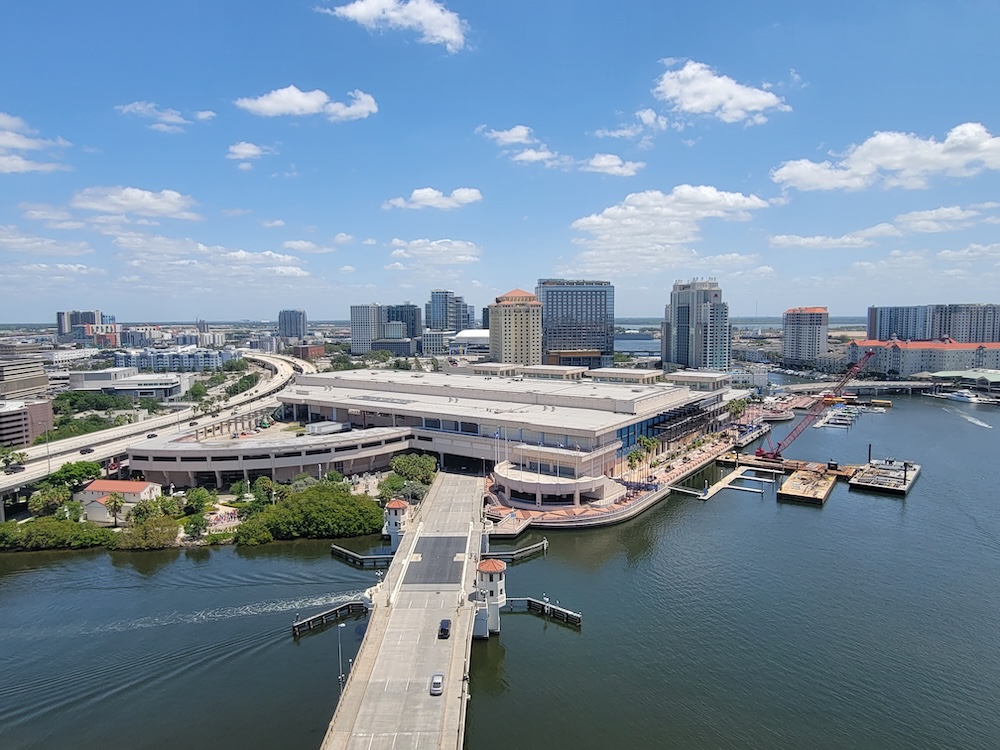
All South’s work at Tampa landmark venues — including the Tampa Convention Center, where we installed a Faraday preventor system — reflects the same engineering discipline that industrial and port projects require. See our Tampa landmark venue lightning protection work for context on how we approach large, complex structures in this market. Our commercial project portfolio documents the range of industrial and institutional installations we’ve completed across the Tampa Bay region.
Frequently Asked Questions
Does NFPA 780 require lightning protection on all industrial facilities in Florida?
NFPA 780 is a design and installation standard, not a universal mandate. Florida requires compliance with NFPA 780 for new commercial construction in certain occupancy categories, and local jurisdictions — including Hillsborough County — may have additional requirements. More practically, industrial facilities with high-value equipment, flammable materials, or continuous operations face a risk profile where the cost of a compliant system is a fraction of the cost of a single unprotected strike event. Insurance carriers increasingly require or incentivize NFPA 780-compliant, UL 96A-certified systems for large industrial risks. The question for most facility managers isn’t whether NFPA 780 applies — it’s whether the facility’s risk profile justifies the investment, and for most industrial sites in Tampa, the answer is straightforward.
What’s the difference between a Class I and Class II lightning protection system, and why does it matter for industrial facilities?
NFPA 780 classifies structures by height: Class I covers structures under 75 feet, Class II covers those 75 feet and above. The practical difference is conductor sizing — Class II requires 115,000 circular mils of copper versus 57,400 cmil for Class I. That’s not a minor variation; it’s a system that can handle the full mechanical and thermal stress of a direct strike versus one that may fail under those conditions. Most significant industrial structures — cranes, storage tanks, process towers, tall buildings — qualify as Class II. A contractor who installs Class I conductors on a Class II structure has built a non-compliant system that will fail UL 96A inspection and may fail catastrophically under a direct strike.
How does cathodic protection on buried piping interact with a lightning protection grounding system?
Cathodic protection systems work by maintaining a controlled voltage differential between a protected metallic structure and the surrounding soil. Lightning protection grounding systems work by providing a low-impedance path to earth. Bonding the two together without proper engineering can disrupt the cathodic protection system’s voltage reference, accelerating corrosion on the very structures it’s designed to protect. The standard approach is to use a polarization cell or a similar isolation device that blocks the DC cathodic protection current while allowing the high-frequency, high-energy lightning current to pass through to ground. This requires coordination between the lightning protection engineer and the cathodic protection engineer — it’s not something that should be resolved in the field during installation.
How often does a lightning protection system at an industrial facility need to be inspected?
UL 96A requires recertification every five years, but that’s a minimum, not a maintenance schedule. Industrial facilities should conduct a visual inspection annually and a full electrical inspection — including ground resistance testing — after any significant storm event, any structural modification, or any work that could have disturbed conductors, bonds, or grounding electrodes. In practice, industrial facilities modify their structures frequently: new equipment, new rooftop penetrations, new utility connections. Each of those events is an opportunity for the lightning protection system to be inadvertently compromised. A post-modification inspection is the only way to confirm the system is still compliant before the next storm season.
Can a general electrical contractor install a compliant lightning protection system for a large industrial facility?
In Florida, lightning protection installation requires a specific state license — it’s not covered under a general electrical contractor’s license. Beyond the licensing question, the engineering requirements for a Class II industrial system — Rolling Sphere Method design, Class II conductor sizing, equipotential bonding for complex industrial environments, hazardous location compliance, and sealed permit drawings — require specialized expertise that most electrical contractors don’t carry. The Florida Department of Business and Professional Regulation (Florida DBPR) maintains the licensing requirements. For a facility where a non-compliant installation could result in a fire, an explosion, or a multi-day operational shutdown, the licensing and expertise of the contractor is not a detail to overlook.
Industrial and port facilities in Tampa represent some of the most technically demanding lightning protection work in Florida — and some of the highest-consequence environments if that work is done wrong. The combination of Class II conductor requirements, complex grounding environments, hazardous location provisions, and the need for permit-ready sealed engineering drawings means this work requires a contractor with both the technical credentials and the in-house engineering capability to execute it correctly from design through UL 96A certification.
All South Lightning Protection has been designing and installing compliant systems for Tampa’s commercial and industrial sector for more than 40 years. If you’re managing a port facility, an industrial plant, or a large commercial asset in the Tampa Bay area and you’re not certain your current system meets Class II requirements and NEC 250.106 bonding standards — or if you’re planning a new installation or a structural modification that will affect your existing certification — the right time to get an engineering assessment is before the next storm season, not after. Schedule a site assessment with our Tampa team and we’ll give you a clear picture of where your system stands and what it takes to bring it into full compliance.