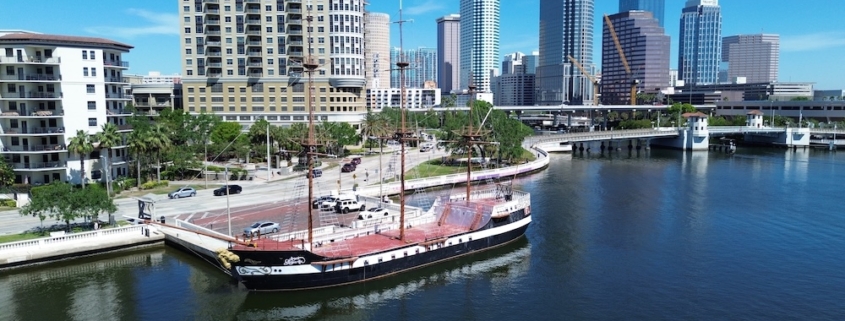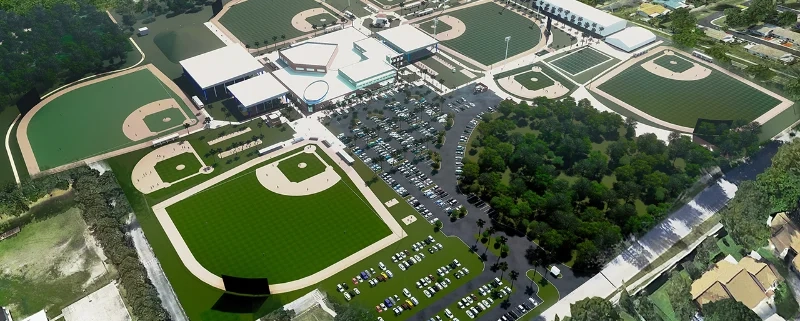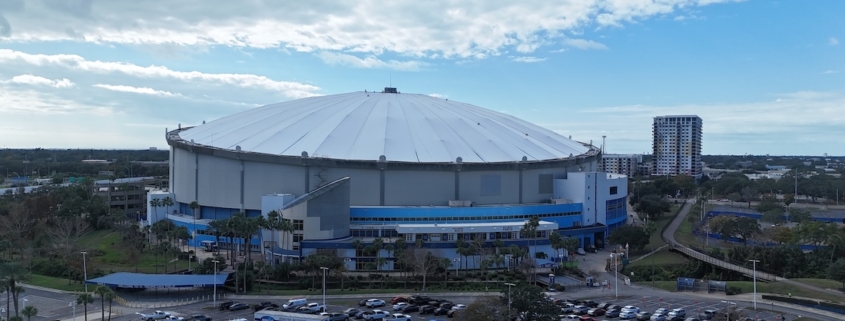
Tampa sits inside one of the most lightning-active corridors on Earth — 76 cloud-to-ground flashes per square mile per year, according to the National Weather Service. For a 45,000-seat domed stadium, a convention center running simultaneous trade shows, or an open-air zoo with 1,000 daily visitors, that statistic isn’t background noise. It’s a liability calculation that shows up in insurance premiums, Joint Commission audits, and the kind of post-storm conversation no facility director wants to have with their CFO. This post documents what lightning protection Tampa landmark venues actually requires — not in theory, but on the specific buildings All South has engineered and installed over the past two decades.
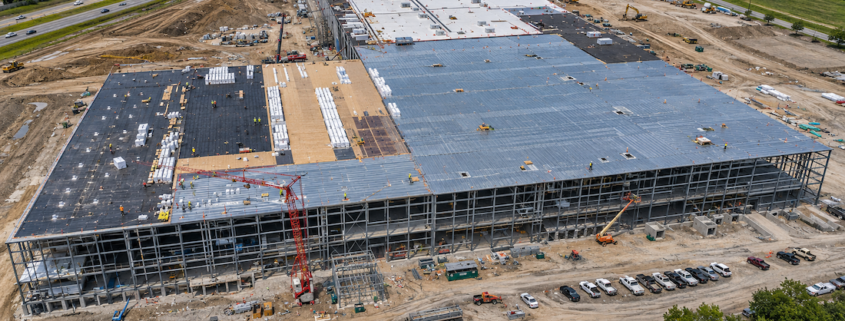
Jacksonville is adding AI data center capacity faster than almost any mid-tier market in the Southeast. Submarine cable landing stations at Ponte Vedra, available land along the I-295 corridor, and a power grid that can support hyperscale loads have made Duval County a serious destination for AI training and inference infrastructure. What the site-selection spreadsheets rarely flag — until a structural engineer raises it during permit review — is that Northeast Florida logs more than 100 thunderstorm days per year and roughly 76 cloud-to-ground lightning flashes per square mile annually, the highest density in the United States. For an AI data center running GPU clusters at full utilization, a single direct strike or a conducted surge from a nearby hit can destroy server hardware, corrupt storage arrays, and trigger a cascade failure that takes days to recover. The only cost-effective answer is to engineer AI data center lightning protection in Jacksonville before the first column is poured — not after the building is enclosed and the mechanical-electrical-plumbing coordination is finished.
A single cloud-to-ground strike delivering 40,000 amperes into an unprotected crane rail, fuel tank farm, or process control cabinet doesn’t just damage equipment — it can halt port operations for days, trigger OSHA incident reporting, and expose facility ownership to liability that dwarfs the cost of a compliant system. Port Tampa Bay moves more than 37 million tons of cargo annually, making it the largest port by tonnage in the southeastern United States. The industrial corridor surrounding it — tank farms, bulk material handling, chemical processing, and utility substations — represents some of the highest-value, highest-consequence infrastructure in Florida. Lightning protection for industrial Tampa isn’t a checkbox. It’s a structural engineering decision that starts with the right conductor sizing, the right grounding electrode system, and permit-ready sealed drawings before a single air terminal goes on the roof.
TL;DR: When a lightning bolt kills or injures a spectator at an outdoor venue, the legal exposure doesn’t hinge on whether the storm was unusual; it hinges on whether the facility had a documented warning protocol and acted on it. Florida logs roughly 76 cloud-to-ground flashes per square mile per year, the highest density of any state in the country, and sports venues sit squarely in the crosshairs.
The good news is that lightning detection technology has advanced far beyond a simple horn-and-flag system. Real-time ground-based sensor networks, predictive atmospheric algorithms, and direct integration with building management systems (BMS) now give venue operators a genuine decision-support tool — not just a liability shield. This post breaks down where the technology stands, what’s coming next, and how Florida venues can build detection into a complete, NFPA 780-compliant protection strategy.
Tampa Location:
Sunrise Location:
4759 NW 103rd Ave, Sunrise,
FL 33351, USA
Sunrise 954-742-4164
Sunrise Fax 954-742-4165
Jacksonville Location:
13270 Yellow Bluff Road, Jacksonville,
FL 32226, USA
Jacksonville 813-842-6172
Jacksonville Fax 813-630-2758