Hospital Lightning Protection Requirements: What New Construction Must Get Right
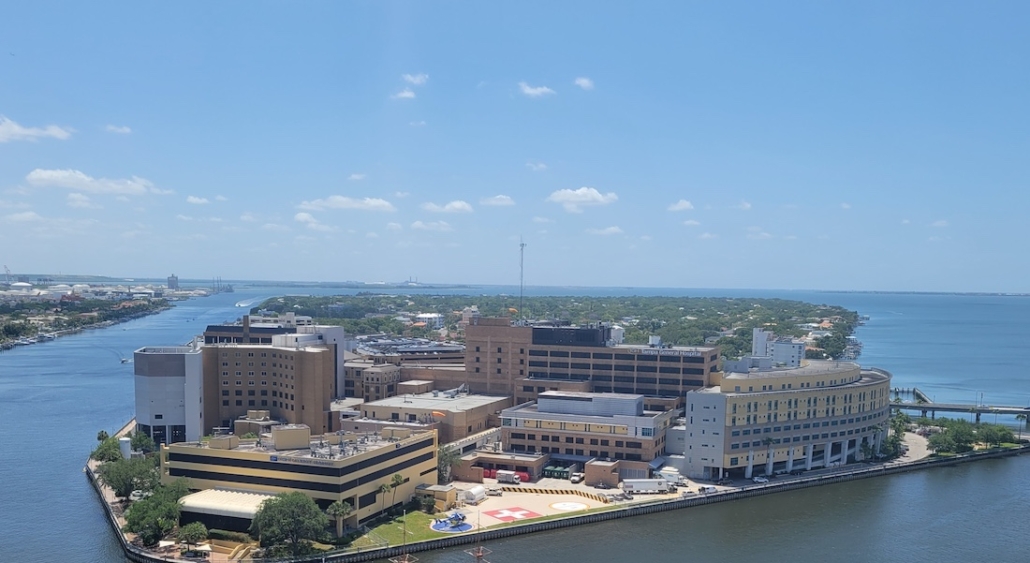
A hospital that loses power mid-surgery isn’t just an operational problem — it’s a patient safety crisis with immediate regulatory consequences. In Florida, where the average square mile absorbs 76 cloud-to-ground lightning strikes per year, new hospital construction carries a non-negotiable obligation: a fully code-compliant lightning protection system installed before the first patient walks through the door. Miss that obligation, and you’re looking at failed Joint Commission surveys, potential CMS Conditions of Participation violations under 42 CFR §482.15, and an insurance carrier that has every reason to deny a lightning-related claim. This guide breaks down exactly what hospital lightning protection requirements apply to new Florida healthcare construction, which standards govern each layer of the system, and what facility teams and project architects need to specify from day one.
Why Florida Hospitals Face a Higher Lightning Risk Than Almost Any Other Building Type
Florida records more cloud-to-ground lightning strikes than any other state — roughly 1.4 million per year, with some inland and central Florida counties logging more than 100 thunderstorm days annually. That’s not a backdrop statistic; it’s a design parameter. A hospital campus typically combines every feature that makes a structure vulnerable: large rooftop mechanical and HVAC equipment, extensive antenna and communications arrays, helipads elevated above the roofline, and miles of internal data and power cabling that can carry a transient surge from one end of the building to the other in microseconds.
Unlike a warehouse or office building, a hospital cannot evacuate patients when a storm rolls in. Staff cannot power down life-critical equipment to protect it. The National Weather Service consistently identifies healthcare facilities as among the highest-consequence structures for lightning-related disruption, precisely because the margin for error is zero. A single direct strike that bypasses an inadequate grounding system can cascade through nurse-call networks, imaging equipment, and ICU monitoring systems simultaneously — damage that can run into the millions of dollars and take weeks to repair.
That risk profile is exactly why Florida building code, federal Medicare Conditions of Participation, and accreditation bodies all converge on the same conclusion: lightning protection for hospitals is mandatory, not optional.
NFPA 780: The Foundation of Hospital Lightning Protection Requirements
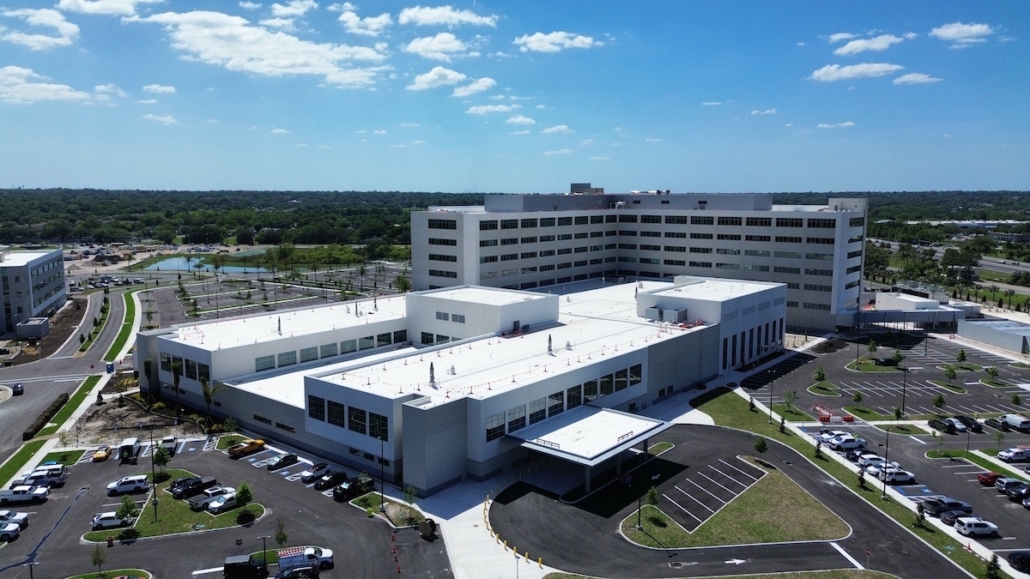
The NFPA 780 Standard for the Installation of Lightning Protection Systems is the primary technical document governing hospital lightning protection requirements in the United States. Florida’s building code adopts NFPA 780 by reference for new commercial construction, including healthcare facilities. The 2026 edition tightens several provisions that directly affect hospital design, and project teams working on permits today should be referencing that edition.
What NFPA 780 Requires for a Complete System
NFPA 780 defines five interdependent components that must all be present for a system to be considered complete. Omitting any one of them leaves the building unprotected in a meaningful technical sense:
- Air terminals (strike termination devices) — Positioned across the roof using the Rolling Sphere Method (a 150-foot sphere rolled across the roofline; any point the sphere touches without contacting an air terminal is unprotected). Moderately blunt-tipped terminals are specified; sharply pointed rods are not preferred under current NFPA 780 guidance.
- Down conductors — Sized by building class. Hospitals taller than 75 feet fall under Class II, requiring conductors of at least 115,000 circular mils in copper. Class I structures under 75 feet require a minimum of 57,400 cmil. Conductor routing must avoid sharp bends and must be as direct as possible to ground.
- Grounding electrode system — Ground resistance must measure below 25 ohms; bonding connections between system components must measure 1 ohm or less. For large hospital campuses, a ground ring electrode encircling the building perimeter is standard practice.
- Equipotential bonding — Every metallic system in the building — structural steel, HVAC ductwork, plumbing, elevator rails, medical gas piping — must be bonded to the lightning protection system to eliminate the voltage differences that cause sideflash. In a hospital, sideflash inside a patient room or operating suite is an unacceptable hazard.
- Surge protective devices (SPDs) — NFPA 780 and NEC Article 285 require a coordinated three-tier SPD strategy: Type 1 at the service entrance, Type 2 at distribution panels, and Type 3 at the point of use for sensitive equipment. In a hospital, “sensitive equipment” includes imaging systems, ventilators, infusion pumps, and electronic health record servers.
The Lightning Protection Institute publishes detailed installation guidance that complements NFPA 780 and is widely used by certified designers working on healthcare projects. Specifying an LPI-certified contractor — credentialed at the Master Installer/Designer (MID) or Designer/Inspector (DI) level — is the clearest way to ensure the system will pass both the UL 96A inspection and any regulatory review.
NEC 250: Grounding and Bonding Requirements That Hospitals Cannot Overlook
The National Electrical Code adds a second layer of mandatory requirements that intersect directly with lightning protection. NEC 250.106 requires that the lightning protection grounding system be bonded to the building’s electrical grounding system. NEC 250.60 clarifies that lightning protection electrodes are separate from — but must be bonded to — the building’s grounding electrode system. These aren’t parallel systems that can be designed independently; they must be integrated.
For hospitals, this integration matters in a very specific way. The NEC’s Article 517 governs healthcare facility wiring and establishes requirements for patient care areas, including equipotential grounding in wet procedure locations. When a lightning protection system is installed without proper coordination with the Article 517 grounding infrastructure, the result can be ground loops, equipment interference, and — in worst-case scenarios — patient safety hazards from ground potential differences during a strike event. The electrical engineer of record and the lightning protection designer must coordinate these systems at the schematic design phase, not during construction administration.
Ground Resistance Testing in Hospital Construction
Ground resistance testing using a fall-of-potential or clamp-on method is required before a UL 96A certificate is issued. For hospitals built on Florida’s sandy coastal soils, achieving the sub-25-ohm threshold can require chemical ground enhancement, deep-driven ground rods, or a Ufer ground (concrete-encased electrode) integrated into the foundation. These decisions need to be made during civil and structural design — retrofitting a ground ring after the slab is poured is expensive and disruptive.
42 CFR §482.15 and CMS Conditions of Participation
Federal Medicare and Medicaid Conditions of Participation require hospitals to maintain an emergency preparedness program under 42 CFR §482.15. The regulation mandates that hospitals identify and mitigate risks to patient safety from utility failures — and lightning is explicitly within scope. A hospital that cannot demonstrate a compliant lightning protection and surge suppression system during a CMS survey faces findings that can jeopardize Medicare certification.
The practical implication: CMS surveyors reviewing emergency preparedness documentation will look for evidence that the facility has addressed lightning as a utility-disruption risk. A UL 96A certificate of installation, current within the five-year recertification window, is the clearest single document that satisfies this requirement. Without it, the facility is relying on verbal assurances that won’t hold up under scrutiny.
It’s worth being direct about what 42 CFR §482.15 does and doesn’t say: it doesn’t specify NFPA 780 by name. What it does is create a duty-of-care obligation that any reasonable risk assessment will satisfy through NFPA 780 compliance. Hospitals that have installed systems but never obtained a UL 96A certificate — a surprisingly common situation — are in a gray zone that a CMS surveyor or plaintiff’s attorney can exploit.
Joint Commission Standards and Lightning Protection Documentation
The Joint Commission’s Environment of Care (EC) and Life Safety (LS) chapters don’t cite NFPA 780 directly, but they do require hospitals to manage risks in the physical environment and maintain utility systems in a way that protects patients. EC.02.05.01 covers utility system management, and surveyors have cited facilities for inadequate protection of electrical systems against foreseeable environmental hazards, which in Florida unambiguously includes lightning.
Joint Commission surveys increasingly focus on documentation. A facility that can produce a current UL 96A certificate, a post-storm inspection report, and a maintenance log for its SPD systems is in a fundamentally stronger position than one that can only say “we have lightning rods on the roof.” The difference between passing and failing a Joint Commission EC survey often comes down to whether the paperwork matches the physical installation.
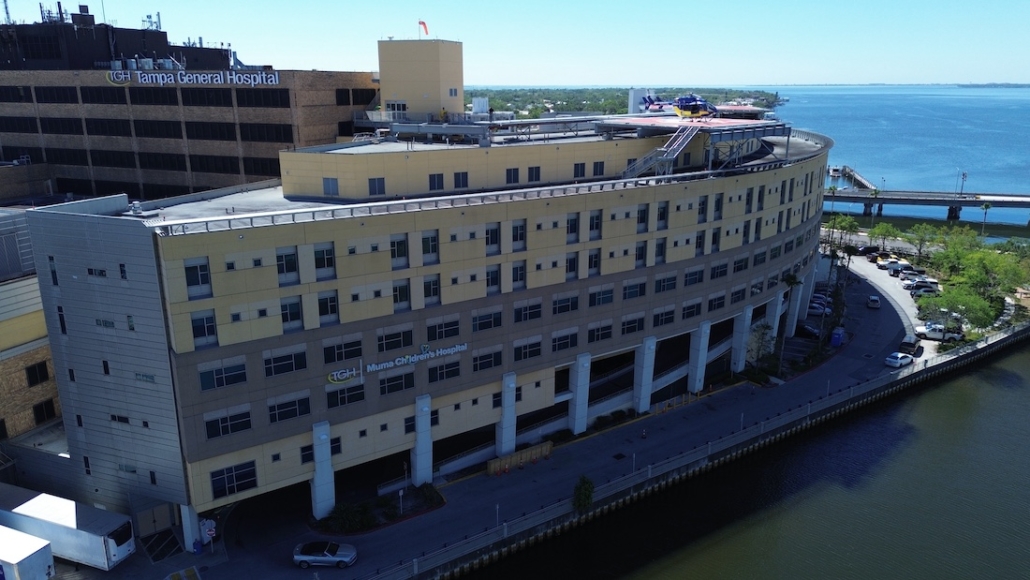
Our team has worked with hospital facilities directors at institutions including Tampa General Hospital and the Orlando VA Medical Center to ensure that both the physical system and the supporting documentation meet the standard surveyors actually apply in the field. That documentation package — sealed engineering drawings, ground resistance test results, UL 96A certificate, and inspection records — is what we deliver on every healthcare project.
Surge Protection for Hospital Medical Equipment: The Layer Most Projects Get Wrong
The most common gap we find in hospital lightning protection specifications is an underbuilt surge suppression strategy. A Type 1 SPD at the service entrance is necessary but nowhere near sufficient for a modern hospital. Medical imaging equipment — MRI, CT, digital X-ray — operates on dedicated circuits with extremely tight voltage tolerances. A transient that the service entrance SPD clips to a “safe” level for general building systems can still be destructive to imaging equipment downstream.
The correct approach follows a coordinated three-tier strategy aligned with IEC 62305-4 Lightning Protection Zone (LPZ) principles:
- LPZ 0 → LPZ 1 boundary (service entrance): Type 1 SPD, rated for direct-strike current, installed at the main switchboard.
- LPZ 1 → LPZ 2 boundary (distribution panels): Type 2 SPDs at each panel serving patient care areas, imaging suites, and data closets.
- LPZ 2 → LPZ 3 boundary (point of use): Type 3 SPDs at individual equipment connections — imaging systems, server racks, nurse-call controllers, and pharmacy automation equipment.
Data center downtime costs $5,000 to $10,000 or more per minute. A hospital’s clinical information systems are effectively a data center, and the same economics apply. A coordinated SPD strategy costs a fraction of a single imaging system replacement — and imaging equipment isn’t always covered under a standard property policy when the loss is attributable to an inadequate protection system.
For a deeper look at how surge protection integrates with data infrastructure in healthcare settings, see our detailed guide on data center lightning protection.
UL 96A Certification: The Document That Ties It All Together
A lightning protection system installed on a hospital is only as defensible as its documentation. UL 96A (14th edition, 2023) — the Standard for Installation Requirements for Lightning Protection Systems — establishes the inspection protocol that results in a UL Master Label certificate. That certificate is issued by UL’s field inspection team after an independent review of the installation against the standard. It is not issued by the contractor; it is earned through third-party inspection.
The certificate is valid for five years. After that, a recertification inspection is required to maintain the label. For hospitals, this five-year cycle should be built into the facility’s preventive maintenance calendar from day one. A lapsed certificate doesn’t mean the system stopped working — but it does mean the facility loses its clearest documentation of compliance, which matters during CMS surveys, Joint Commission visits, and insurance renewals.
Underwriters Laboratories maintains the UL 96A standard and conducts field inspections independently of the installing contractor. Working with a contractor who has a track record of successful UL 96A certifications — and who can coordinate the inspection scheduling as part of the project closeout — is essential for hospital projects where certificate timing often aligns with occupancy milestones.
Our lightning protection inspection services include both initial UL 96A coordination and five-year recertification inspections for existing hospital systems across Florida.
What New Hospital Construction Projects Should Specify
If you’re an architect, engineer of record, or owner’s representative on a new Florida hospital project, the lightning protection specification should address these elements explicitly in the construction documents:
- NFPA 780 (2026 edition) as the governing installation standard
- UL 96A certification as a project closeout deliverable
- Rolling Sphere Method analysis documented in CAD drawings, sealed by a licensed engineer
- Class I or Class II conductor sizing based on building height
- Ground resistance testing protocol and acceptance threshold (<25 ohms)
- NEC 250.106 / 250.60 bonding coordination with the electrical engineer of record
- NEC Article 517 coordination for the patient care area grounding
- Three-tier SPD strategy (Type 1/2/3) with equipment-level protection for imaging and IT systems
- Helipad-specific air terminal placement if applicable (NFPA 780 Chapter 4 covers elevated structures)
- Post-installation inspection report and sealed as-built drawings for the facility’s permanent records
All South Lightning Protection provides permit-ready CAD drawings and sealed engineering documents as part of every hospital project scope. Our lightning protection systems are designed from the ground up to meet UL 96A certification requirements, with documentation packages built to satisfy both Joint Commission and CMS reviewers.
Frequently Asked Questions
Is lightning protection legally required for new hospitals in Florida?
Yes. Florida’s building code adopts NFPA 780 by reference for new commercial construction, which includes hospitals. Beyond state building code, CMS Conditions of Participation under 42 CFR §482.15 create a federal duty-of-care obligation to protect patients from utility disruptions — and lightning is within scope. A hospital that opens without a compliant, UL 96A-certified lightning protection system is exposed on multiple regulatory fronts simultaneously. The practical answer for any new hospital project is that lightning protection is not optional; it’s a permit and occupancy requirement.
What is a UL 96A certificate, and why does a hospital need one?
A UL 96A Master Label certificate is issued by Underwriters Laboratories after an independent field inspection confirms that a lightning protection system was installed in compliance with UL 96A installation requirements. It’s the primary third-party documentation that a hospital’s lightning protection system meets the applicable standard. For CMS surveys, Joint Commission Environment of Care reviews, and insurance purposes, a current UL 96A certificate is the clearest single document demonstrating compliance. The certificate must be renewed every five years through a recertification inspection.
Does a hospital need surge protection in addition to lightning rods?
Absolutely — and this is one of the most common misunderstandings on hospital construction projects. Air terminals and down conductors intercept and route a direct strike to ground. They do not prevent the electromagnetic pulse and conducted transients that travel through power, data, and communications lines during a nearby strike. Without a coordinated three-tier surge protective device strategy (Type 1 at service entrance, Type 2 at distribution panels, Type 3 at point-of-use), medical imaging equipment, EHR servers, and monitoring systems remain vulnerable even when the structural lightning protection system is fully compliant. Both systems are required; neither substitutes for the other.
How does lightning protection interact with a hospital helipad?
Hospital helipads present a specific design challenge because they are typically elevated above the main roofline and surrounded by aviation obstruction lighting, communications equipment, and fuel systems. NFPA 780 Chapter 4 addresses elevated structures, and the Rolling Sphere Method must be applied to the helipad deck and any equipment mounted on or near it. Down conductors from helipad air terminals must be routed to the main grounding system without creating bonding gaps. All South Lightning Protection has direct experience with helipad lightning protection, including the system installed at Tampa General Hospital.
How often does a hospital’s lightning protection system need to be inspected?
UL 96A requires a recertification inspection every five years to maintain the Master Label certificate. Beyond that mandatory cycle, NFPA 780 recommends inspection after any direct strike event, after significant rooftop construction or equipment additions, and as part of annual preventive maintenance. In Florida’s lightning environment, post-storm inspections are a practical necessity — a strike that doesn’t cause visible damage can still loosen bonding connections or degrade SPD components. Hospitals should treat lightning protection inspection as a routine part of their Joint Commission Environment of Care maintenance program, not a one-time construction closeout item.
Schedule a Pre-Construction Lightning Protection Review for Your Hospital Project
Getting hospital lightning protection requirements right starts at the design phase — not during construction administration, and certainly not after a failed inspection. The decisions that determine whether a system achieves UL 96A certification and satisfies CMS and Joint Commission reviewers are made in the engineering drawings, in the grounding electrode design, and in the SPD coordination specifications. Retrofitting any of those elements after the slab is poured or the roof is closed costs multiples of what early coordination costs.
All South Lightning Protection has been designing and installing compliant systems for Florida healthcare facilities for more than 40 years, with completed projects at Tampa General Hospital, the Orlando VA Medical Center, and Aravilla Assisted Living, among others. We provide permit-ready CAD drawings, sealed engineering documents, full UL 96A certification coordination, and the documentation package your facility will need for every regulatory review that follows.
If your hospital project is in design development, schematic design, or approaching permit submission, now is the right time to bring a lightning protection specialist into the conversation. Schedule a pre-construction consultation with our team — we’ll review your project documents, identify any specification gaps, and give you a clear picture of what compliance requires before construction begins.