Lightning Protection System ROI: The Real Numbers for Data Centers and Commercial Facilities
When a single lightning-induced outage can cost your data center between $5,000 and $10,000 per minute in downtime, the question isn’t whether you can afford a certified lightning protection system; it’s whether you can afford to operate without one. Florida averages 76 cloud-to-ground lightning flashes per square mile per year, the highest density in the United States, and that exposure translates directly into financial risk for any facility running mission-critical infrastructure.
What a Lightning Strike Actually Costs a Data Center
Most operators think about lightning damage in terms of the obvious: a fried server, a tripped breaker, a burned UPS unit. The real cost structure is far more layered. A direct strike or a nearby ground flash induces transient overvoltages that travel through power, data, and telecom lines simultaneously. Without a coordinated Type 1, Type 2, and Type 3 surge protective device (SPD) deployment as required under NFPA 780 and IEC 62305-4, a single event can cascade across an entire equipment rack, taking out servers, storage arrays, network switches, and cooling controls in one shot.
The Insurance Information Institute and industry loss data consistently put the national average lightning claim at roughly $18,641 per incident. For a data center, that figure is a floor, not a ceiling. A mid-size colocation facility losing a blade chassis, a SAN array, and a managed switch in one strike is looking at $80,000 to $200,000 in hardware replacement alone before you account for data recovery, SLA penalties, and emergency labor. Florida insurers paid out more than $2.6 billion in lightning-related claims between 2021 and 2024 across more than 250,000 claims statewide. Data center operators represent a disproportionate share of the high-value end of that distribution.
Downtime is the multiplier that makes the math brutal. At $5,000 to $10,000 per minute figures drawn from Ponemon Institute research on data center outage costs, a two-hour partial outage triggered by a lightning-induced power event runs $600,000 to $1.2 million in direct and indirect costs. That includes idle staff, SLA credits, emergency vendor fees, and reputational damage that doesn’t show up on an invoice but absolutely shows up in renewal conversations with enterprise clients.
The Insurance Premium Reduction: Real Savings, Not Hypothetical
A UL 96A-certified lightning protection system, one that has been inspected and certified by a UL-authorized inspection authority, not just installed to code, is a documented risk-reduction measure that commercial property underwriters recognize. Facilities carrying a current UL Master Label certificate routinely see property insurance premium reductions in the range of 10% to 18% on the lightning and electrical damage portions of their policy. For a data center paying $400,000 annually in commercial property premiums, that’s $40,000 to $72,000 in annual savings.
The UL 96A certificate is not permanent. It expires every five years and requires a formal re-inspection by a UL-authorized inspector. Letting it lapse doesn’t just cost you the premium discount; it can affect your claims position if a lightning event occurs during a lapsed certification period. Your insurer’s forensic team will ask for the certificate. If it’s expired, you’ve handed them a legitimate basis for a coverage dispute on a six-figure claim.
Beyond the premium reduction, a certified system creates a documented paper trail that supports your duty-of-care position in any liability proceeding. Risk managers who’ve been through post-incident litigation understand that “we had a UL 96A certified system with current inspection records” is a fundamentally different legal position than “we had some surge strips on the servers.” The Lightning Protection Institute maintains a directory of certified installers and guides what documentation a complete system should generate, including installation records, ground resistance test results, and the UL inspection report.
Equipment Protection Value: The Asset Side of the Ledger
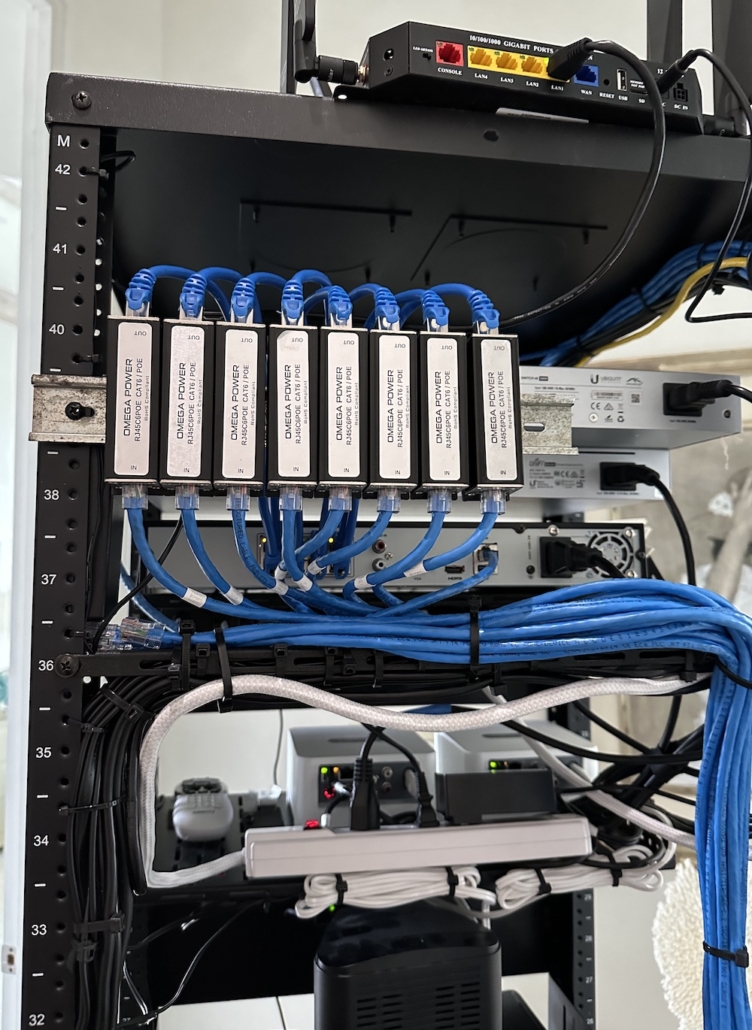
A properly engineered lightning protection system for a data center operates on the IEC 62305-4 Lightning Protection Zone (LPZ) model. The goal is to create an LPZ 2 environment inside the data hall, a zone where the residual surge energy reaching equipment is low enough that compliant SPDs at the rack level can handle it without equipment damage. Getting to LPZ 2 requires a coordinated three-layer SPD deployment: Type 1 at the service entrance, Type 2 at the distribution panels, and Type 3 at the point of use. Each layer handles a different portion of the transient energy. Skipping any layer, which is common in facilities that installed “surge protection” without a system design, leaves gaps that a real strike will find.
The asset protection math is straightforward. A mid-size data center might carry $3 million to $8 million in IT equipment on its asset register. A coordinated lightning protection and surge suppression system, air terminals, down conductors, ground bed, bonding, and all three SPD tiers typically run $25,000 to $75,000 for a facility of that scale, depending on square footage, structural complexity, and existing grounding infrastructure. That’s a capital expenditure protecting an asset base 40 to 300 times its cost. No CFO running a standard risk-adjusted return calculation rejects that ratio.
The grounding system is where most existing facilities have the most exposure. NEC 250.106 requires that lightning protection grounding be bonded to the building’s electrical grounding system, and NEC 250.60 specifies that LP electrodes remain separate but bonded. A ground bed resistance above 25 ohms or a bonding connection with more than 1 ohm of resistance means the system can’t safely dissipate strike energy. We’ve inspected facilities in the Tampa Bay area and Broward County, where the ground bed was reading 40 to 60 ohms. That’s not a lightning protection system; that’s a liability waiting to be triggered.
Avoided Downtime: Building the Business Case for IT Leadership
IT directors presenting a capital request for lightning protection need a number their CFO can stress-test. Here’s a framework that holds up in budget review.
Start with your facility’s annualized lightning exposure. Florida’s 76 flashes per square mile per year means a 50,000-square-foot data center in the Tampa or Fort Lauderdale metro area sits in one of the highest-risk lightning environments in the world. The National Weather Service documents Florida’s lightning density in detail — use their data when building your risk narrative for the board.
Next, calculate your downtime cost per hour. Use your actual SLA penalty structure, your hourly staff cost during an outage, and a conservative estimate of client churn risk from a major event. For most colocation and managed services operators, the honest number lands between $300,000 and $1.2 million per hour of full outage. Even a partial outage, cooling system down, some racks offline, runs $50,000 to $200,000 per hour when you account for emergency response costs and SLA exposure.
Then estimate your annual probability of a damaging lightning event without a certified system. Industry loss data and actuarial tables used by commercial property insurers suggest that an unprotected data center in Florida’s lightning corridor faces a meaningful probability of a damaging event within any five-year window. A conservative 20% annual probability of a $200,000 event gives you a $40,000 expected annual loss before you factor in the probability of a catastrophic event. A $50,000 protection system that eliminates or dramatically reduces the expected loss pays for itself in 15 months on expected-value math alone, without counting the insurance premium reduction or the equipment asset protection.
For facilities that have already experienced a lightning-related outage, the ROI calculation is even simpler: the system cost is almost always less than the last incident’s total cost. We’ve worked with data center operators in Jacksonville and Sunrise who came to us after a strike event, ran the numbers, and realized they’d been self-insuring a risk that a $35,000 system would have transferred to physics rather than their balance sheet.
Liability Mitigation: What Risk Managers Need to Document
The liability dimension of lightning protection ROI is the one that gets underweighted in most financial analyses, because it’s harder to quantify until something goes wrong. For a data center operating under colocation agreements, managed services contracts, or cloud service agreements, a lightning-induced outage that causes client data loss or service interruption creates direct contractual liability. If you can’t demonstrate that you maintained a certified, inspected lightning protection system, your defense position in arbitration or litigation is materially weaker.
The documentation standard that matters is UL 96A certification. A current Master Label certificate, combined with ground resistance test records and a five-year inspection history, demonstrates that you exercised reasonable care in protecting the facility. That documentation package is what your legal team needs if a client ever claims that your facility’s lightning vulnerability caused their data loss or business interruption.
For healthcare-adjacent data center facilities hosting EHR systems, medical imaging archives, or telehealth infrastructure, the liability exposure is compounded by HIPAA and, for hospital operators, 42 CFR §482.15 emergency preparedness requirements. A lightning-induced outage that compromises patient data or disrupts clinical systems creates regulatory exposure on top of contractual liability. The Joint Commission’s environment-of-care standards expect that facilities have addressed known environmental risks. In Florida, lightning is a known environmental risk. Documented mitigation is the expected response.
Our system inspection services include a written report with ground resistance measurements, component condition assessment, and a compliance gap analysis against current NFPA 780 and UL 96A requirements. That report is the document your risk manager needs in the file before an incident, not after.
What a Complete System Costs — and What It Doesn’t
The most common objection to a lightning protection investment is a cost estimate based on an incomplete scope. A single air terminal on the roof is not a lightning protection system. A power strip with a surge rating is not a Type 1 SPD. These partial measures create a false sense of protection while leaving the actual risk exposure largely intact.
A complete, NFPA 780-compliant system for a commercial data center includes five required elements: air terminals (sized and positioned using the Rolling Sphere Method, not the obsolete 45-degree cone rule), down conductors sized to Class I or Class II requirements, a grounding electrode system with verified resistance below 25 ohms, equipotential bonding to prevent sideflash between structural elements, and a coordinated three-tier SPD deployment. The system also requires CAD-documented engineering drawings, permit-ready and sealed, and a UL 96A inspection to earn the Master Label certificate that your insurer and legal team will want to see.
For a data center in the 10,000 to 50,000 square foot range, a complete system typically runs $25,000 to $75,000 installed. Larger campuses or facilities with complex structural geometry run higher. Our cost guide for lightning protection systems walks through the variables that drive pricing — building height (Class I under 75 feet, Class II above), conductor sizing requirements, ground bed conditions, and SPD tier requirements. Every facility is different, which is why we start with a site assessment rather than a catalog price.
The surge suppression systems we design and install for data centers are engineered to IEC 62305-4 LPZ 2 specifications — not selected from a catalog and bolted to a panel. The difference matters when a real strike happens, and you need the system to perform as designed.
Frequently Asked Questions
How much can a certified lightning protection system actually reduce my insurance premiums?
Facilities with a current UL 96A Master Label certificate typically see reductions of 10% to 18% on the lightning and electrical damage portions of their commercial property policy. The exact reduction depends on your carrier, your coverage structure, and your facility’s risk profile. The certificate needs to be current — it expires every five years — and your broker needs to actively present it to the underwriter at renewal. Letting the certificate lapse, or failing to present it, leaves that discount on the table. For a data center paying $400,000 in annual property premiums, that’s a potential $40,000 to $72,000 annual savings that directly offsets the system’s capital cost.
Does a lightning protection system prevent all lightning damage?
A properly engineered, NFPA 780-compliant system with a coordinated three-tier SPD deployment dramatically reduces the probability and severity of lightning-induced damage — it doesn’t create an absolute guarantee. What it does is intercept direct strikes safely, dissipate the energy into the ground system rather than through your equipment, and suppress the transient overvoltages that travel through power and data lines. The IEC 62305-4 LPZ 2 standard defines the residual surge environment that equipment inside a protected data hall should experience. Achieving that standard requires all five system components working together. A partial system — air terminals without proper grounding, or SPDs without bonding — leaves gaps. That’s why the engineering design and UL inspection matter as much as the hardware.
How often does a lightning protection system need to be inspected?
UL 96A requires a formal re-inspection every five years to maintain the Master Label certificate. Beyond that mandatory cycle, we recommend a post-storm inspection after any direct strike event or any event that trips your Type 1 SPD, since a real strike can degrade components even when the system performs correctly. Annual visual inspections of accessible components — checking for conductor corrosion, loose connections, and air terminal condition — are good practice between formal UL inspections. Our inspection program covers both the five-year UL recertification and post-storm assessments, with written reports that document ground resistance measurements and component condition for your records.
What’s the difference between a Type 1, Type 2, and Type 3 SPD, and do I need all three?
Yes, you need all three — they handle different portions of the transient energy from a lightning event. A Type 1 SPD is installed at the service entrance and handles the highest-energy surges from direct strikes or nearby ground flashes. A Type 2 SPD is installed at distribution panels and handles the residual energy that gets past the Type 1 device. A Type 3 SPD is installed at the point of use — at the rack PDU or equipment outlet — and handles the low-level transients that the first two tiers don’t fully suppress. Skipping any tier leaves a gap. Power strips marketed as “surge protectors” are typically Type 3 devices at best; they provide no meaningful protection against the energy levels produced by a direct strike or a close ground flash without Type 1 and Type 2 upstream.
Can I add lightning protection to an existing data center, or does it only work for new construction?
Retrofit installations are common and fully achievable. The engineering approach for an existing building differs from new construction — conductor routing has to work around finished surfaces, and the grounding system assessment is more involved when you’re working with an existing electrode system — but the end result is a fully compliant, UL 96A-certifiable system. We’ve completed retrofit installations at facilities across Tampa, Jacksonville, and Broward County, including buildings with complex roof geometry and existing MEP infrastructure that required careful coordination. The site assessment is the critical first step: it identifies the existing grounding conditions, structural constraints, and SPD gaps that the design needs to address.
The Bottom Line: Run the Numbers Before the Next Storm Season
Florida’s lightning season runs from June through September, with peak activity in July and August. That gives facility managers and IT directors a defined planning window — and a hard deadline. The ROI case for a certified lightning protection system is not complicated: a $25,000 to $75,000 capital investment protects a multi-million-dollar equipment asset base, reduces annual insurance premiums by tens of thousands of dollars, eliminates the expected cost of downtime events that run $300,000 to $1.2 million per hour, and creates the documentation record that your legal and risk management teams need if an incident ever reaches litigation.
All South Lightning Protection has been engineering and installing certified systems for commercial and institutional facilities across Florida for more than 40 years. Our work at Tampa General Hospital, the Tampa Convention Center, and data center and colocation facilities throughout the state reflects the same engineering discipline: complete systems, properly documented, built to pass UL 96A inspection. We provide permit-ready CAD drawings, sealed engineering documents, and the inspection coordination needed to earn and maintain your Master Label certificate.
Schedule a site assessment before the next storm season opens. Our team will evaluate your existing grounding infrastructure, identify SPD gaps, and deliver a scope and cost estimate that gives you a real number to put in front of your CFO. Request your site assessment here — and go into budget season with the data you need to make the decision.
For more on how lightning protection engineering applies specifically to data center environments, see our detailed guide on data center lightning protection. For a full breakdown of system cost variables, our lightning protection cost guide covers what drives pricing for facilities of different sizes and complexity.