Top 5 Lightning Protection Myths Debunked
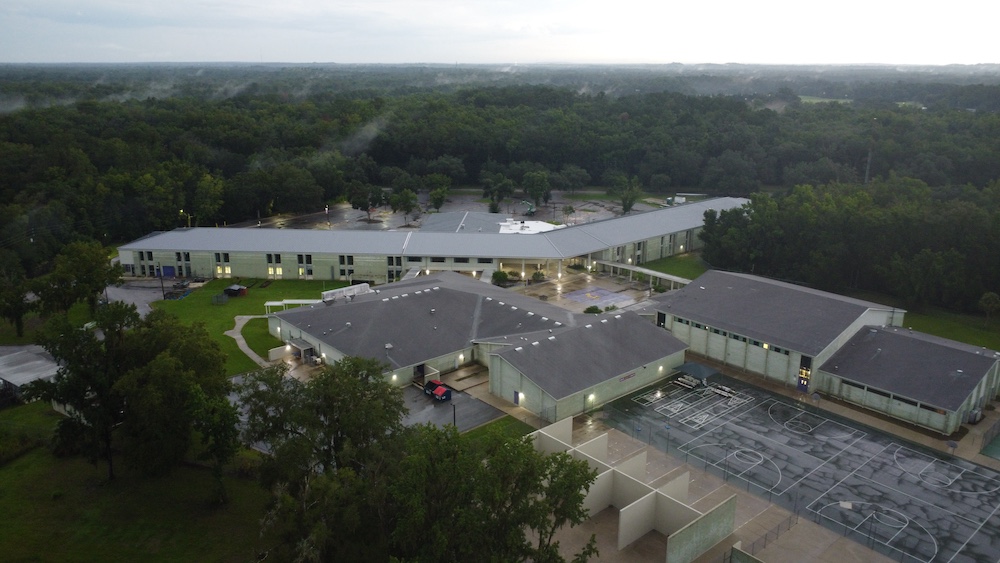
A single lightning strike to an unprotected commercial building can trigger equipment failures, data loss, fire, and liability exposure — all within milliseconds. Yet some of the most persistent lightning protection myths still shape purchasing decisions, delay system upgrades, and leave Florida facilities dangerously exposed. With roughly 1.4 million cloud-to-ground strikes hitting Florida every year and more than $2.6 billion in lightning-related insurance claims paid out between 2021 and 2024, the cost of acting on bad information is measurable. This post breaks down the five myths we hear most often — from school superintendents, facility managers, and risk officers — and replaces each one with the technical reality that actually governs compliant system design.
Myth 1: One Lightning Rod Protects the Whole Building
This is the most common misconception we encounter, and it’s the one most likely to create a false sense of security. A single air terminal — what most people call a “lightning rod” — protects only the zone directly above and around it, defined by the Rolling Sphere Method specified in NFPA 780. Picture a 150-foot sphere rolling across every surface of your building. Any point that sphere can touch without being intercepted by an air terminal is unprotected. For a 200-foot school gymnasium or a sprawling hospital campus, one rod covers almost nothing.
NFPA 780 (2026 edition) requires air terminals to be placed at intervals that ensure complete rolling-sphere coverage across the entire roof plane, including ridges, parapets, mechanical equipment, and HVAC curbs. Class I buildings under 75 feet need conductors sized at a minimum of 57,400 circular mils of copper. Class II structures above 75 feet require 115,000 cmil. These aren’t suggestions — they’re the engineering baseline for a compliant system.
The practical takeaway: if a vendor quotes you a single rod or a minimal array without providing CAD drawings showing rolling-sphere analysis, that’s not a lightning protection system. That’s a lightning rod. There’s a significant difference. Our team produces permit-ready sealed engineering drawings for every commercial installation, so facility managers and AHJs can verify coverage before a single component goes on the roof.
Myth 2: Sharper Lightning Rods Work Better
Intuition says a sharp point attracts lightning more effectively. The physics says otherwise. Research published through the Lightning Protection Institute and referenced in NFPA 780 Annex B confirms that moderately blunt air terminals — with a tip radius of approximately 25 mm — actually intercept lightning more reliably than needle-sharp points. A very sharp tip ionizes the surrounding air at lower field strengths, which can cause corona discharge that bleeds off charge rather than facilitating a clean attachment. Blunt tips hold off that ionization until the stepped leader is close enough for a reliable upward streamer to form.
This matters practically because some contractors still sell “enhanced” or “dissipation array” terminals with marketing language suggesting sharper or more complex geometry equals better protection. NFPA 780 does not recognize dissipation array technology as a compliant alternative to a conventional system. The standard is explicit: air terminals must meet UL 96A requirements, and the installation must be verifiable through a UL Master Label inspection. If a product can’t earn that label, it doesn’t belong on a school, hospital, or data center.
Myth 3: A Power Strip Surge Protector Is Enough
Walk into almost any school IT closet or small business server room and you’ll find power strips marketed as “surge protectors.” They’re not wrong — they do suppress small transient voltages from switching events and minor grid disturbances. What they cannot do is handle the energy from a direct lightning strike or a near-miss strike that couples into the building’s electrical system.
A compliant surge protection strategy requires three coordinated layers, as defined by NEC Article 285 and IEC 62305-4:
- Type 1 SPD — installed at the service entrance, rated to handle direct strike energy before it enters the building’s distribution system.
- Type 2 SPD — installed at the distribution panel, suppressing residual transients that pass the Type 1 device.
- Type 3 SPD — point-of-use protection at sensitive equipment, the last line of defense for servers, medical devices, and control systems.
A $30 power strip is a Type 3 device at best. Without a Type 1 at the entrance and a Type 2 at the panel, it’s absorbing energy it was never designed to handle. For data centers, the stakes are even higher: downtime costs run $5,000 to $10,000 per minute, and a single surge event can cascade through an entire server rack. Our commercial surge suppression services address all three SPD layers as a coordinated system, not as isolated afterthoughts.
Myth 4: Lightning Never Strikes the Same Place Twice
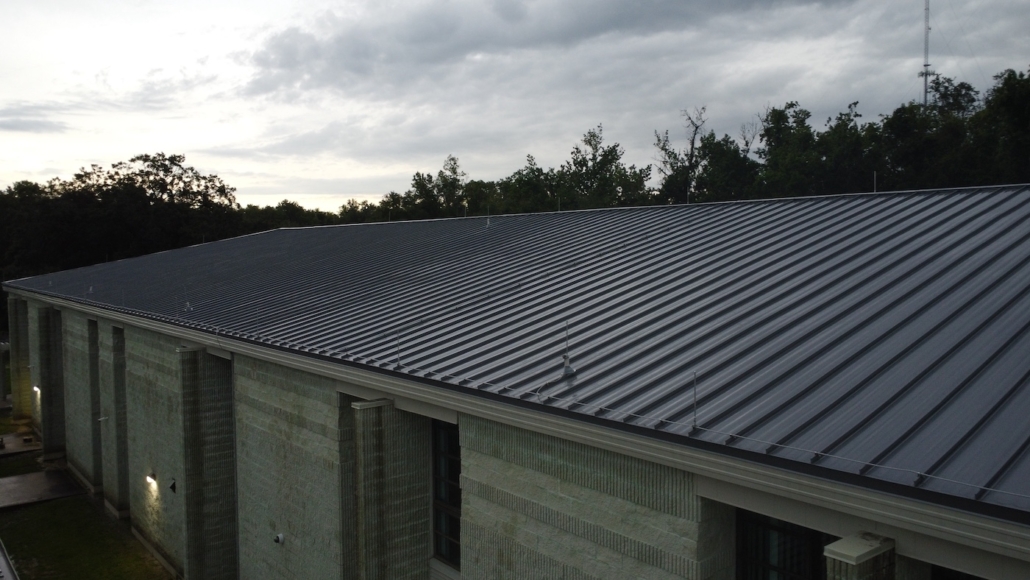
This one is folklore, not physics. The Empire State Building is struck 20 to 25 times per year. Tall structures, rooftop mechanical equipment, communication towers, and elevated HVAC units are struck repeatedly because the same geometry that made them attractive the first time hasn’t changed. In Florida, where the National Weather Service documents over 100 thunderstorm days annually in some regions and 76 lightning flashes per square mile per year statewide, repeated strikes to the same structure are routine — not exceptional.
For facility managers, this myth has a specific operational consequence: it leads to the belief that a building that has already been struck is somehow “used up” or less likely to be struck again. The opposite logic applies. If your building has been struck and you haven’t had the system inspected and recertified, you may be operating with damaged conductors, compromised ground connections, or failed SPDs that absorbed the previous event. UL 96A requires recertification every five years under normal conditions — and a post-strike inspection should happen before the next storm season, not five years later.
Our lightning protection system inspections include conductor continuity testing, ground resistance measurement (target: under 25 ohms per NFPA 780), and SPD status verification. A post-strike inspection report also gives risk managers the documentation they need for insurance purposes.
Myth 5: Rubber Tires and Car Bodies Keep You Safe — and Buildings Don’t Need Grounding If They Have a Rod
Two myths for the price of one, because they share the same root misunderstanding: that lightning protection is about blocking or deflecting energy rather than safely conducting it to ground.
The tire myth is persistent enough that the National Weather Service addresses it directly: rubber tires provide no meaningful protection from lightning. The protection inside a hard-topped vehicle comes from the metal body acting as a Faraday cage, routing current around the occupants and into the ground through the chassis — not through the tires. The principle is the same one that governs proper building grounding.
For commercial structures, the grounding electrode system isn’t optional decoration — it’s the entire point. An air terminal intercepts the strike. Down conductors carry the current. The grounding electrode system dissipates that energy safely into the earth. Under NEC 250.106, the lightning protection grounding system must bond to the building’s electrical grounding system to prevent dangerous potential differences — what engineers call sideflash — between the LP system and other conductive building elements. Under NEC 250.60, LP electrodes are kept separate from but bonded to the building grounding electrode system.
A ground bed that measures above 25 ohms is a system that can’t do its job. Equipotential bonding — connecting structural steel, metallic piping, HVAC equipment, and electrical grounds to a common reference — is what prevents sideflash from jumping to a person standing near a wall during a strike. This is the component most often skipped in cheap installations, and it’s the one most likely to cause injury or fire when it’s missing. Our grounding and bonding services treat this as a first-order engineering problem, not a line item to value-engineer away.
Why These Myths Persist — and Who Pays the Price
Most of these misconceptions come from three sources: outdated training, marketing from vendors selling non-compliant products, and the simple fact that lightning protection is invisible infrastructure. When a system works, nothing happens — and “nothing happened” is hard to credit to a system most people never think about. When a system fails or was never properly installed, the consequences show up as an insurance claim, a data loss event, a fire investigation, or a liability suit.
Florida school districts face a specific compliance reality: state law requires new school construction to meet NFPA 780, and the Florida DBPR licenses lightning protection contractors separately from general electrical contractors. That licensing requirement exists because this work demands specialized knowledge — the kind that comes from understanding rolling-sphere geometry, conductor sizing by building class, and the interaction between LP grounding and the NEC 250 electrode system. A general electrician with a rod and some copper wire isn’t a lightning protection contractor.
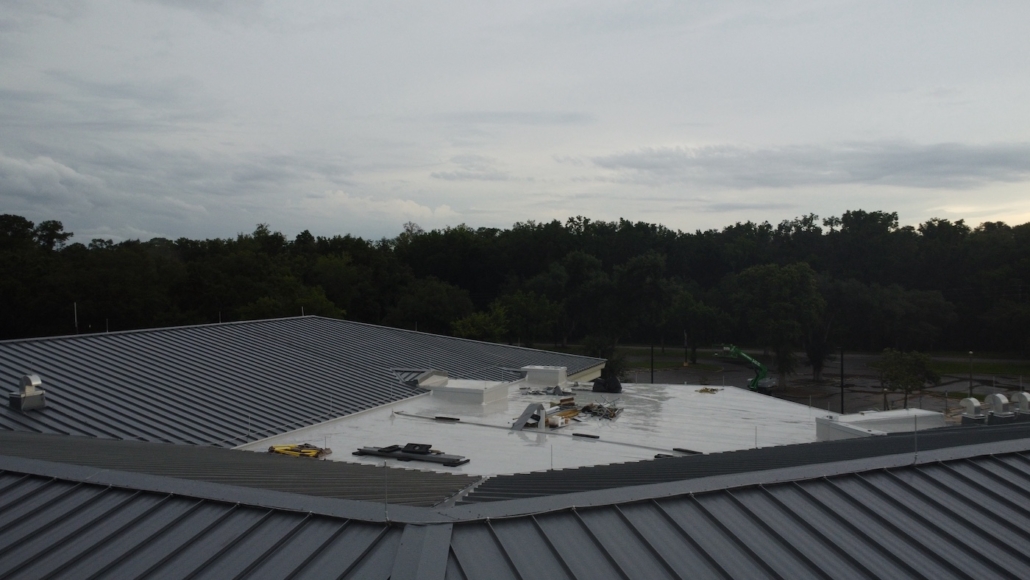
We’ve installed compliant systems at Floral City Elementary, Delores Parrot Middle School, Deep Creek Elementary, and MOSI — each one engineered to NFPA 780 and inspected under UL 96A. The education project portfolio reflects what a properly scoped system actually looks like for institutional clients. For school administrators evaluating a new installation or questioning whether an existing system is still compliant, that’s the baseline worth comparing against.
Frequently Asked Questions
Does my school or commercial building legally need a lightning protection system in Florida?
Florida requires new school construction to comply with NFPA 780 under state building code. For other commercial buildings, NFPA 780 compliance may be required by the Authority Having Jurisdiction (AHJ), the building’s insurer, or specific occupancy classifications. Even where it isn’t legally mandated, the liability exposure from an unprotected building — particularly one housing students, patients, or critical data — makes compliance a risk management decision as much as a regulatory one. Many Florida insurers also offer premium reductions for buildings with UL 96A-certified systems, which can offset installation costs over time.
How do I know if my existing lightning protection system is still compliant?
UL 96A requires recertification every five years for systems carrying a UL Master Label. Between certifications, any significant roof modification, HVAC addition, antenna installation, or direct strike event should trigger an inspection. During an inspection, a qualified contractor checks conductor continuity, ground resistance (target below 25 ohms), bonding connections, air terminal placement against current rolling-sphere requirements, and SPD status. If your system was installed more than five years ago and hasn’t been inspected, assume it needs evaluation — components degrade, connections corrode, and rooftop geometry changes with every renovation.
Are surge protectors and lightning protection the same thing?
No — they address different parts of the same threat. A lightning protection system (air terminals, down conductors, grounding) intercepts a direct strike and routes the energy safely to ground. Surge protection devices (SPDs) suppress the transient overvoltages that travel through electrical, data, and communication lines during a strike or near-miss event. Both are necessary. A building with a perfect lightning protection system but no SPDs can still lose its entire server infrastructure to a conducted surge. A building with excellent SPDs but no structural lightning protection is still at risk of fire, structural damage, and direct-strike injury. NFPA 780 and IEC 62305-4 both treat these as complementary, not interchangeable.
What’s the difference between a UL 96A certificate and just having a lightning rod installed?
A UL 96A Master Label certificate means the complete system — air terminals, conductors, grounding, bonding, and SPDs — was designed and installed to UL 96A standards and inspected by a UL field representative. It’s third-party verification, not a contractor’s self-assessment. A lightning rod installed without that process may or may not meet NFPA 780 requirements, and there’s no independent documentation to prove it either way. For risk managers and insurers, the UL 96A certificate is the document that matters. It’s also the baseline for the five-year recertification cycle that keeps the system’s compliance status current.
Can lightning protection be added to an existing building, or does it only work for new construction?
Retrofit installations are common and fully compliant with NFPA 780 when engineered correctly. The process involves a site survey, rolling-sphere analysis of the existing roof geometry, conductor routing that works with the building’s current structure, and integration with the existing electrical grounding system per NEC 250.106. Older buildings — particularly schools and hospitals built before modern standards — often have no system at all or a legacy installation that doesn’t meet current requirements. A retrofit is almost always less disruptive than facility managers expect, and the engineering drawings we provide give the AHJ everything needed for permit approval.
The Bottom Line
Lightning protection myths aren’t harmless misunderstandings — they’re the gap between a facility that’s actually protected and one that looks protected until a storm proves otherwise. Florida’s lightning environment doesn’t leave much margin for error. With 76 flashes per square mile per year and insurance claims averaging $18,641 per event nationally, the financial and operational consequences of an inadequately protected building are concrete and recurring.
All South Lightning Protection has been engineering and installing compliant systems across Florida for more than 40 years — from school campuses in Hillsborough County to hospital helipads, convention centers, and data facilities. Every system we design is built to NFPA 780, installed to UL 96A, and documented with sealed engineering drawings. If you’re not certain your current system would pass a UL 96A inspection — or if you’ve never had one — the right move is a professional site assessment before the next storm season arrives.
Schedule a site assessment with our team by visiting our contact page or calling the Tampa office directly at (813) 630-2757. We serve commercial, institutional, and government clients across Tampa, Jacksonville, Sunrise, and throughout Florida.