Three Events That Void Your UL 96A Certificate
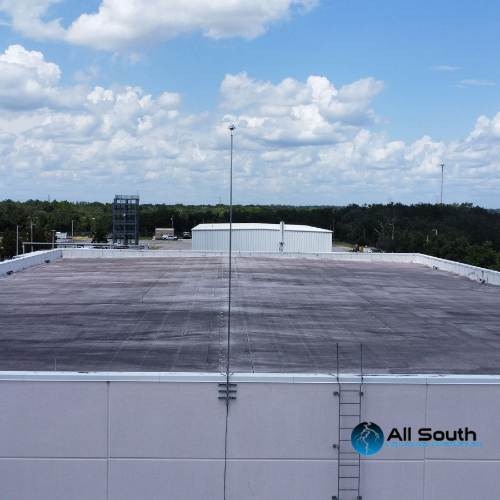
Your building has a certified lightning protection system. The UL Master Label is on file, the five-year clock is running, and you’ve checked that box. Then a roofer pulls permits to replace the membrane, or a mechanical contractor drops a new 20-ton rooftop unit on the northwest corner, or a summer storm puts a direct strike on the east parapet. Any one of those three events can render your UL 96A certification invalid before the ink on the work order dries — and most facility managers don’t find out until an insurance auditor or a Joint Commission surveyor asks for the current certificate. This article is for the buildings that already have a system. It covers exactly which events trigger a recertification requirement under UL 96A (14th edition, 2023) and NFPA 780, what the inspection process looks like, and how to get back into compliance without replacing anything you don’t have to.
What UL 96A Certification Actually Means — and What It Doesn’t
UL 96A is the installation standard for complete lightning protection systems. When a UL-listed contractor installs a system to that standard and a UL field representative inspects and approves it, the building receives a UL Master Label certificate. That certificate is not a one-time award. It is a time-limited attestation that the system, as inspected on a specific date, met every requirement of UL 96A — conductor sizing, air terminal placement, grounding electrode resistance, bonding continuity, and SPD coordination.
The certificate expires every five years. That’s the baseline. But the five-year clock is not the only thing that can end your certification. UL 96A is explicit: any modification to the structure or the system that affects the lightning protection design requires a new inspection before the certificate remains valid. The standard doesn’t define a grace period. It doesn’t say “notify UL within 90 days.” It says the system must be inspected after a qualifying change. If it hasn’t been, the certificate is, at minimum, in question — and in a claim or audit scenario, that distinction rarely favors the building owner.
It’s also worth being clear about what UL does and doesn’t do here. UL inspects; it doesn’t install. The inspection is performed by a UL field representative who verifies the installed work against the standard. Your contractor — the one who holds LPI certification and is listed with UL — is responsible for the installation quality and for flagging when a recertification inspection is needed. If your contractor isn’t proactively telling you that a reroof or a new rooftop unit requires a follow-up inspection, that’s a gap in the service relationship worth addressing.
Event One: A Direct Strike to the Structure
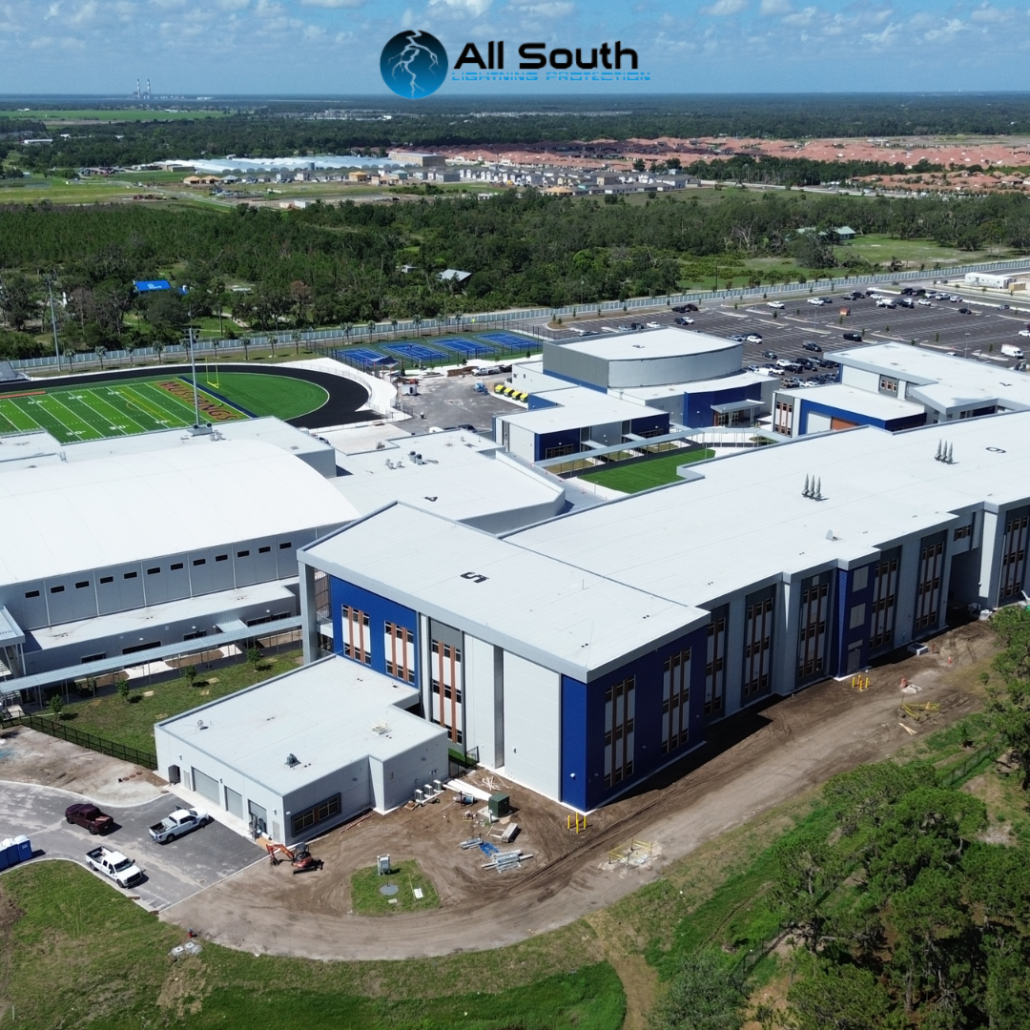
A direct lightning strike to a protected building is not proof the system failed. In most cases, it’s proof the system did exactly what it was designed to do — intercept the strike, conduct the current to ground, and prevent structural damage or fire. But the energy involved is real. A typical negative cloud-to-ground stroke carries 20,000 to 30,000 amperes. A large positive stroke can exceed 200,000 amperes. That current travels through your conductors, through your bonding connections, and into your grounding electrode system. Components absorb stress. Connections that were within spec before the strike may not be afterward.
NFPA 780 Section 4.27 addresses post-strike inspection directly. The standard requires that a lightning protection system be inspected after a known direct strike to verify that no components were damaged, no connections loosened, and no grounding continuity compromised. This is not optional language. For buildings operating under a UL Master Label, a post-strike inspection is required to confirm the certificate remains valid.
In practice, the inspection covers several specific items:
- Visual inspection of all air terminals for physical damage, displacement, or melting at the tip
- Continuity testing of all down conductors from air terminal to ground rod
- Ground resistance measurement at each electrode — the system must still read below 25 ohms at each rod, with bonding connections below 1 ohm
- Inspection of all bonding connections to metallic rooftop equipment, structural steel, and the building’s grounding electrode system per NEC 250.106
- Assessment of Type 1 SPDs at the service entrance, which absorb the highest energy during a direct strike and are the most likely component to require replacement
Florida averages 76 cloud-to-ground lightning flashes per square mile per year — the highest density in the United States, according to NOAA’s National Weather Service. For a large commercial campus, a direct strike is not a once-in-a-generation event. Buildings in the Tampa Bay corridor and along the I-4 corridor regularly take multiple strikes across a single storm season. If your post-strike inspection protocol is “we’ll call if something looks wrong,” you’re operating on assumption, not documentation.
Event Two: Roof Replacement or Significant Roof Work
Roof replacement is the most common trigger for an inadvertent UL 96A violation — and the one facility managers are most likely to overlook, because the lightning protection system isn’t the reason the roofer is on the roof. The roofing contractor is there to replace a membrane, add insulation, or repair storm damage. The lightning protection system is, from their perspective, an obstacle to work around.
The problem is that a compliant lightning protection system is integrated into the roof assembly. Air terminals are mounted at specific intervals — NFPA 780 Table 4.6.1 requires air terminals no more than 20 feet apart along roof edges and ridges for Class I buildings, with additional terminals required at corners and high points. The conductors connecting those terminals run across the roof surface and penetrate through the roof assembly at down conductor locations. When a roofer removes and replaces the membrane, those conductors get moved, re-routed, or, in some cases, removed entirely and not reinstalled.
Even when the roofer is careful, the reinstallation of air terminals and conductors after a reroof must be verified against the original design drawings. Spacing that was compliant before the reroof may not be compliant after if the roofer repositioned a terminal by three feet to avoid a drain. A conductor that was properly secured and protected before the reroof may now be running under a new insulation layer without the required protection. These are not hypothetical scenarios — they’re the findings that come up repeatedly in post-reroof inspections.
The correct sequence is straightforward: before the roofer starts, your lightning protection contractor should document the existing system layout with photographs and measurements. After the reroof is complete, the LP contractor returns to verify reinstallation against the original design and, if the system is UL-certified, coordinates a UL field inspection to confirm the certificate remains valid. If your roofing project is already underway and this sequence hasn’t happened, schedule the LP inspection before the roofer demobilizes — it’s far easier to correct a spacing issue while the roofer still has equipment on site.
For buildings with existing UL Master Labels, our lightning protection system inspection service includes a full post-reroof verification with written documentation suitable for your UL file and your insurance carrier.
Event Three: New Rooftop Equipment — HVAC Units, Solar Arrays, and Mechanical Additions
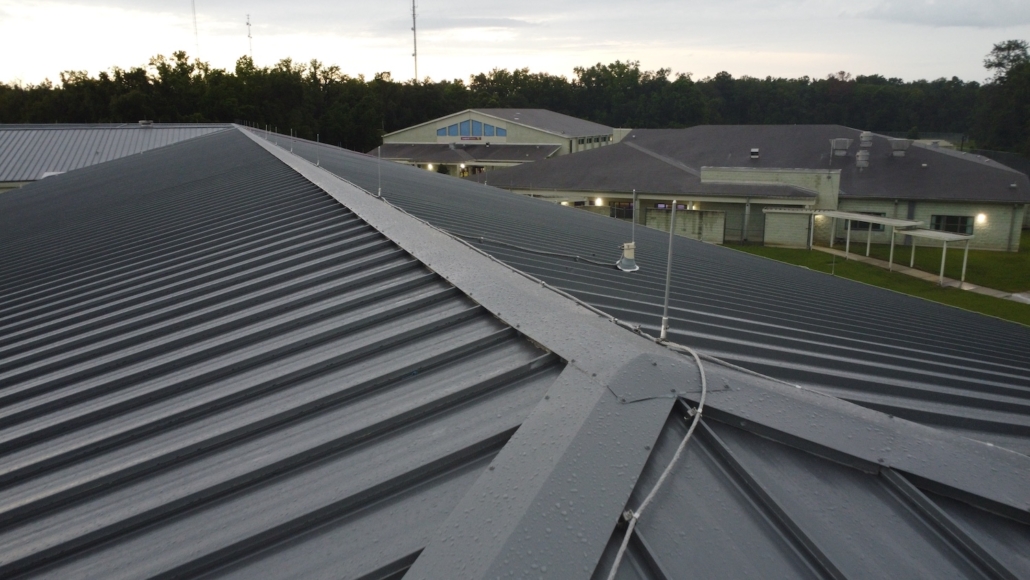
This is the event that catches the most sophisticated facility managers off guard, because it doesn’t feel like a lightning protection issue. A mechanical contractor installs a new 25-ton rooftop unit. An energy manager adds a 200-kW solar array. A telecom team mounts a new antenna cluster. None of those scopes of work include lightning protection, and none of those contractors are thinking about your UL 96A certificate. But each of them changes the geometry of your roof in ways that directly affect the lightning protection system’s coverage.
NFPA 780 uses the Rolling Sphere Method — a theoretical 150-foot sphere rolled across the structure — to define the zone of protection. Air terminals are positioned so that no point on the structure falls outside the sphere’s path. When you add a rooftop unit that stands four feet above the roof surface, you’ve created a new high point. If that high point isn’t within the zone of protection of an existing air terminal, it’s unprotected — and it’s now the most likely strike point on that section of the roof.
Beyond the coverage geometry, new rooftop equipment introduces a bonding requirement. Under NEC 250.106, all metallic objects on the roof — including HVAC equipment, conduit, ductwork, and structural supports — must be bonded to the lightning protection system. A new rooftop unit that isn’t bonded to the LP system creates a side-flash hazard: when lightning current flows through the LP conductors, the potential difference between the conductor and the unbonded equipment can arc across the gap, causing exactly the kind of damage the system was designed to prevent.
Solar arrays present a specific set of challenges. The racking system, the inverters, the DC conductors, and the array frames all require bonding. IEC 62305-4 provides additional guidance for systems with sensitive electronic equipment in the discharge path. For buildings that have added solar since their original LP system was certified, a full system review against the current installation — not the original design — is the only way to confirm coverage and bonding are still compliant.
Our grounding and bonding services include assessment of new rooftop equipment additions and coordination with your mechanical and electrical contractors to ensure bonding is completed correctly before the equipment goes into service.
The Five-Year Recertification Cycle — and Why It’s a Floor, Not a Ceiling
UL 96A requires recertification every five years as a baseline. That interval assumes a static building — no strikes, no roof work, no new equipment. For most commercial facilities in Florida, a static five-year period is the exception, not the rule. Buildings get reroofed. Mechanical systems get upgraded. Tenants add equipment. Storms happen.
The practical implication is that the five-year recertification date on your certificate is the latest you can go without an inspection, not the earliest. If any of the three events described above occur before that date, the inspection needs to happen then — not at the five-year mark. Waiting until the scheduled recertification to address a post-strike or post-reroof condition means operating with an effectively invalid certificate for months or years.
NFPA 780 Section 4.27 recommends annual visual inspections in addition to the UL recertification cycle. For Florida facilities, that recommendation reflects the reality of the operating environment. An annual visual inspection by a qualified LP contractor — checking for physical damage, corrosion at connections, displaced air terminals, and new unbonded equipment — catches the conditions that would otherwise go undetected until the five-year inspection.
The Lightning Protection Institute publishes inspection checklists and guidance for system owners that align with both NFPA 780 and UL 96A requirements. These are useful reference documents for facility managers who want to understand what a qualified inspection should cover.
For a broader look at what a full inspection involves and what it costs relative to a claim, see our breakdown of lightning protection system costs for commercial facilities.
What the Recertification Inspection Actually Involves
A UL 96A recertification inspection is not a paperwork exercise. A UL field representative physically inspects the installed system against the current UL 96A standard and the approved design drawings. For the certificate to be renewed, every element of the system must be in compliance on the day of inspection — not on the day it was originally installed.
The inspection covers:
- Air terminal placement and condition — spacing per NFPA 780 Table 4.6.1, physical integrity, and correct tip geometry (moderately blunt, per current standard)
- Conductor sizing and routing — Class I buildings require conductors of at least 57,400 cmil copper; Class II (over 75 feet) require 115,000 cmil; routing must avoid sharp bends and maintain required separation from electrical conduit
- Grounding electrode system — ground resistance below 25 ohms at each electrode; bonding to the building’s grounding electrode system per NEC 250.60
- Equipotential bonding — all metallic rooftop objects bonded to the LP system; bonding connections below 1 ohm resistance
- SPD coordination — Type 1 devices at the service entrance, Type 2 at distribution panels, Type 3 at point-of-use; all within the system’s surge coordination design
- Documentation — as-built drawings must reflect the current installed condition; any deviations from the original design must be documented and approved
If the inspection identifies deficiencies, the certificate is not renewed until those deficiencies are corrected and re-inspected. The timeline for correction depends on the nature of the deficiency — a loose bonding connection can be corrected in hours; a conductor routing issue on a large roof may take longer. The key is identifying deficiencies before the inspection, not during it. A pre-inspection walkthrough by your LP contractor — before the UL field representative arrives — is standard practice for any well-managed recertification.
The Insurance and Liability Dimension
Florida insurers paid out more than $2.6 billion in lightning claims between 2021 and 2024. The national average per commercial lightning claim runs approximately $18,641, but large commercial losses — data centers, hospitals, manufacturing facilities — routinely run into six and seven figures. When a claim is filed, the insurer’s first question about a certified system is whether the certificate was current and valid at the time of the loss.
An expired or invalidated UL 96A certificate doesn’t automatically void coverage. But it gives the insurer grounds to investigate whether the system was maintained in compliance with the standard it was certified to — and if it wasn’t, whether that non-compliance contributed to the loss. For risk managers, the documentation trail matters as much as the physical system. A current UL Master Label, annual inspection records, and documented post-event inspections are the paper record that supports a claim rather than complicating it.
Some Florida commercial insurers offer premium reductions for UL-certified lightning protection systems — reductions that are contingent on the certificate remaining current. If your certificate has lapsed or been invalidated by an unreported modification, you may be paying for a discount you’re no longer entitled to, and your carrier may have grounds to recover it.
For facilities with complex risk profiles — hospitals, data centers, schools — the specific compliance requirements for healthcare facilities add another layer of documentation obligation that makes current certification non-negotiable.
Frequently Asked Questions
Does a direct lightning strike automatically void my UL 96A certificate?
Not automatically — but it triggers a mandatory post-strike inspection under NFPA 780 Section 4.27. Until that inspection is completed and the system is confirmed to be in compliance, the certificate’s validity is in question. If the inspection finds damage or degraded connections, the certificate is suspended until repairs are made and re-inspected. The practical answer for any facility manager is: treat a direct strike as an immediate inspection trigger, not a wait-and-see situation. Document the event, notify your LP contractor, and schedule the inspection before the next storm season.
My roofer says he “worked around” the lightning protection system. Is that good enough?
No. “Working around” the system is not the same as reinstalling it correctly. Air terminal spacing, conductor routing, and penetration details must be verified against the original design drawings after any roof work. A roofer who repositioned a terminal by a few feet to clear a drain may have created a coverage gap that violates NFPA 780 Table 4.6.1. The only way to confirm compliance after a reroof is a documented inspection by a qualified LP contractor, followed by a UL field inspection if the building carries a Master Label certificate.
We added a rooftop solar array last year. Do we need a new inspection?
Yes. A solar array changes the roof geometry, introduces new metallic equipment that must be bonded to the LP system, and may create new high points that fall outside the existing zone of protection. The racking system, inverter enclosures, and array frames all require bonding per NEC 250.106. If the array was installed without coordinating with your LP contractor, schedule an inspection now. The longer unbonded equipment sits on the roof, the longer you’re operating with a sideflash hazard and an effectively non-compliant system.
How long does a UL 96A recertification inspection take, and how much does it cost?
For a typical mid-size commercial building — 50,000 to 150,000 square feet — a recertification inspection takes one to two days for the LP contractor’s pre-inspection walkthrough and documentation, plus a separate UL field inspection visit. Cost varies by system complexity, building size, and whether any deficiencies require correction before the UL visit. The pre-inspection walkthrough by the LP contractor is the most cost-effective step: it identifies and corrects deficiencies before the UL representative arrives, avoiding the cost of a failed inspection and a return visit. Contact us for a site-specific estimate.
Our five-year recertification isn’t due for another 18 months, but we just had a reroof. Can we wait?
No. The five-year cycle is the maximum interval between recertifications under normal conditions. A reroof is not a normal condition — it’s a qualifying modification that requires inspection regardless of where you are in the five-year cycle. Operating under a certificate that was issued before a significant modification, without a post-modification inspection, means the certificate no longer accurately reflects the installed system. For insurance and liability purposes, that’s a meaningful exposure. Schedule the inspection now and reset the documentation record.
Schedule Your Inspection Before the Next Storm Season
If your building has taken a direct strike, completed a reroof, or added rooftop equipment since your last UL 96A inspection, the time to act is before the next Florida storm season — not after the next event. The inspection process is straightforward, the documentation is manageable, and the cost is a fraction of what a single uninsured or disputed claim would run. What’s not manageable is discovering a coverage gap or a lapsed certificate in the middle of a claim investigation.
All South Lightning Protection has been performing UL 96A inspections and recertifications for commercial facilities across Florida for more than 40 years, with completed projects at Tampa General Hospital, the Tampa Convention Center, and dozens of institutional and commercial properties from Jacksonville to Broward County. Our inspection reports are written to satisfy UL, your insurance carrier, and your risk manager — not just to check a box.
To schedule a post-event inspection, a pre-recertification walkthrough, or a full system assessment, contact our team and request a site visit. Tell us what’s changed on your roof, and we’ll tell you exactly what the inspection needs to cover.