Lightning Safety Week Tips: How to Protect Your Home and Business Before, During, and After a Storm
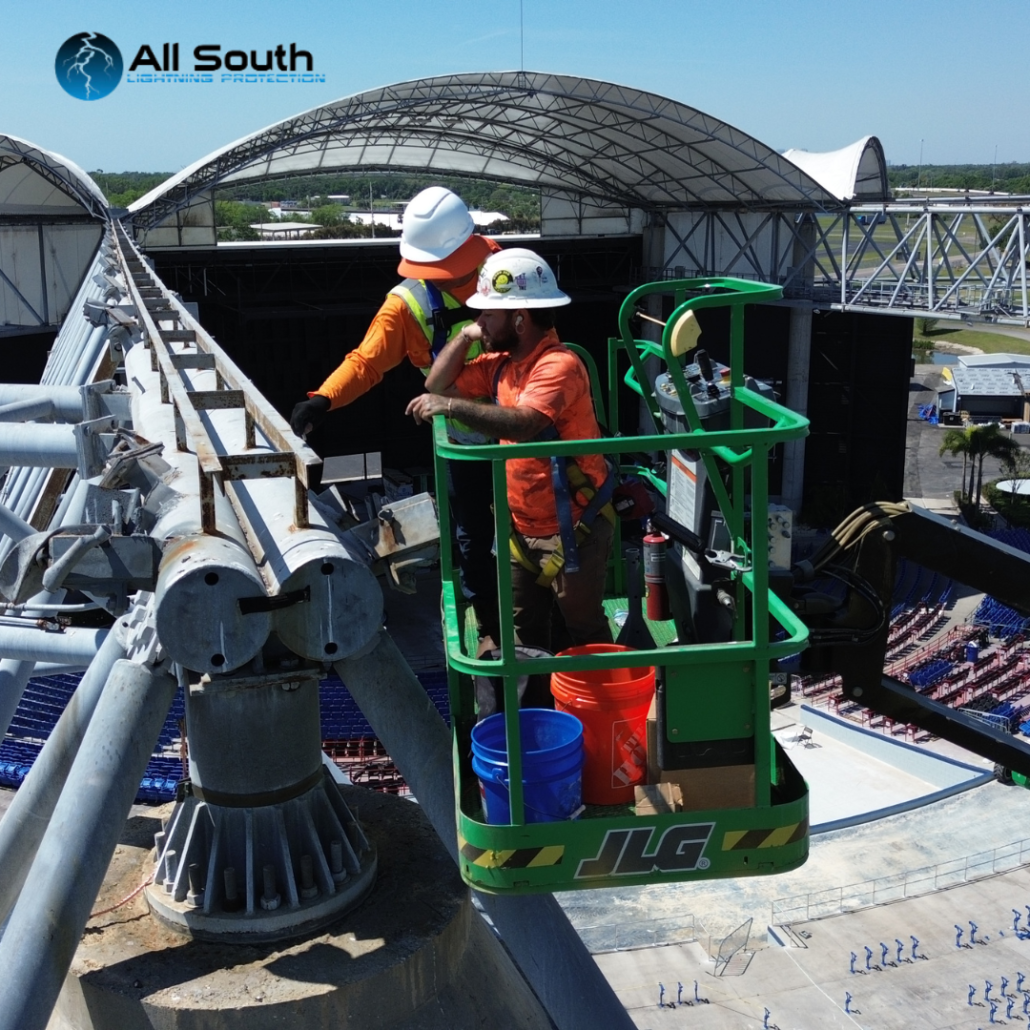
Every June, National Lightning Safety Awareness Week serves as a reminder that lightning is not just a dramatic weather event — it’s a leading cause of property damage, equipment failure, and preventable death in the United States. In Florida, that reminder carries extra weight. The state records roughly 1.4 million cloud-to-ground strikes per year and more than 100 thunderstorm days in many counties, making it the most lightning-prone state in the country by a wide margin. For facility managers, school administrators, business owners, and homeowners across Tampa, Jacksonville, and South Florida, lightning safety isn’t a once-a-year conversation. It’s an operational reality. This guide gives you concrete, standards-based actions you can take right now — before the next storm rolls in.
Why Lightning Safety Week Matters More in Florida Than Anywhere Else
The National Weather Service designates the last full week of June as Lightning Safety Awareness Week, timed to coincide with the peak of the U.S. lightning season. For most of the country, that’s a seasonal concern. For Florida, it’s the opening act of a six-month storm cycle that doesn’t let up until October.
Florida averages 76 cloud-to-ground flashes per square mile per year — the highest density in the nation. Between 2021 and 2024, Florida insurers paid out more than $2.6 billion across 250,000+ lightning-related claims. The national average claim now runs about $18,641, but commercial losses — particularly when HVAC systems, fire suppression panels, or data infrastructure take a direct hit — routinely run into six figures before the adjuster closes the file.
Lightning Safety Awareness Week is the right moment to audit your exposure, train your staff, and confirm that your physical protection systems are inspection-current. The tips below are organized the way storms actually unfold: before, during, and after.
Before the Storm: Preparation Is Where Real Protection Happens
Most lightning injuries and equipment losses are preventable with preparation that happens days or weeks before a storm arrives. Reactive measures — unplugging equipment when you hear thunder, sheltering in a doorway — are last resorts, not strategies.
Audit Your Lightning Protection System Against NFPA 780
NFPA 780, the Standard for the Installation of Lightning Protection Systems, is the governing document for commercial and institutional buildings in Florida. New commercial construction in the state must comply with it. But compliance at the time of installation doesn’t mean your system is still performing correctly five years later. Ground connections corrode. Down conductors get damaged during re-roofing. Bonding connections loosen. UL 96A requires a full recertification inspection every five years, and any post-storm inspection should happen within 30 days of a significant strike event. If you don’t know when your system was last inspected, that’s your first action item this Lightning Safety Week.
Our lightning protection system inspections cover all five required components: air terminals, down conductors, grounding electrode systems, equipotential bonding, and surge protective devices. We issue UL 96A-compliant documentation that satisfies insurance carriers and risk managers.
Install a Coordinated Surge Protection Strategy — Not Just Power Strips
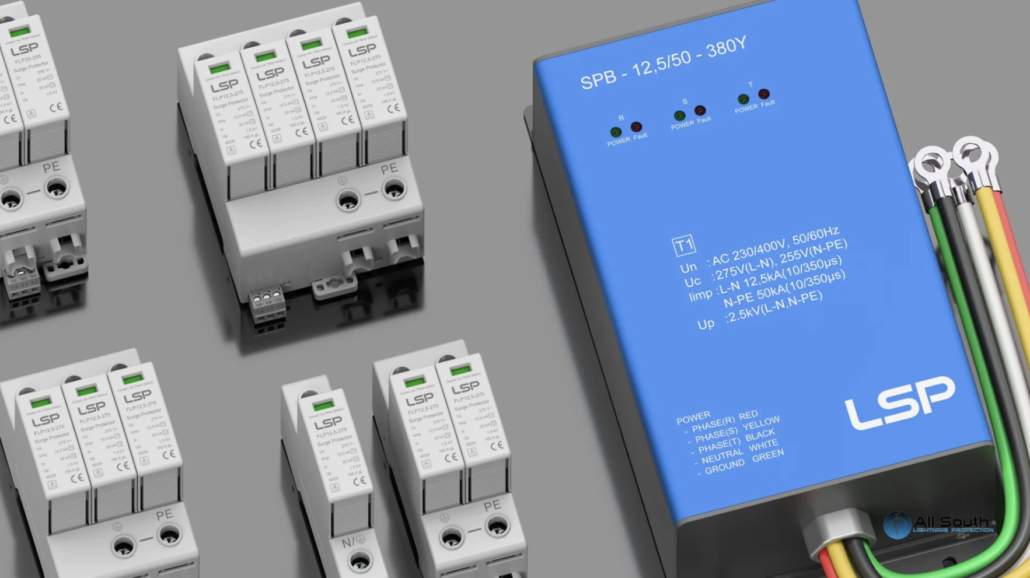
One of the most persistent misconceptions in facility management is that a power strip with a built-in surge protector provides meaningful lightning protection. It doesn’t. A direct strike or a nearby ground strike induces transient overvoltages that overwhelm point-of-use devices in milliseconds. The correct approach, per NEC Article 285 and IEC 62305-4, is a three-layer coordinated system:
-
- Type 1 SPD at the service entrance — intercepts the highest-energy transients before they enter the building
- Type 2 SPD at distribution panels — clamps residual energy at the panel level
- Type 3 SPD at point-of-use — final protection for sensitive electronics, servers, and medical equipment
All three layers must be present and coordinated. A Type 3 device installed without upstream Type 1 and Type 2 protection is absorbing energy it was never designed to handle. For data centers and server rooms, IEC 62305-4 defines a Lightning Protection Zone 2 (LPZ 2) environment — the standard your IT infrastructure should be designed to meet. Learn more about our commercial surge suppression services and how we design coordinated SPD systems for Florida facilities.
Train Staff on the 30/30 Rule and Shelter-in-Place Protocols
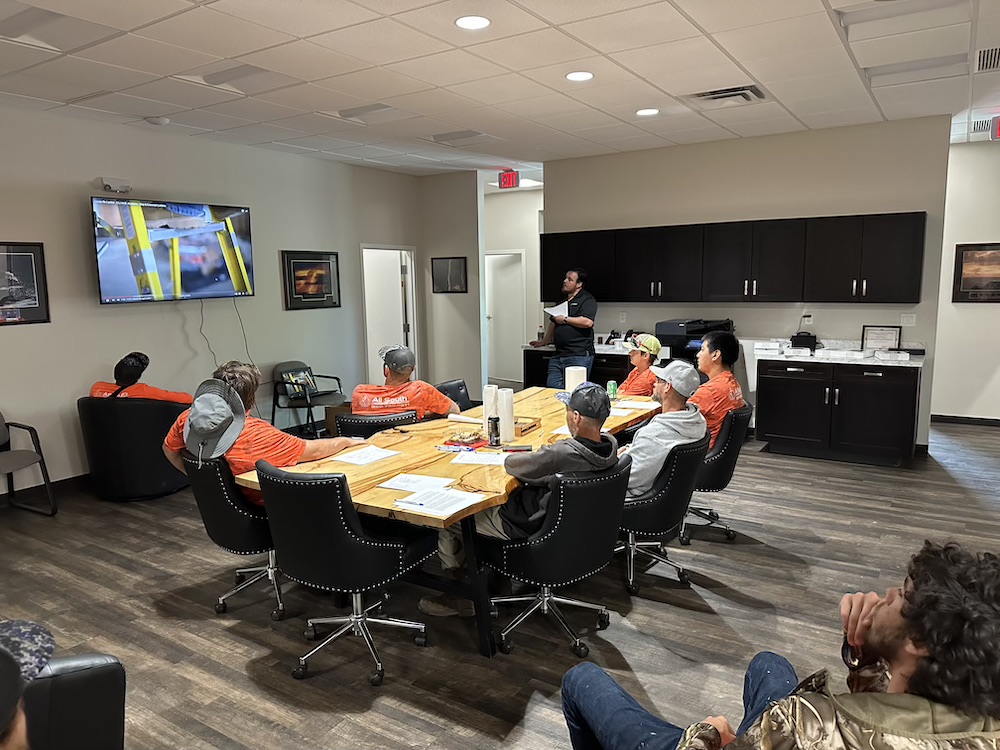
The 30/30 rule is the most actionable field guideline for outdoor workers, school staff, and event coordinators: if the time between a lightning flash and the thunder it produces is 30 seconds or less, the storm is within 6 miles and everyone should be indoors. Stay inside for at least 30 minutes after the last thunder. Post this rule in break rooms, on athletic fields, and in outdoor work areas. For schools and healthcare facilities, this protocol should be written into your emergency operations plan — not left to individual judgment in the moment.
During the Storm: What Actually Keeps People Safe
When a storm is overhead, the decisions that matter most were made before it arrived. But there are still clear behavioral guidelines that reduce risk significantly.
Safe Shelter Is a Substantial Building or a Hard-Topped Vehicle
A substantial building — one with plumbing, wiring, and a complete roof — is the safest place to be during a lightning storm. The building’s electrical system and plumbing provide a path to ground that bypasses occupants, provided the building has a properly bonded grounding system. Open structures like pavilions, dugouts, and covered bus stops offer no protection. A hard-topped metal vehicle with windows closed is the second-best option. The tires provide no protection — that’s a myth. The metal frame of the vehicle acts as a Faraday cage, routing current around the occupants.
For hospitals, schools, and large commercial facilities, shelter-in-place protocols need to account for the fact that you cannot always evacuate. Healthcare facilities in particular must maintain operations during storms — which is exactly why a complete, inspected lightning protection system is a patient safety issue, not just a property issue.
Avoid Contact Points During a Strike Event
Inside a building, avoid corded phones, plumbing fixtures, windows, and doors during active lightning. Current can travel through a building’s electrical and plumbing systems during a nearby strike, even when the building has a lightning protection system. The system routes the bulk of the energy to ground — it doesn’t make the building a zero-risk environment during the event itself. Unplug non-essential electronics if you have advance warning and time to do so safely, but don’t put yourself at risk to save equipment.
After the Storm: The Inspection Steps Most Facilities Skip
The storm passes, the sun comes out, and most facilities move on without a second thought. That’s a mistake. Post-storm inspection is where you find the damage that will cause the next failure.
Walk the Roof and Perimeter Within 48 Hours
After any storm that produced lightning in your immediate area, a qualified person should walk the roof and building perimeter to check for visible damage to air terminals, down conductors, and bonding connections. Look for scorch marks, displaced conductors, cracked masonry near down conductor paths, and any sign that a strike actually contacted the building. If you find evidence of a direct strike, stop using the system as-is and call for a professional inspection before the next storm season.
Test Your SPDs — They Don’t Last Forever
Surge protective devices are sacrificial by design. They absorb transient energy so your equipment doesn’t. After a significant storm event, Type 1 and Type 2 SPDs should be tested or visually inspected for status indicator changes. Many commercial-grade SPDs have a visual fault indicator; if it’s showing a fault, the device needs replacement before it can protect anything. This is a maintenance task that gets skipped in most facilities because the SPD is inside a panel and out of sight. Put it on your post-storm checklist.
Document Everything for Insurance and Risk Management
If your facility sustained a lightning-related loss, documentation is your most valuable asset in the claims process. Photograph damage before any cleanup. Pull your UL 96A inspection certificate to demonstrate that your system was maintained. Note the date and time of the storm event and cross-reference it with NWS strike data if available. Risk managers and insurance carriers respond better to documented, maintained systems than to facilities that can’t produce an inspection record. Our post-storm inspection service includes a written report suitable for insurance submission.
Lightning Safety for Schools: A Special Obligation
Florida law requires new school construction to comply with NFPA 780 — and for good reason. Schools concentrate hundreds of children in buildings that often have large open athletic fields, metal bleachers, and outdoor gathering areas that create real exposure during afternoon thunderstorms. The school lightning protection work we’ve completed across Florida — including Floral City Elementary, Delores Parrot Middle, and Deep Creek Elementary — follows a consistent design approach: complete NFPA 780-compliant systems, coordinated SPD protection for technology infrastructure, and Faraday preventor installations where appropriate.
For school superintendents and facilities directors, Lightning Safety Week is the right time to confirm that every campus has a current UL 96A certificate, that outdoor activity protocols include the 30/30 rule, and that your emergency operations plan addresses lightning specifically — not just severe weather in general. The Lightning Protection Institute publishes school-specific safety resources that are worth distributing to athletic directors and PE staff.
The Business Case: Why Lightning Safety Is a Financial Decision
Facility managers and risk managers already understand that lightning protection is not optional in Florida. But the financial argument is worth stating clearly. A properly designed, installed, and maintained lightning protection system — including coordinated SPD coverage — typically costs a fraction of a single major loss event. Data center downtime alone runs $5,000 to $10,000 per minute at the low end. HVAC replacement, fire suppression panel repair, and network infrastructure replacement after a direct strike routinely exceed $100,000 at mid-size commercial facilities.
Documented UL 96A-compliant systems have also supported insurance premium reductions of up to approximately 18% with some carriers. That’s a recurring annual return on a one-time capital investment. For developers and building owners, it’s a straightforward ROI calculation. For risk managers, it’s a duty-of-care argument that holds up in court. Either way, the math works.
Our lightning protection cost guide breaks down what commercial systems actually cost by building class and complexity — no vague ranges, just real numbers.
Frequently Asked Questions
What is National Lightning Safety Awareness Week and when does it occur?
National Lightning Safety Awareness Week is an annual public safety campaign coordinated by the National Weather Service and observed during the last full week of June. It was established in 2001 to reduce lightning fatalities and injuries by raising awareness of safe behaviors and protection strategies. For Florida businesses and institutions, it’s a practical trigger point to schedule system inspections, review staff protocols, and confirm that surge protection is current — before the peak of the summer storm season.
Does a lightning protection system make a building completely safe during a storm?
No, and any contractor who tells you otherwise is overstating the technology. A properly designed NFPA 780-compliant system provides a controlled, low-impedance path for lightning current to reach ground — dramatically reducing the risk of fire, structural damage, and electrical system damage. It does not eliminate all risk. Occupants should still follow shelter-in-place protocols, avoid contact with plumbing and electrical fixtures during active storms, and stay away from windows. The system and behavioral protocols work together; neither replaces the other.
How often should a commercial lightning protection system be inspected?
UL 96A requires a full recertification inspection every five years for systems carrying a UL Master Label. Beyond that mandatory cycle, we recommend a visual inspection after any storm that produced a confirmed strike on or near the building, after any roofing or structural work that could have disturbed conductors or bonding connections, and any time you add significant electrical or mechanical equipment to the building. The five-year certificate is a floor, not a ceiling. Florida’s storm frequency makes more frequent checks a reasonable operational standard for high-value or high-occupancy facilities.
Are power strips with surge protection enough for my business equipment?
No. Point-of-use surge protectors — including high-end power strips — are Type 3 SPDs. They’re designed to handle residual transient energy after upstream Type 1 and Type 2 devices have already absorbed the bulk of the surge. Without that upstream protection, a Type 3 device is exposed to energy levels it cannot safely clamp. For any commercial facility with servers, medical equipment, HVAC controls, or fire suppression panels, a coordinated three-tier SPD system is the correct solution. The surge suppression systems we design for Florida commercial clients include all three tiers, sized and coordinated to the building’s service entrance characteristics.
What should I do if I think my building was struck by lightning?
First, account for all occupants and call 911 if anyone was injured or if there’s any sign of fire or structural damage. Once the immediate safety situation is resolved, do not assume the building is fine because it’s still standing. Schedule a professional inspection within 30 days — sooner if you have any evidence of a direct strike. Document all visible damage with photographs before any cleanup or repair work begins. Pull your UL 96A certificate and any prior inspection reports for your insurance carrier. Our team provides post-strike inspections with written reports for insurance and risk management purposes. Contact us to schedule an assessment.
Take Action This Lightning Safety Week
Lightning Safety Awareness Week is a useful calendar marker, but the protection it points toward has to be in place before the storm arrives — not during it. If your facility is operating without a current UL 96A inspection certificate, without coordinated SPD coverage, or without a written staff protocol for lightning events, those are gaps worth closing now. Florida’s storm season doesn’t wait for convenient timing.
All South Lightning Protection has been designing, installing, and inspecting commercial lightning protection systems across Florida for more than 40 years. Our work spans Tampa General Hospital, the Tampa Convention Center, Tropicana Field, and dozens of schools, data centers, and commercial facilities across the state. We provide NFPA 780-compliant system design, UL 96A-certified installations, coordinated surge suppression, and post-storm inspection services — with sealed engineering drawings for permit submissions when your project requires them.
Schedule a site assessment before the next storm system moves through. Request your lightning protection evaluation here — we serve Tampa, Jacksonville, Sunrise, and commercial facilities throughout Florida.