Jacksonville’s AI Data Center Boom Has a Design-Phase Problem Most Developers Don’t See Until It’s Too Late
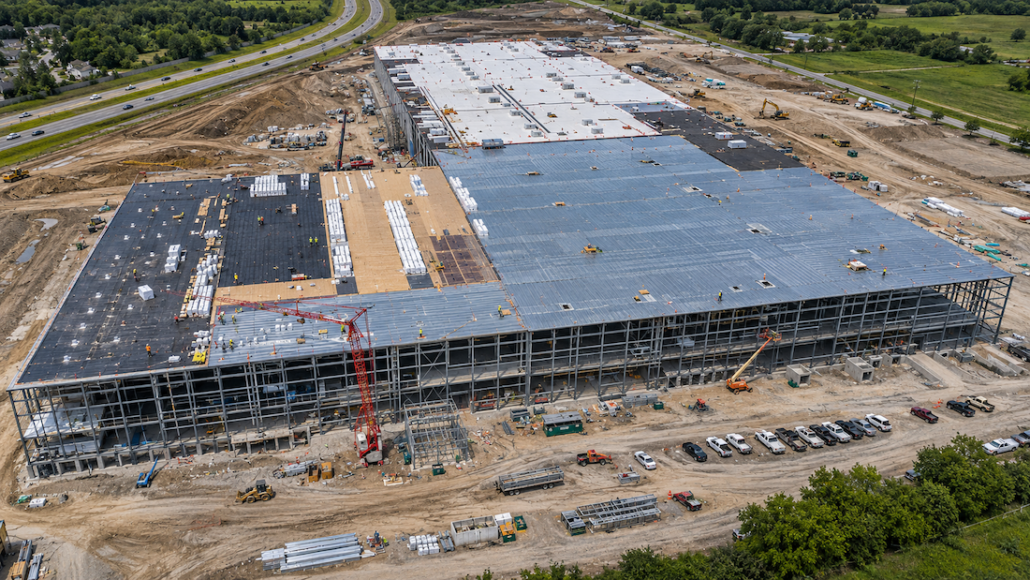
Jacksonville is adding AI data center capacity faster than almost any mid-tier market in the Southeast. Submarine cable landing stations at Ponte Vedra, available land along the I-295 corridor, and a power grid that can support hyperscale loads have made Duval County a serious destination for AI training and inference infrastructure. What the site-selection spreadsheets rarely flag — until a structural engineer raises it during permit review — is that Northeast Florida logs more than 100 thunderstorm days per year and roughly 76 cloud-to-ground lightning flashes per square mile annually, the highest density in the United States. For an AI data center running GPU clusters at full utilization, a single direct strike or a conducted surge from a nearby hit can destroy server hardware, corrupt storage arrays, and trigger a cascade failure that takes days to recover. The only cost-effective answer is to engineer AI data center lightning protection in Jacksonville before the first column is poured — not after the building is enclosed and the mechanical-electrical-plumbing coordination is finished.
Why Jacksonville’s AI Infrastructure Is Uniquely Exposed
Most lightning risk discussions treat all data centers the same. They shouldn’t. A traditional colocation facility running virtualized workloads can tolerate a controlled shutdown and a measured restart sequence. An AI training cluster mid-run on a 72-hour job cannot. The financial loss isn’t just hardware replacement — it’s the cost of the interrupted compute job, the GPU-hours that have to be re-purchased, and the contractual penalties if the facility is operating under a service-level agreement. At industry-standard downtime costs of $5,000 to $10,000 per minute for critical data infrastructure, a strike event that takes a facility dark for four hours represents $1.2M to $2.4M in direct operational loss before a single replacement server is ordered.
Jacksonville’s specific geography compounds the exposure. The St. Johns River corridor and the Atlantic coastline create the moisture and thermal instability that drive Florida’s convective storm season, which runs roughly May through October but produces significant lightning events well outside those months. Facilities sited near Yellow Bluff Road, the Northside industrial corridor, or the Westside logistics zone are in open, low-obstruction terrain — exactly the conditions where a new, tall structure becomes the preferred strike termination point for a descending stepped leader. If that structure is a data center and its lightning protection system was designed as an afterthought, the consequences are predictable.
The submarine cable infrastructure adds another layer of risk that onshore-only facilities don’t face. Cable landing stations and the terrestrial backhaul networks connecting them to Jacksonville’s data hubs introduce long, exposed conductor runs that act as antennas for lightning-induced surges. NFPA 780 addresses bonding requirements for telecommunications entry points, but the specific surge coordination for fiber and copper backhaul serving AI workloads requires the kind of zone-by-zone analysis that IEC 62305-4 was written to provide — and that analysis has to happen during schematic design, not during commissioning.
What IEC 62305-4 Actually Requires for an AI Server Environment
IEC 62305-4 is the international standard governing protection of electrical and electronic systems inside structures. For a facility housing AI compute infrastructure — GPU clusters, high-density storage, networking switching fabric, power distribution units — the standard defines a Lightning Protection Zone hierarchy that determines how much surge energy each zone boundary must attenuate before it reaches sensitive equipment.
The LPZ Hierarchy and What It Means for GPU Infrastructure
The outermost zone, LPZ 0, is the unprotected exterior — the roof, the yard, the incoming utility service. LPZ 1 is the building interior after the structural lightning protection system, and the service entrance Type 1 SPD has done its work. LPZ 2 is the protected equipment room — the server hall, the GPU cage, the storage array room. Getting from LPZ 0 to LPZ 2 requires two coordinated attenuation stages, and each stage boundary must be defined in the design documents before the electrical engineer of record can properly size the surge protective devices.
This is where design-phase integration matters in a way that retrofit work simply cannot replicate. When the lightning protection system is engineered alongside the structural frame, the down conductor routing can be coordinated with the building steel to minimize the separation distance between the LP conductors and the internal power and data runs — a separation that, if violated, creates the induction loop responsible for most equipment damage in near-miss events. NFPA 780 Table 4.13 specifies the minimum separation distance formula; for a Class II structure above 75 feet, the numbers are unforgiving if the conductor layout wasn’t planned from the start.
Type 1, Type 2, and Type 3 SPDs — All Three, Coordinated
A common and expensive mistake in data center construction is specifying only Type 2 surge protective devices at the distribution panels and calling the surge protection complete. For an AI data center in Jacksonville, that approach leaves the facility exposed at both ends of the protection chain.
- Type 1 SPDs at the service entrance handle the direct-strike current that the utility service can conduct into the building. These must be rated for the full lightning impulse current and must be bonded to the building grounding electrode system per NEC 250.106.
- Type 2 SPDs at each distribution panel handle the residual surge energy that passes through the Type 1 device. In a high-density AI facility with multiple distribution panels serving different compute zones, each panel needs its own coordinated Type 2 device — not a single device at the main switchboard.
- Type 3 SPDs at the point of use — the PDU serving each GPU rack — provide the final attenuation stage that gets the surge voltage below the equipment’s withstand rating. For NVIDIA H100 or H200 clusters, the manufacturer’s published immunity levels are the design target; the SPD cascade has to be engineered to meet them.
Coordinating all three types requires knowing the impedance of the grounding system, the conductor lengths between stages, and the let-through voltage of each upstream device. That coordination is a design-phase exercise. Trying to reverse-engineer it after the building is enclosed routinely results in either over-specified devices that waste capital or under-specified devices that fail to protect.
The Grounding System: Where Most Jacksonville Data Center Designs Fall Short
The grounding electrode system for an AI data center is not the same as the grounding electrode system for a commercial office building, and it is not the same as the lightning protection grounding electrode system — though all three must be bonded together. NEC 250.60 is explicit: lightning protection electrodes are separate from but bonded to the building grounding electrode system. That bonding requirement is what prevents the most dangerous failure mode in a lightning event: side flash.
Sideflash occurs when the lightning current traveling down a down conductor encounters a grounding system at a different potential than a nearby metallic object — a server rack, a cable tray, a chilled water pipe. The current arcs across the gap. In a data center, that arc destroys whatever is in its path. The equipotential bonding network that prevents side flash has to connect every significant metallic mass in the facility to a common reference point, and that network has to be designed before the mechanical and electrical trades rough in their systems.
Ground Resistance Targets for AI Compute Loads
NFPA 780 requires a ground bed resistance of less than 25 ohms for the lightning protection grounding electrode system, with bonding connections of 1 ohm or less. For AI data centers, those are minimum thresholds, not targets. The sensitive power supplies in GPU servers are designed around a stable, low-impedance ground reference. Facilities that meet the 25-ohm threshold but no better often see nuisance tripping of sensitive equipment during nearby strikes even when the direct-strike protection performs correctly.
Jacksonville’s soil conditions vary significantly across the development corridors. The sandy, low-conductivity soils common in the Northside and Westside areas require either a larger ground bed, chemical ground enhancement, or a driven electrode array to achieve low resistance. That soil analysis needs to happen during geotechnical investigation — the same phase when the structural engineer is characterizing the soil for foundation design. Combining those investigations saves mobilization cost and ensures the grounding design is based on real field data rather than assumed soil resistivity.
For more on how grounding and bonding requirements interact with the full lightning protection system, see our overview of grounding and bonding services and the technical detail in our data center lightning protection guide.
Design-Phase Integration: What the Coordination Timeline Actually Looks Like
The phrase “design-phase integration” is easy to say and harder to execute when a project is running on a compressed schedule. Here is what it concretely requires, and when.
Schematic Design (SD) Phase
The lightning protection engineer needs to be at the table during SD to establish the building classification under NFPA 780 — Class I for structures under 75 feet, Class II for structures above — and to identify the air terminal layout using the Rolling Sphere Method (a 150-foot sphere rolled across the roof surface; any point the sphere touches requires an air terminal). For a multi-story Jacksonville AI data center with rooftop mechanical equipment — cooling towers, chillers, generator exhaust stacks — the Rolling Sphere analysis determines which rooftop components need their own air terminals and how those terminals connect to the down conductor network. Getting this wrong at SD means redesigning the roof penetration schedule during construction documents, which costs time and money.
Design Development (DD) Phase
During DD, the down conductor routing is coordinated with the structural steel, the mechanical systems, and the electrical distribution layout. The separation distance calculations per NFPA 780 Table 4.13 are run against the actual building geometry. The grounding electrode system is sized based on the geotechnical soil resistivity data. The SPD cascade — Type 1 through Type 3 — is specified with coordinated let-through voltage ratings. The IEC 62305-4 LPZ boundaries are drawn on the electrical plans so the mechanical, electrical, and plumbing engineers can design their systems to respect those boundaries.
Construction Documents (CD) Phase
The lightning protection contractor produces permit-ready CAD drawings and sealed engineering documents that the authority having jurisdiction requires for permit issuance. In Duval County, the building department requires these documents as part of the electrical permit package for commercial construction. Having them ready at CD submission — rather than as a deferred submittal — keeps the permit timeline on track. All South produces sealed engineering drawings in-house, which eliminates the coordination lag that occurs when the LP contractor and the engineer of record are separate firms.
The Lightning Protection Institute publishes installation standards and contractor certification levels — JI, MI, MID, and DI — that owners and architects should verify before selecting a contractor for a project of this scale. A Master Installer with Design certification (MID or DI) is the appropriate credential for a complex AI data center project.
UL 96A Certification: The Document Your Insurance Carrier Will Ask For
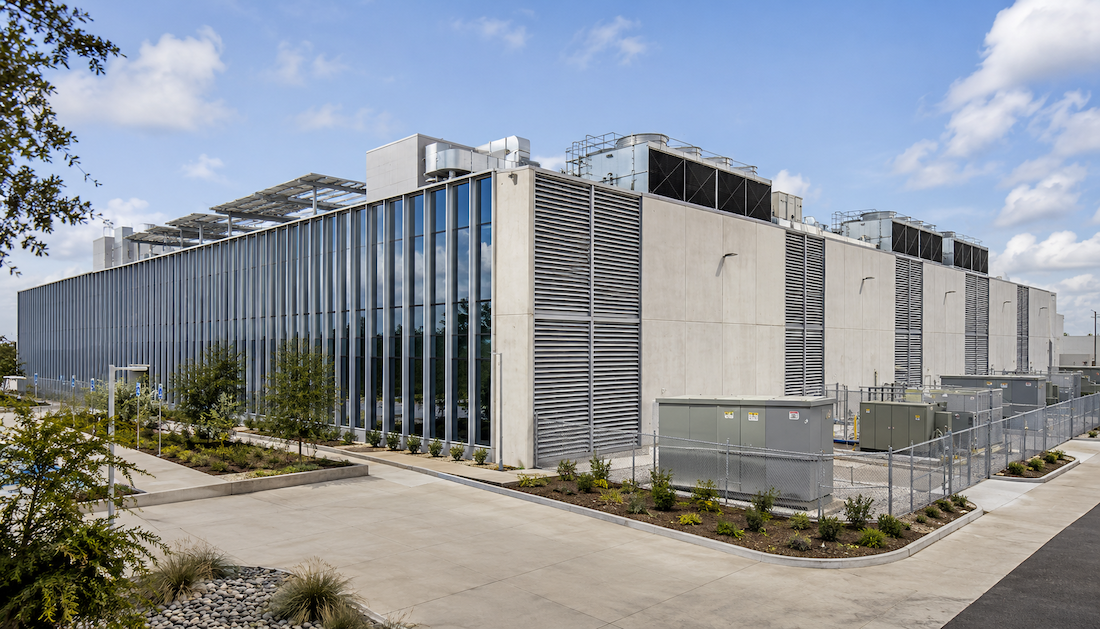
A completed lightning protection system on a commercial facility in Florida is eligible for UL 96A certification — a third-party inspection and certification by Underwriters Laboratories that documents the system meets the installation standard. For an AI data center, that certificate does two things. First, it gives the facility’s insurance carrier the documentation needed to apply the premium reduction — typically in the range of 10 to 18 percent on the property policy — that a certified system supports. Second, it creates the baseline record against which future inspections are measured.
UL 96A certificates expire every five years and must be renewed through a re-inspection. For a Jacksonville AI data center, the re-inspection schedule should be built into the facility’s maintenance calendar from day one. Any modification to the building — a new rooftop cooling unit, an expanded generator pad, a new telecommunications entry point — can affect the system’s certification status and must be evaluated against the existing LP design. The UL certification process is rigorous precisely because the stakes for certified facilities are high; a lapsed or voided certificate removes the insurance documentation and signals to the carrier that the system may no longer be compliant.
For a deeper look at what triggers a certification review, see our post on lightning protection system inspections and the specific scenarios that void a UL 96A certificate.
What Retrofit Lightning Protection Actually Costs on an Enclosed Building
The argument for design-phase integration is partly technical and partly financial. The technical case is made above. The financial case is straightforward: retrofitting a lightning protection system onto an enclosed, occupied AI data center costs two to four times what the same system costs when installed during construction. The reasons are labor-intensive and predictable.
Down conductors on an enclosed building have to be surface-mounted or routed through finished spaces, both of which require more labor and more material than conductors installed in open framing. Penetrations through completed roofing systems require cutting, flashing, and re-waterproofing — work that carries its own warranty implications. Coordinating the installation around an operating facility means working in restricted windows, often nights and weekends, at premium labor rates. And if the grounding electrode system wasn’t designed into the foundation, adding it after the slab is poured may require excavation around the building perimeter.
For a 200,000-square-foot AI data center, the difference between design-phase and retrofit installation cost can easily exceed $300,000 — before accounting for the operational disruption of working in an active facility. That number tends to focus the attention of developers who initially view lightning protection as a line item to defer.
For context on system costs across building types and sizes, our guide on how much a lightning protection system costs breaks down the variables that drive pricing on commercial projects.
Frequently Asked Questions
At what point in the design process should we bring in a lightning protection engineer for a Jacksonville AI data center?
The right answer is schematic design — the same phase when the structural, mechanical, and electrical engineers are establishing the building’s primary systems. The Rolling Sphere Method analysis that determines air terminal placement depends on the roof geometry and rooftop equipment layout, both of which are established in SD. Waiting until design development means the LP engineer is reacting to decisions already made rather than informing them, which typically results in coordination conflicts and cost increases. For a project above 75 feet — Class II under NFPA 780 — the conductor sizing and separation distance requirements are complex enough that early engagement pays for itself in avoided rework.
Does Florida law require lightning protection on a new AI data center in Jacksonville?
Florida’s building code requires lightning protection systems on certain occupancy types — new K-12 school buildings are the most cited example. For commercial data centers, the requirement is driven by the authority having jurisdiction and, increasingly, by the insurance carrier and the lender’s risk requirements rather than a single statutory mandate. That said, any facility seeking UL 96A certification — which most institutional lenders and insurance carriers now require for large commercial projects — must meet NFPA 780 in full. The practical effect is that a properly insured and financed AI data center in Jacksonville will need a compliant lightning protection system regardless of whether a specific code section mandates it. The Florida DBPR licenses lightning protection contractors; verify your contractor’s license before signing a contract.
How does lightning protection for an AI data center differ from a standard commercial building?
Three ways. First, the consequence of failure is orders of magnitude higher — GPU clusters and high-density storage are far more expensive to replace than standard office equipment, and the operational loss during recovery is substantial. Second, the IEC 62305-4 LPZ 2 requirement for the server environment demands a coordinated three-stage SPD cascade that most commercial buildings don’t need. Third, the grounding system has to meet a lower impedance target than the NFPA 780 minimum to protect the sensitive power supplies in AI compute hardware. The structural lightning protection system — air terminals, down conductors, grounding electrode — is similar in principle to any large commercial building, but the internal protection layer is significantly more complex.
Can we add lightning protection after the building is complete if we decide we need it?
Yes, but at significantly higher cost and with real constraints on what’s achievable. Surface-mounted down conductors on an enclosed building are more expensive to install and harder to route in compliance with NFPA 780 separation distance requirements. If the grounding electrode system wasn’t designed into the foundation, adding it post-construction may require excavation. The SPD cascade can be added at any point, but coordinating it with an existing electrical distribution system that wasn’t designed with SPD coordination in mind takes more engineering time. The short answer: retrofit is possible, but the cost premium and the technical compromises make design-phase integration the correct approach for any facility where the cost of a lightning event is material.
What does the National Weather Service data say about Jacksonville’s lightning risk compared to other data center markets?
Jacksonville sits in the highest lightning-density region in the United States. The National Weather Service documents Florida averaging 76 cloud-to-ground lightning flashes per square mile per year — a figure that dwarfs competing data center markets like Northern Virginia (roughly 10–15 flashes/sq mi/yr), Phoenix (under 5), or the Pacific Northwest (under 3). For a developer choosing between markets, that difference is a real risk variable that belongs in the site-selection analysis alongside power cost and fiber availability. For a developer already committed to Jacksonville, it’s the reason lightning protection belongs in the design budget from day one.
Jacksonville’s Data Center Window Is Open — Build the Protection In Now
The AI infrastructure buildout in Jacksonville is moving quickly. Land is being optioned, permits are being filed, and the first wave of hyperscale and edge AI facilities will be in the ground within the next 18 to 24 months. The developers and owners who build lightning protection into the design from the start will commission faster, insure more favorably, and operate without the retrofit disruption that their competitors will face when their insurers or lenders require a compliant system after the fact.
All South Lightning Protection has designed and installed systems on critical infrastructure across Northeast Florida for decades — from healthcare facilities to large commercial projects — and we produce permit-ready sealed engineering drawings in-house. If your Jacksonville AI data center project is in schematic design or early design development, now is the right time to get the lightning protection engineer at the table.
Schedule a design-phase consultation with our Jacksonville team before your construction documents go to permit. The conversation costs nothing; the retrofit costs plenty.