Reliable Lightning Arresters for Residential & Commercial Use
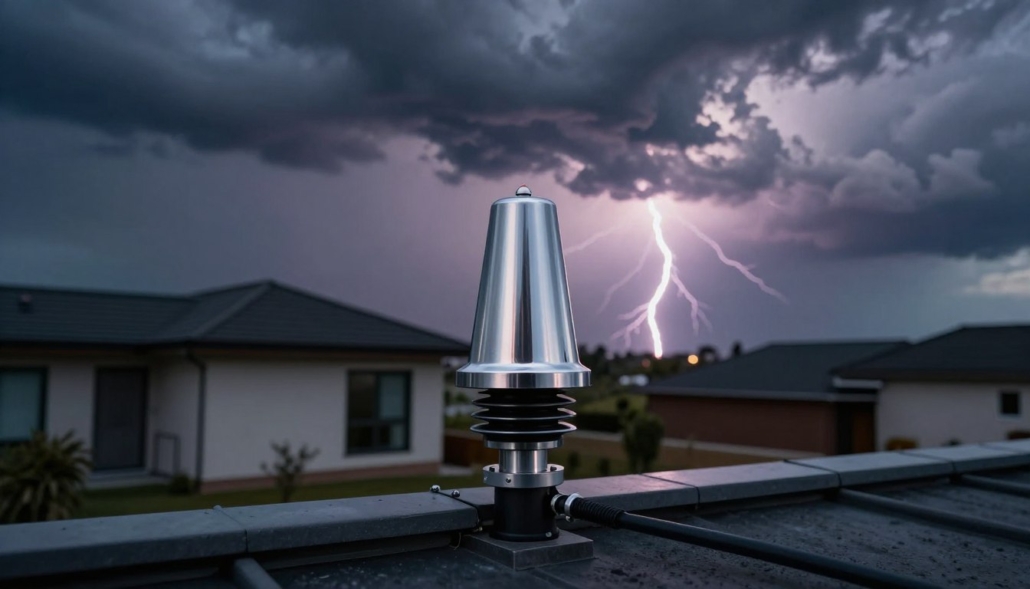
A sudden electrical storm can unleash incredible power. This natural force carries immense energy, posing a serious threat to any structure. Without proper safeguards, the results can be catastrophic for both homes and businesses.
Modern properties are filled with sensitive electronics and vital systems. From home offices to commercial servers, our daily operations depend on this technology. A single surge can cause irreversible harm to equipment and data.
Professional safety measures are no longer an optional luxury. They are a fundamental requirement for property preservation. A comprehensive approach involves multiple components working together seamlessly.
This guide delivers expert knowledge on understanding and selecting the right protective solutions. We will cover technical mechanisms, installation requirements, and vital compliance standards. Our goal is to equip you with the information needed to make an informed decision.
Key Takeaways
- Electrical storms pose a severe risk to both residential and commercial structures.
- Modern properties rely heavily on electronics that are vulnerable to power surges.
- A professional safety system is essential for preventing catastrophic damage.
- Effective protection involves an integrated network of components.
- Proper installation by certified professionals is critical for system performance.
- Understanding compliance standards ensures your property meets safety regulations.
- Proactive measures safeguard your investment and provide peace of mind.
Understanding Lightning Arresters for Buildings
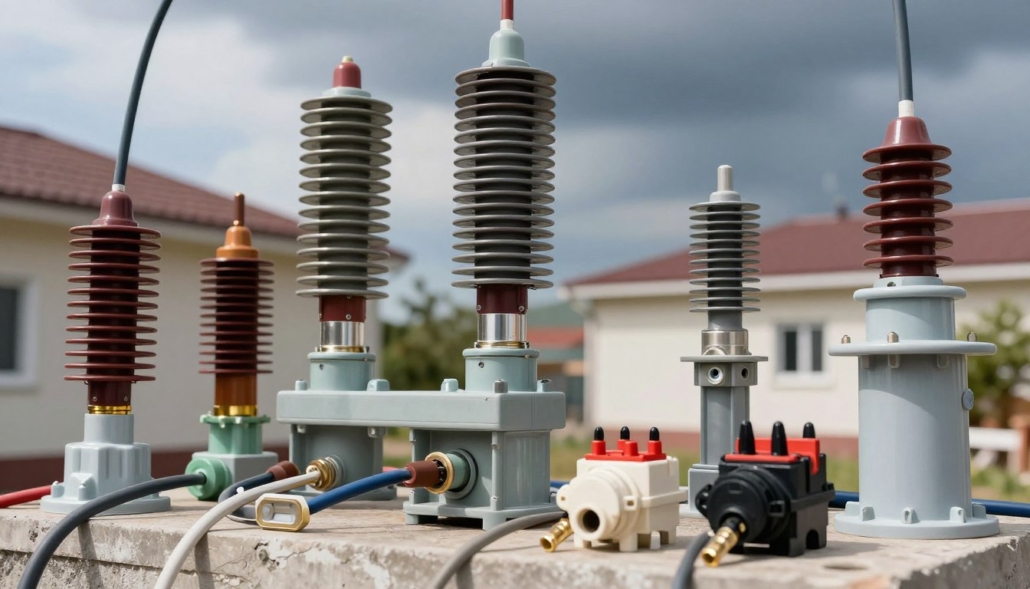
Modern property safety requires advanced solutions for electrical surge management. These specialized components form the frontline defense against atmospheric electrical threats.
Defining the Device and Its Role
A lightning arrester serves as a critical protective device for electrical infrastructure. This cylindrical component typically measures one to two feet in length.
The equipment contains an inductor and a spark gap mechanism. These internal components work together to detect dangerous voltage spikes.
Rather than stopping atmospheric discharges, the arrester provides a controlled path to ground. This redirects hazardous energy away from sensitive equipment.
Key Features and Benefits
Quality protective systems operate silently during normal conditions. They activate only when genuine threats exceed safe voltage levels.
The rapid response capability is essential for effective protection. Instant activation creates a low-resistance route for dangerous surge diversion.
Durable construction ensures reliable performance through multiple storm events. The automatic reset function maintains readiness for subsequent electrical surges.
| Operational Characteristic | Normal Conditions | Surge Event | Post-Event Recovery |
|---|---|---|---|
| Device Activity | Silent operation | Instant activation | Automatic reset |
| Electrical Flow | Undisturbed | Diverted to ground | Normal operation restored |
| System Protection | Standby mode | Active safeguarding | Ready for next event |
| Power Consumption | Zero drain | Surge energy handling | Return to standby |
Both residential and commercial applications benefit from this advanced protection technology. Proper installation safeguards electrical systems across various property types.
How Lightning Arresters Work: A Step-by-Step Guide
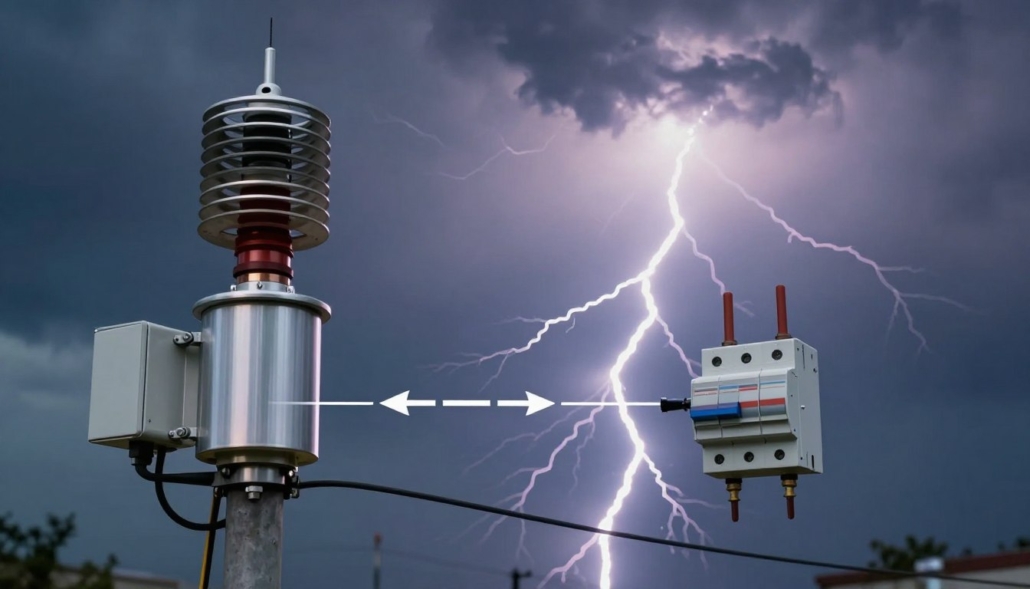
A property’s electrical network hums along smoothly, delivering power where needed. This changes instantly when an atmospheric discharge introduces a massive power surge. The protective system must react in microseconds to prevent catastrophic damage.
Voltage Surge Diversion Mechanism
Under normal conditions, electrical flow is like a controlled highway. Current moves smoothly to power all devices within the structure.
When a lightning strike occurs, it creates a dangerous voltage spike. The arrester’s internal monitoring system instantly recognizes this threat.
A spark gap inside the component breaks down. This creates a controlled electrical discharge. It opens a protective path for the dangerous energy.
An inductor then enables a low-resistance route. This route preferentially directs the massive surge directly to the ground. The entire diversion process happens faster than the blink of an eye.
This swift action saves connected electronics, wiring, and appliances. The lightning arrester is a silent guardian until needed.
Optimal Installation Locations
Placement is critical for maximum effectiveness. The unit should be installed as close as possible to sensitive equipment or main panels.
In AC electrical systems, the optimal placement is between the phase wire and ground. For DC setups, arresters connect between positive and negative terminals.
Different property types require unique strategies. Proximity to protected assets is the most important factor.
| Property Type | Primary Installation Point | Additional Strategic Points |
|---|---|---|
| Residential | Main Electrical Panel | Near major appliances |
| Commercial | Service Entrance | Generators, Transformers, Bus Bars |
| Industrial | Primary Circuit Breakers | Control panels, Critical machinery |
Correct installation location directly influences the overall protection level. A well-planned system offers comprehensive security for valuable assets.
Types of Lightning Arresters and How to Choose the Right One
From simple rod gaps to advanced early streamer emission systems, options vary widely. Each category operates on distinct principles suited for different risk levels and applications. A professional evaluation is essential to determine the optimal device for your specific needs.
Exploring Different Technologies
Rod gap arresters represent the simplest technology. They use two metallic rods with a precise gap where a surge sparks across to redirect energy.
Valve-type devices combine spark gaps with non-linear resistors. This allows for precise surge control and handling repeated events effectively.
Metal Oxide Varistor (MOV) arresters are modern solutions. They use metal oxide discs to clamp surges instantly, requiring no spark gap.
Expulsion-type devices are common in outdoor, high-voltage networks. They extinguish electrical arcs by expelling ionized gases during operation.
Incorporating Modern Advances like ESE Technology
Early Streamer Emission (ESE) technology is a French innovation dating back to the 1980s. It generates an ascending electrical tracer before natural ones form.
This initiation advance of 10 to 60 microseconds allows the device to capture strikes at greater heights. The result is protection for a larger area of coverage.
There are two primary types of ESE systems. Electronically triggered types use a device to ionize the air, often powered by a battery.
Geometrically triggered types, like the IONIFLASH MACH NG, use a spark gap. They offer an extended lifespan and reduced maintenance.
Selecting the right type requires considering system voltage, local weather risk, and reliability needs. Always consult a professional for the final assessment.
Residential Lightning Protection: Shielding Your Home
Homeowners across the nation are recognizing the critical need for comprehensive electrical surge defense. Every residence, regardless of size or market value, benefits substantially from professional installation. This protection becomes especially vital as severe weather events increase in frequency.
Protecting Personal Electronics and Essential Systems
Modern households contain significant investments in technology. Computers, routers, and communication equipment represent both financial value and irreplaceable data. These devices require robust surge protection to maintain daily operations.
During electrical storms, sudden voltage spikes threaten household appliances. Televisions, kitchen equipment, and HVAC systems face potential destruction. Smart home devices and security systems also remain vulnerable.
Professional systems integrate discreetly with the main electrical panels. They operate silently and require minimal maintenance. This provides continuous security for your home without disruption.
The instantaneous response occurs in microseconds when needed. Dangerous voltage gets diverted to ground, preserving all connected electronics. Household activities continue uninterrupted during this protection process.
Fire prevention represents another crucial benefit. Most electrical fires result from direct strikes to wood-framed roofs. These fires often become severe before traditional alarms activate.
Cost expectations range from a few hundred to several thousand dollars. System complexity, building size, and local requirements influence final pricing. This investment adds property value and provides essential peace of mind.
While insurance may cover financial losses, it cannot replace personal data or family memories. Homeowners in storm-prone regions should consider this prudent safety measure. It offers security similar to other essential household systems.
Commercial & Industrial Lightning Protection Strategies
For schools, hospitals, and manufacturing plants, a power surge is more than an inconvenience—it’s a critical failure. These large-scale structures house complex electrical networks and expensive equipment. A comprehensive defense system is an essential operational safeguard.
Integrated Protection Systems for Complex Infrastructures
Professional engineers design integrated protection systems. These networks coordinate multiple components for maximum security. Lightning rods intercept direct strikes, while specialized arresters manage surges within wiring.
Complete commercial systems require numerous air terminals and grounding electrodes. This creates redundant, safe pathways for dangerous energy. Extensive conductor networks ensure comprehensive coverage across the entire property.
A critical step is bonding all metallic elements. Plumbing, electrical wiring, and structural steel must connect to the protection system. This prevents dangerous side-flashing and ensures a unified defense.
Surge protection devices are installed on every incoming line. This includes power feeds, data cables, and control systems. This multi-layered approach is vital for business continuity.
The consequences of inadequate protection are severe. They include costly operational outages, catastrophic fires, and destruction of sensitive equipment. Data loss and potential liability add to the risks.
Investment in a robust system prevents far greater costs. It safeguards against equipment replacement, business interruption, and reputation damage. Professional installation is a wise business decision.
Professional Installation and Adherence to Safety Standards
The effectiveness of any electrical surge defense depends entirely on proper implementation by certified specialists. This work demands specialized knowledge beyond general electrical contracting.
Importance of Expert Evaluation and System Design
Qualified professionals conduct comprehensive assessments before installation. They evaluate electrical infrastructure and verify adequate grounding systems.
Critical design elements include proper conductor sizing and strategic component placement. Secure bonding of all metallic building elements ensures unified protection.
Incorrect implementation creates dangerous false security. Improper grounding could channel hazardous voltage into the structure rather than away from it.
Compliance with NFPA780, UL96A, and Other Regulations
Installation must follow nationally recognized standards like NFPA 780 and UL96A. These establish minimum safety and performance requirements.
All system components must come from UL-listed manufacturers. Specialized firms with formal training on these standards should perform the work.
Annual professional inspections verify system integrity. Post-storm reviews are crucial in high-risk areas. Building modifications may require system updates to maintain comprehensive coverage.
Conclusion
Expertly installed safety measures offer generations of reliable defense for residential and commercial investments. A complete lightning protection system acts as a silent guardian, integrating interception rods, arrester systems, and proper grounding.
This comprehensive approach prevents catastrophic damage from a lightning strike, which can cause destructive electrical fires and ruin sensitive equipment. Only professional assessment and installation by specialized firms ensure this protection meets all safety standards.
Property owners should consult qualified specialists for a risk evaluation. This prudent investment safeguards your structure, data, and, most importantly, human safety. Remember the National Weather Service advice: “When thunder roars, go indoors!” to a fully enclosed building.
With minimal maintenance, a properly designed system provides peace of mind for decades. It is a crucial step in protecting your valuable property from nature’s unpredictable power.